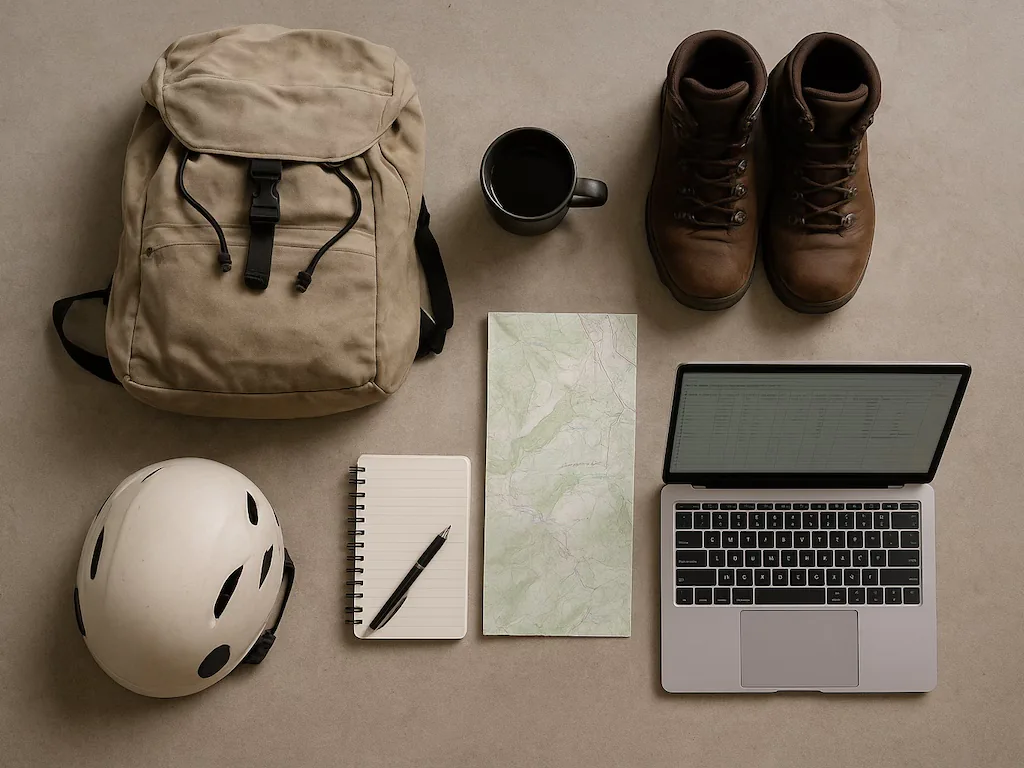
If you’ve ever felt the urge to scroll for “something slightly better” at 11pm, picture yourself selling a kidney to fund it. That’s outdoor gear economics – knowing when to buy, what to skip, and how not to turn your pack into a black hole for money.
After years of trial, error, spreadsheets, and mild regret, I’ve distilled my approach into five rules that keep my gear – and my sanity – in check.
Rule #1 – Make a List and Stick to It
Impulse is expensive. You don’t need another “just in case” jacket. The first step to smart buying is knowing exactly what you need, and what you don’t.
I used to use a gear spreadsheet for this. It tracked what I have, what I need, estimated prices, and priority levels. More than just planning, it was a gear control system. Over time it became easy to see which categories grow too fast, where money leaks, and what items are just duplicates in disguise.
The spreadsheet worked well for years – until I wanted to know what my kit actually cost me after selling old pieces, add notes to items, or build a packing list on my phone at 3am in a hut. So I built an app. It’s called Kit Book – it does everything the spreadsheet did, plus tracks the full buy/sell history of each item so you can see your true net cost over time. If you already have a gear spreadsheet, you can import it directly at kitbook.app.
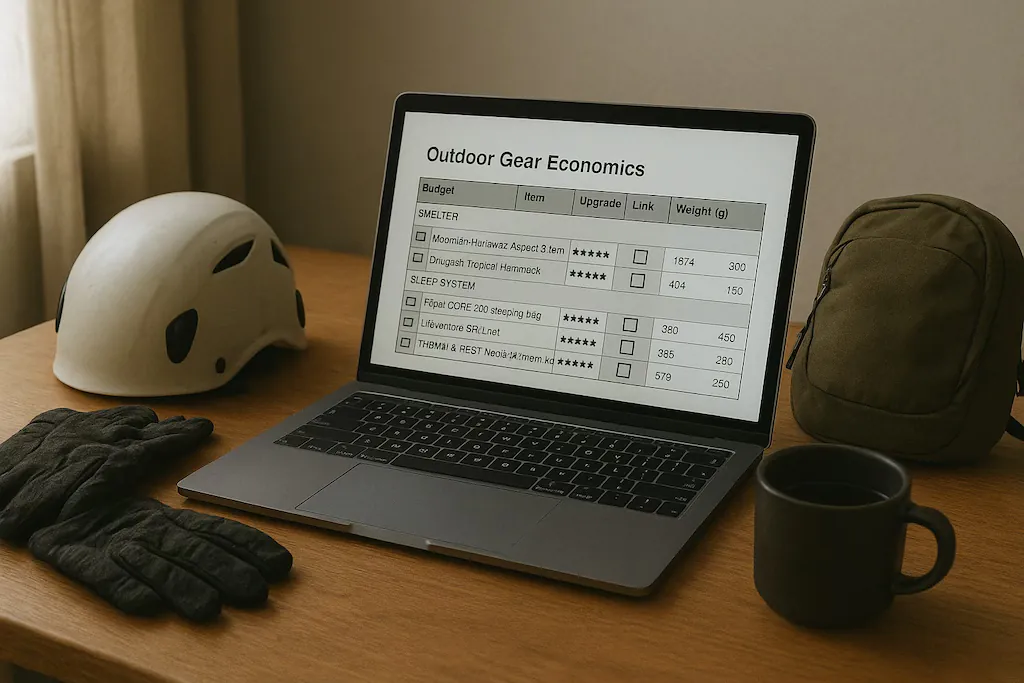
Tip: Don’t be afraid to mark items as “nice-to-have” but not urgent. Seeing them laid out in black and white helps curb FOMO without stifling adventure.
Rule #2 – Research Like a Pro
Outdoor gear economics is about value, not cheapness. Before buying anything, dig into real-world specs, weights, durability, and user experiences. Reddit threads, gear forums, and sites like WeighMyRack or Switchback Travel, as well as HowNot2 and other Youtube channels are goldmines for honest comparisons.
Once you’ve done your homework, track pricing over time. Tools like Idealo or Keepa help you see when discounts are real or just marketing smoke. Patience pays: over the years, following these rules has given me an average savings of around 47% compared to retail – calculated by tracking every purchase against MSRP in my gear spreadsheet. That’s real money back in my pocket for lift tickets, alpine trips, or the occasional treat – without ever feeling deprived.
The key is consistency. Each research session teaches you a little more about brands, materials, and pricing patterns. It compounds over time: the more you know, the smarter your buying decisions become, and the less you rely on impulse or hype.
Rule #3 – Understand Margins and Market Timing
Here’s something most buyers miss: gear pricing is strategic. Brands set MSRPs, but actual margins for retailers can vary wildly, from 30% to 60%, depending on product type, season, and stock turnover. That’s why “50% off” sales can still be profitable for shops, while specialized alpine or safety gear rarely discounts much.
Knowing how margins and liquidity work helps you read the market. Mainstream outdoor apparel often discounts quickly to move stock, while niche items hold value longer. That means some items are worth waiting for, some are worth buying immediately, and a few might even be worth picking up used. Timing, patience, and knowing the market give you a serious edge.
Tip: Keep your spreadsheet updated with expected replacement years or season priorities. It makes planning purchases far more intentional than following every “limited-time” deal.
Rule #4 – Buy for Your Use, Not Your Ego
We’ve all been tempted by ultralight packs, hyped jackets, or fancy gadgets “for that one trip someday”. The truth? Most of it ends up unused.
Here’s a simple rule: if it doesn’t cover at least 80% of your realistic use cases, skip it. Fancier isn’t better. Functional, practical, and suited to your adventures is what counts.
This is where your spreadsheet becomes a reality check. Seeing each item next to priorities and usage notes stops you from buying for aspiration or social bragging. Gear should serve your current objectives, not your ego or your imagined future self. If you’re starting out or not sure something will stick – buy what’s good enough for the objective, not the most expensive option on the shelf.
Rule #5 – No Regrets and Learn Over Time
Once you’ve researched, planned, and finally clicked “buy”, stop second-guessing. Buyer’s remorse is wasted mental energy.
Follow the first four rules, and you’ve likely made a solid choice. The real value of outdoor gear economics shows over time: the more you track, plan, and review, the sharper your instincts get. You start spotting trends, anticipating sales, and naturally buying smarter. It compounds – like interest, but with backpacks and crampons.
Once you’ve researched, planned, and finally clicked ‘buy’ – stop second-guessing. Buyer’s remorse is wasted mental energy. The real value of outdoor gear economics shows over time: the more you track, plan, and review, the sharper your instincts get. You start spotting trends, anticipating sales, and naturally buying smarter. It compounds – like interest, but with backpacks and crampons.
Final Thoughts
Smart spending on gear isn’t about being cheap – it’s about being intentional. Make a list, do your research, understand the market, buy for your real use cases, and stop second-guessing once you’ve bought. Over time you’ll spend less, waste less, and enjoy everything you own – with money left over for the actual adventures.
Follow along on Instagram for more on gear, mountains, and spending less on both.
Useful links
- Kit Book – gear catalogue app with full buy/sell cost tracking and spreadsheet import.
- Outdoor Adventure Essentials – What You Really Need – a useful post about building the right essentials kit.
- Where to Find the Best Outdoor Gear Deals in Europe – best places to find deals and reliable stores
- WeighMyRack – compare climbing hardware and keep a visual list of your gear.
- Idealo – track prices and set alerts for smart timing.
- HowNot2 – nerdy and entertaining YouTube channel that dives deep into how gear works (and fails).