
Have you ever been on a trip that stays so vivid in your mind that, even years later, it feels like it ended only yesterday? That, to me, is the essence of traveling and experiencing – moments that embed themselves so deeply they never fade. I’ve been lucky to have a few such journeys, and the Monte Rosa traverse – Eastern side of the massif – in the Alps was definitely one of them.
Why Monte Rosa?
When I set the goal to “collect” all 82 Alpine 4000ers – peaks above 4000 m – Eastern side of the Monte Rosa massif was the logical first major chapter. Here’s why:
- Relative ease: nothing too technical for a start (or so I thought).
- Smooth logistics: a ski lift from and back to Staffal (Italy) – no complicated cross-border returns.
- Flexibility: multiple route options with the ability to adapt plans mid-way.
- And, honestly: it all looked stunning in photos.
My original plan was to climb or traverse nine peaks: Punta Giordani, Piramide Vincent, Corno Nero, Ludwigshöhe, Parrotspitze, Punta Gnifetti (Signalkuppe), Zumsteinspitze, Dufourspitze, and Nordend.
As mountains often remind us, plans evolve – and so did mine.
The Journey Begins
After a sweltering night in the Aosta Valley (over 25°C even at night), I drove up the Gressoney Valley to Staffal, where the first gondola leaves at 7:30 a.m.
Three lifts and nearly an hour later, I stepped out at Punta Indren (3275 m), greeted by the dark, dirt-streaked late-summer ice of the Indren Glacier. The route ahead: climb the glacier towards Punta Giordani.
1. Punta Giordani – 4046 m (F)
An 800 m ascent doesn’t sound too bad on paper, especially with an F (Facile) rating. But ratings don’t always tell the full story.
Eight hundred vertical meters of exposed, bare ice at a 40-50° angle was not what I’d call “easy.” Coming straight from the valley, the altitude hit sooner than expected, and I found myself stopping more often to catch my breath.
Still, a steady “this too shall pass” attitude carried me upward. After two hours and some light scrambling, I stood on top of my first Alpine 4000er.
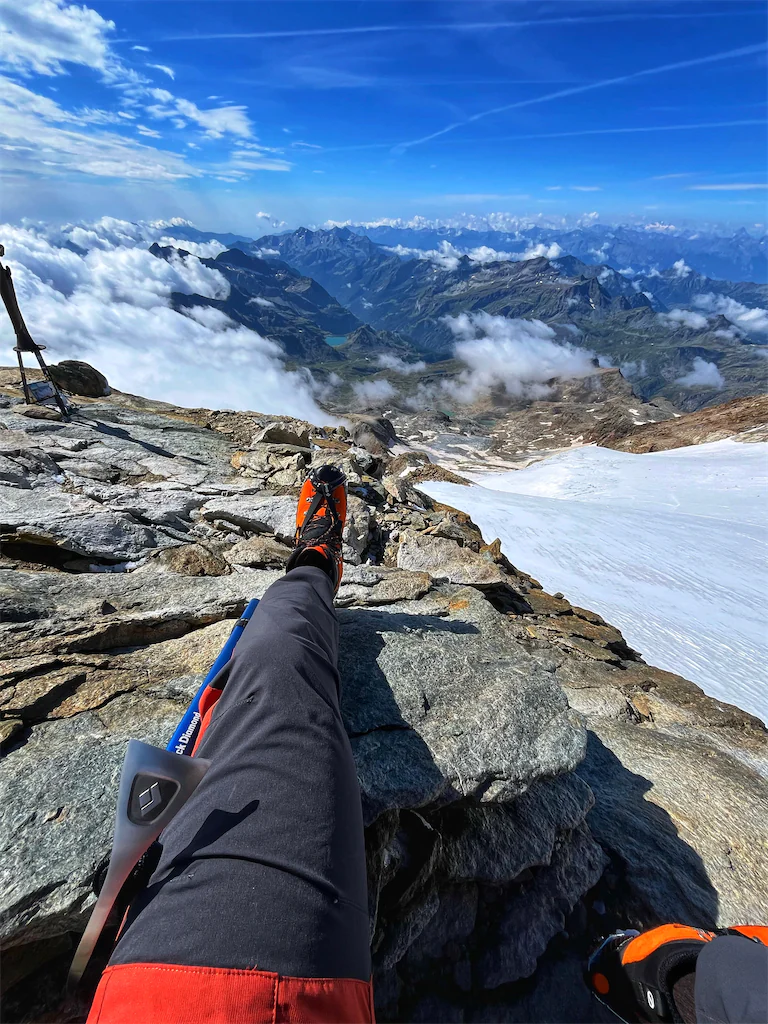
The feeling wasn’t just of achievement — it was of belonging. As if the mountain had silently accepted me. I gave myself a few minutes to take it in before continuing toward the distant Capanna Margherita hut.
2. Piramide Vincent – 4215 m (PD+)
Mountains have a way of testing your decision-making early. Most climbers summit Punta Giordani, descend, and spend the night at Gnifetti or Mantova hut before continuing. Naturally, I thought: why wait?
The choice was between descending the glacier and taking the normal F route to Piramide Vincent, or tackling the Cresta del Soldato ridge (PD+). From where I stood, the ridge didn’t look so bad – and descending didn’t sound appealing. Ridge it was.
That decision turned the climb into a sketchy adventure.
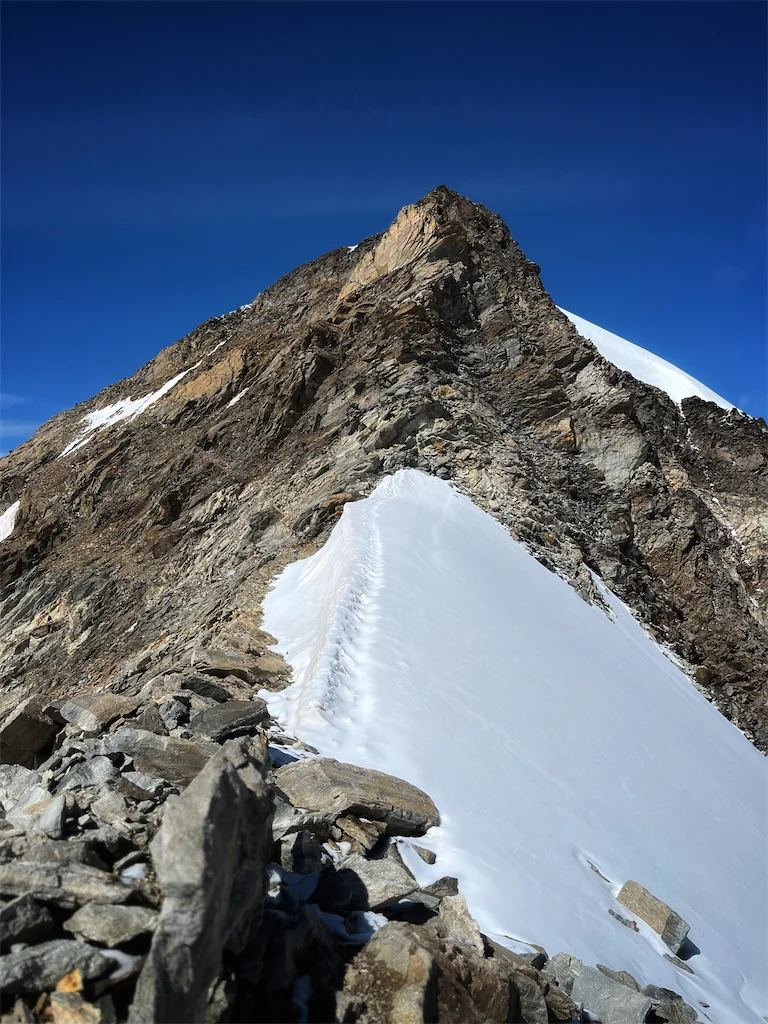
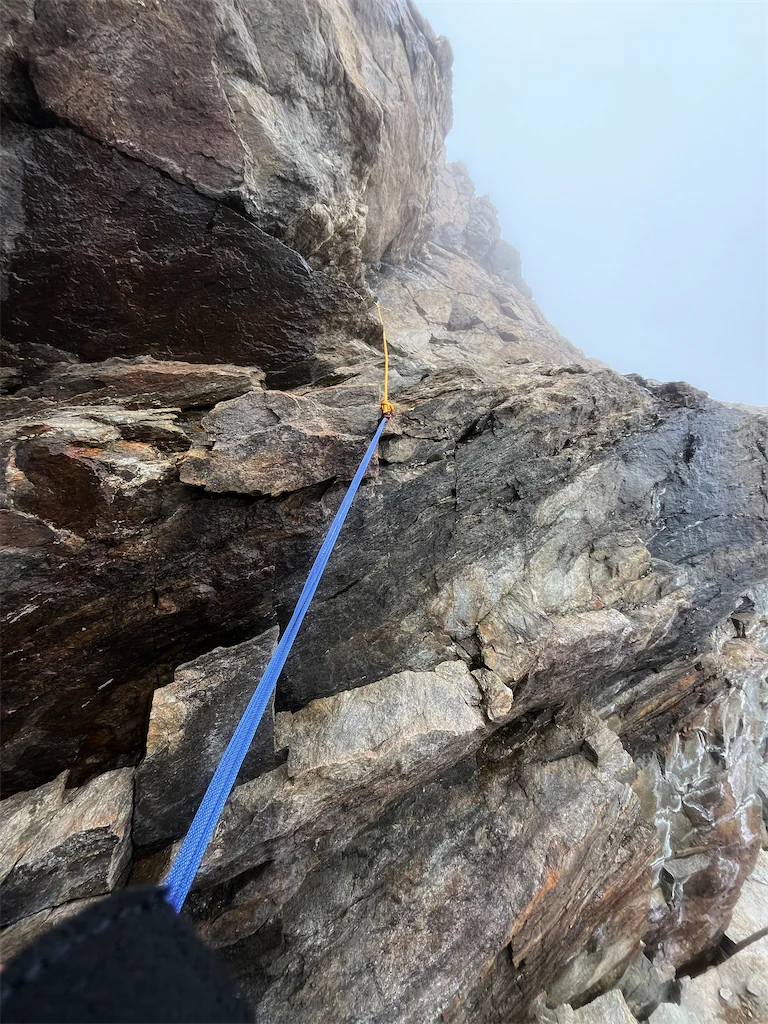
Solo, without prior knowledge of the route, I soon found myself on large overhanging gneiss slabs, increasingly steep and slippery as rain began. At one point, boxed in by three-meter-high rock faces with a drop behind me, I had to puzzle my way out – very carefully.
Three hours later, I topped out on Piramide Vincent, exhilarated, but in one piece.
Lesson learned: never make uninformed decisions in alpine terrain – and bring proper gear. A few nuts or cams would’ve made that ridge much safer and faster. But it was 80% fun, 20% adrenaline, and 100% memorable.
3. Corno Nero – 4321 m (PD)
By the time I reached Vincent, the weather turned to chaos – full whiteout, snow gusts, and strong wind.
Using a GPS track, I descended toward Balmenhorn, easily spotting the Christ statue and small emergency shelter. Three Polish climbers were already inside, melting snow for water. I debated heading straight to the hut, but decided to traverse the next peaks as planned.
A brief clearing tempted me toward Corno Nero, which suddenly appeared out of the mist. How could I not go?
Funny thing about whiteouts: you seem to lose the sense of coordination and surroundings. Fifteen minutes in, I realized I was crawling on all fours up a 60-70° ice slope, using a single ice axe in one hand while smashing the trekking pole’s tip into the ice with another. Not ideal. But turning back wasn’t an option.
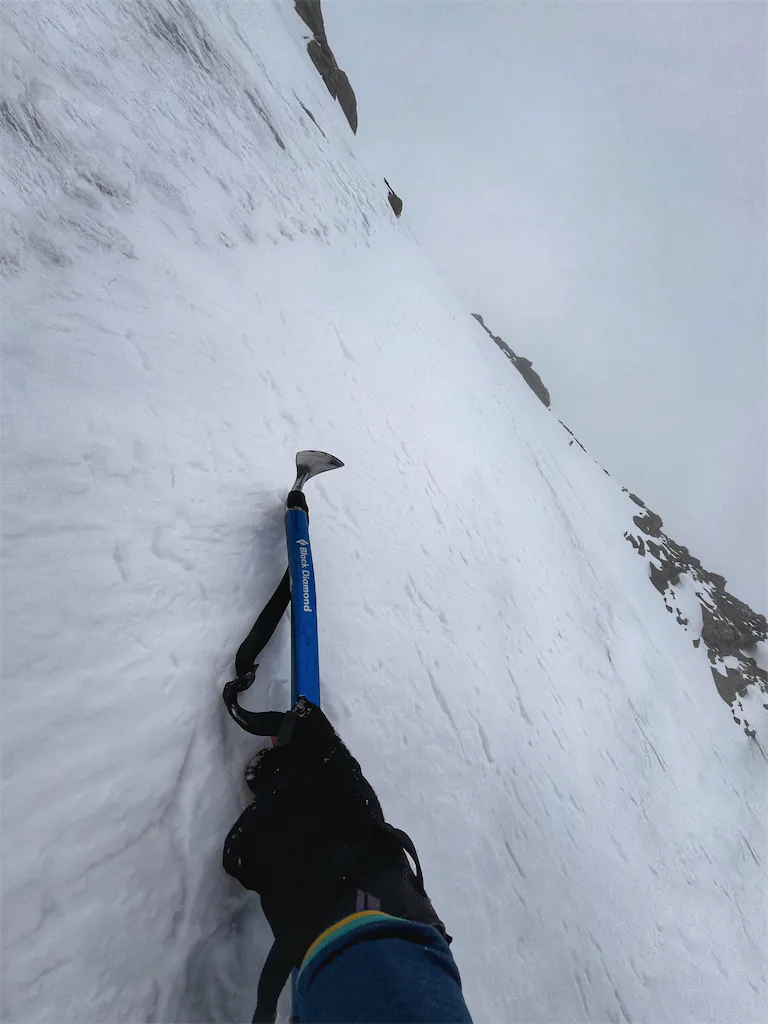
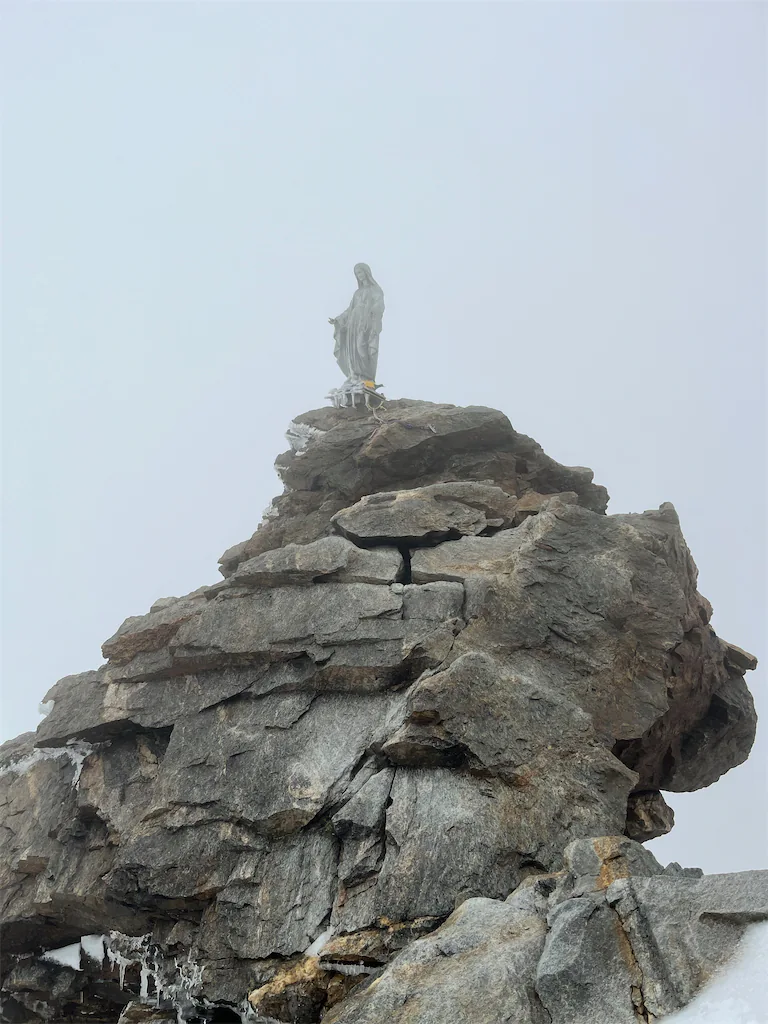
A few rock climbing meters crowned the peak with a statue of Mary which overlooked her son on Balmenhorn below. The descent, steep and blind in the cloud, was slow and tense. Corno Nero took over an hour – and a good portion of my remaining energy.
4. Ludwigshöhe – 4342 m (F)
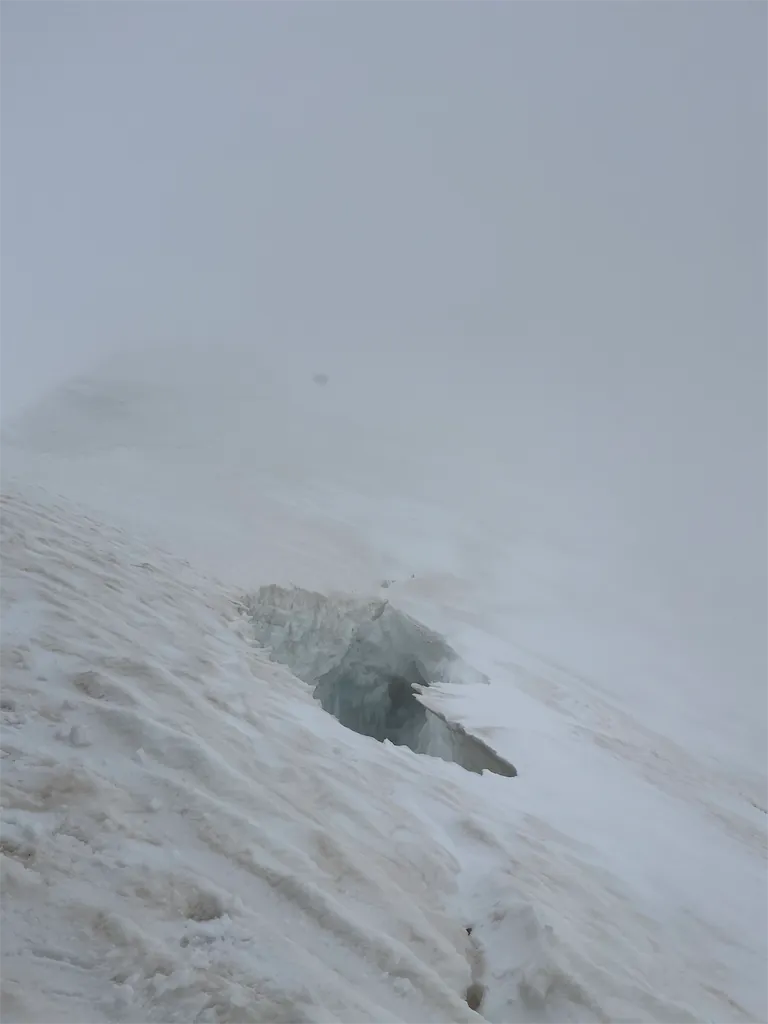
After Corno Nero, Ludwigshöhe was merciful – a gentle 15-minute slope. I crossed its summit ridge in a cloud, saw almost nothing, and kept moving.
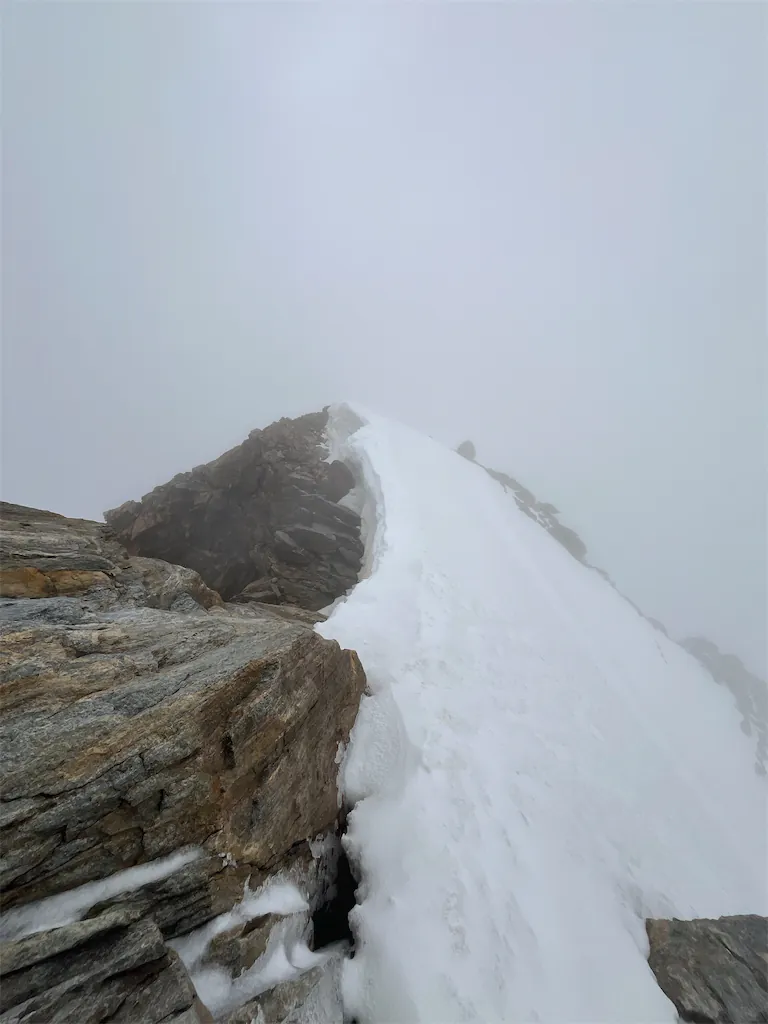
5. Parrotspitze – 4434 m (PD)
Descending from Ludwigshöhe meant later regaining about 150 vertical meters after crossing a windy glacier between them.
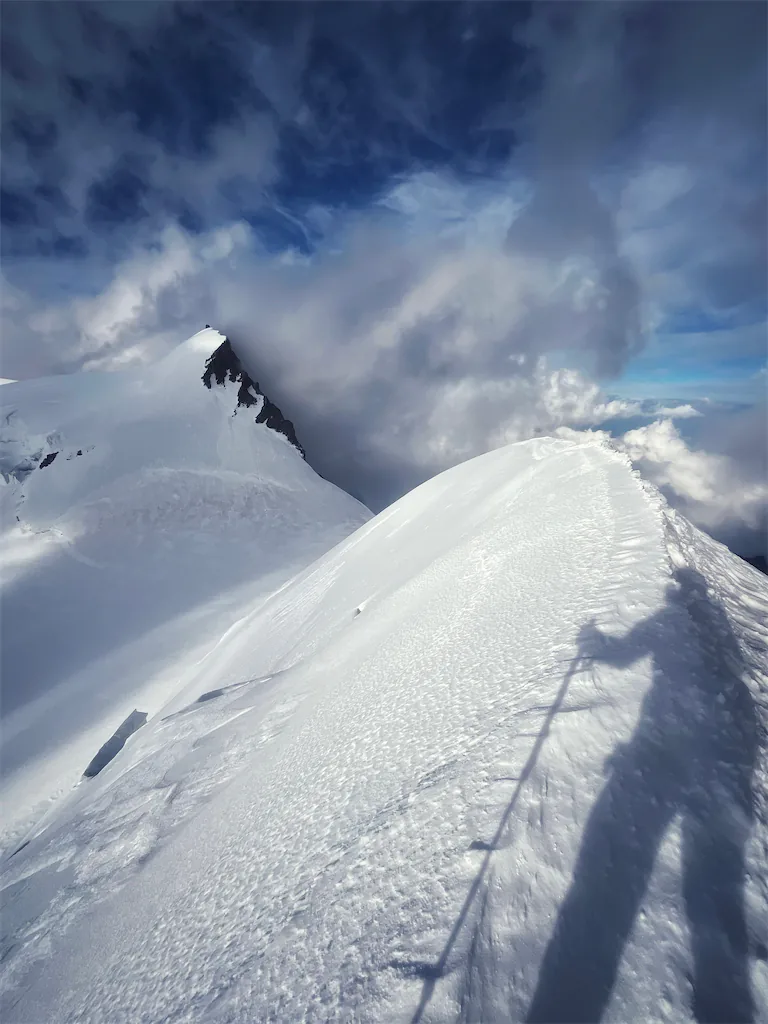
Parrotspitze’s narrow, more exposed ridge finally gave me a glimpse of the world again as the clouds lifted. Traversing it was magnificent – the wind howled across both sides, with an endless drop on the right.
While crossing, I caught myself wondering: Who grades these peaks? Parrotspitze PD? Then what was Corno Nero — PD++? I shelved that thought for later and pressed on. Ahead stood the unmistakable outline of Punta Gnifetti with a tiny looking hut on top of it – and the promise of food and warmth.
6. Punta Gnifetti (Signalkuppe) – 4554 m (F)
The approach from Parrotspitze meant another 200 m descent, glacier crossing, and over 300 m climb to the top of Punta Gnifetti (Signalkuppe) – not too bad, except it was now almost 7 p.m.
After 11 hours on the move, battling every type of weather – rain, sleet, snow, hail, and wind sharp enough to sting – that final ascent felt monumental.
Fifty steps, rest, breathe. Fifty more. Repeat.
When I finally reached the summit and the Capanna Margherita hut, I was running on fumes.
Inside awaited hot food, a glowing sunset, and the first moment of true rest that day. It felt like pure luxury.
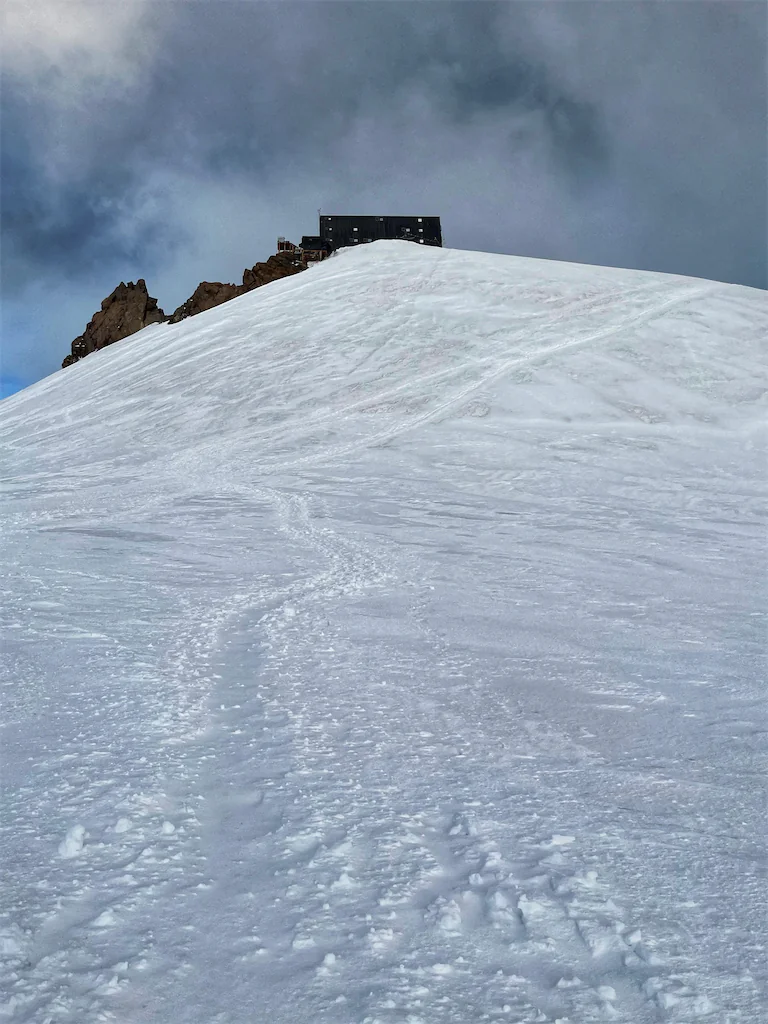
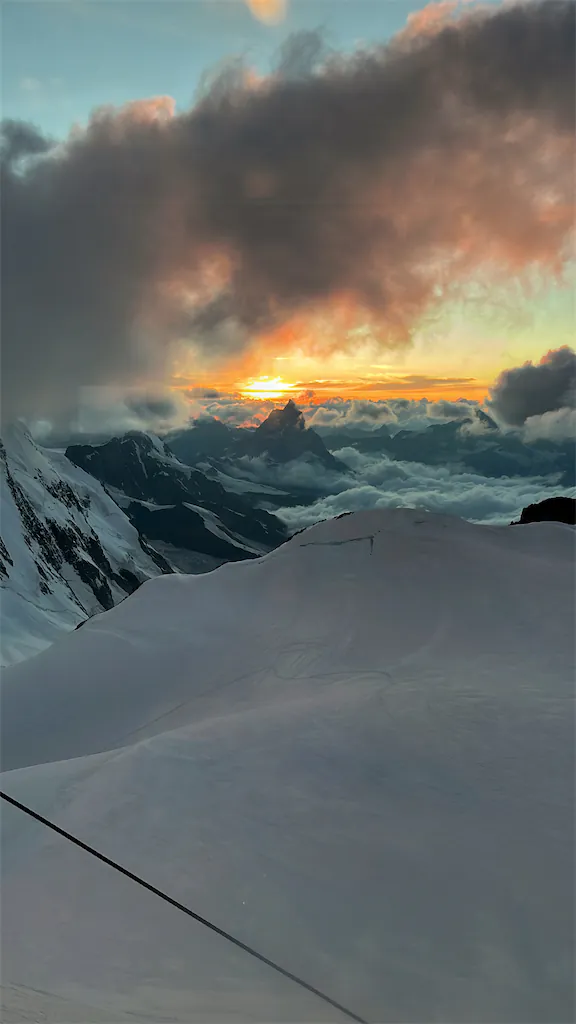
Night at 4554 m
To my surprise, I slept deeply. Most others struggled with the altitude. In the morning, over crackers and jam, I learned from one family that the whole hut was betting the previous night – on whether I’d make it to the top or need rescuing.
They lost.
After a laugh and a few coffees, I stepped outside into a calm, golden morning – and the next decision point.
7. Zumsteinspitze – 4563 m (PD-)
Descending partway from Signalkuppe, Zumsteinspitze felt like a quick, solid warm-up. The route had good rock and fixed ropes, and compared to the previous day, it felt simple – an F+, maybe.
But ahead loomed the bigger question:
Continue to Dufourspitze and Nordend, or call it here?
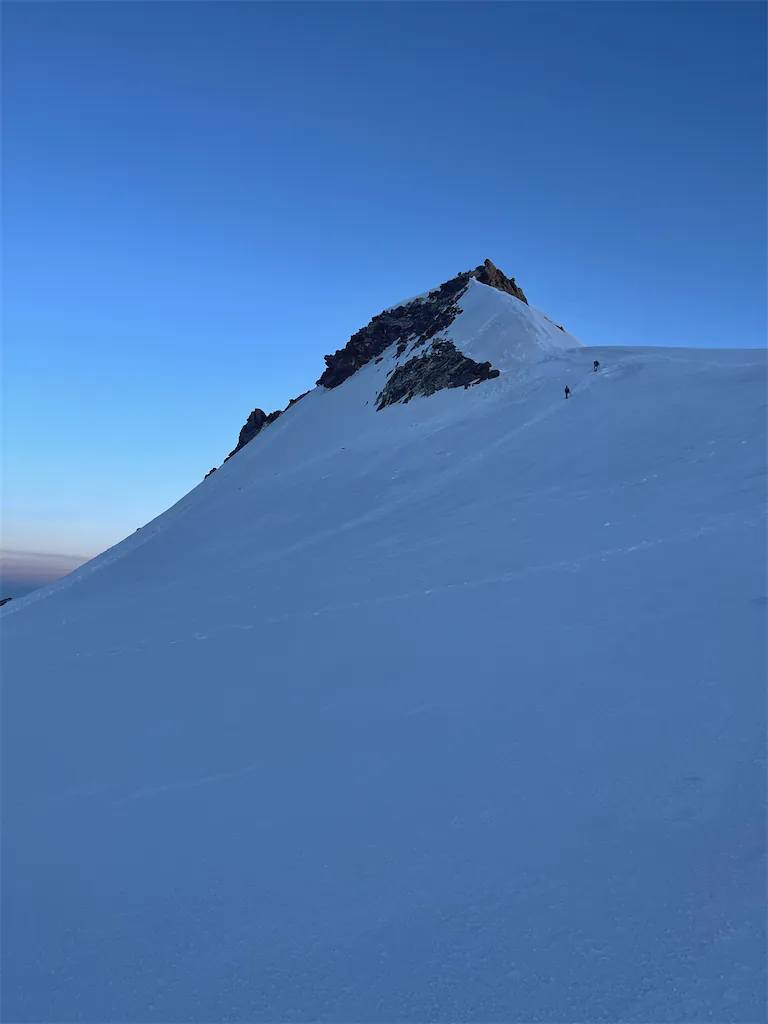
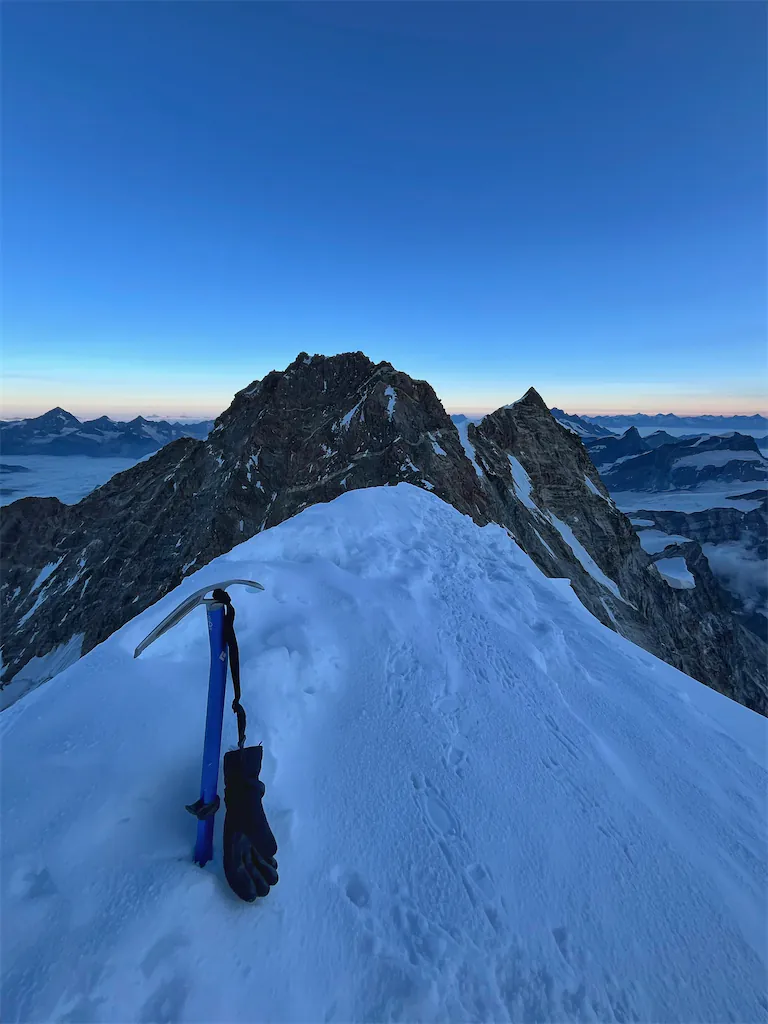
A storm was building fast in the east, and Dufourspitze was a few hour rock climb – something I wasn’t sure of after the previous day. I watched the black clouds rolling in and decided to stop. No regrets. Mountains aren’t going anywhere.
Still, I felt I owed something to Dufourspitze – a debt to be repaid one day.
8. Lyskamm Orientale – 4527 m (AD)
While descending, I met a trail runner from the hut who mentioned heading to Lyskamm before the storm. That sparked an idea.
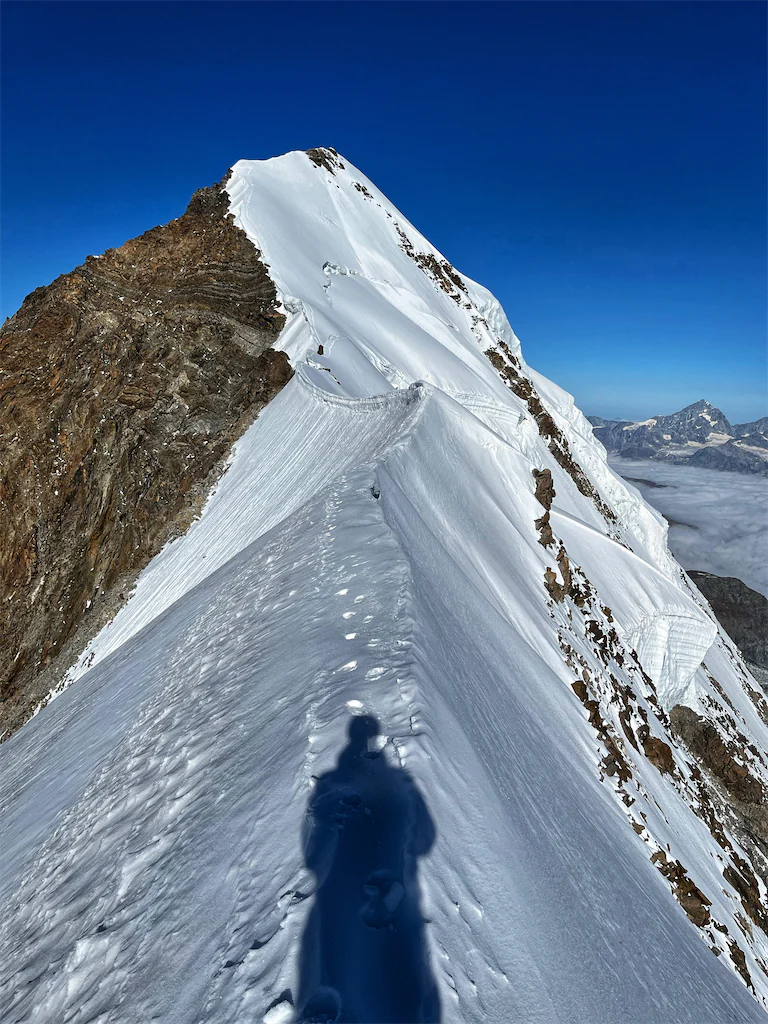
Lyskamm Orientale turned out to be the mountain of the trip – elegant, dangerous, and beautiful beyond words.
At the start, I met yesterday’s Polish trio retreating – the ridge was too thin and exposed. Minutes later, I watched one of them unrope, shaking his head. I pressed on alone.
A narrow, kilometer-long ridge led to its main slope: 300 vertical meters at 45–55°, following the mountain’s knife-edge crest.
Every step demanded focus. Cornices hung over both sides; one mistake, and it was over. Halfway up, the trail runner reappeared, descending at speed. We exchanged quick words and smiles – mountain camaraderie at its purest.
From the summit, the entire Monte Rosa range stretched beneath a bright, fragile calm. I thanked the mountain – literally – for letting me ascend, and began the descent before the storm.
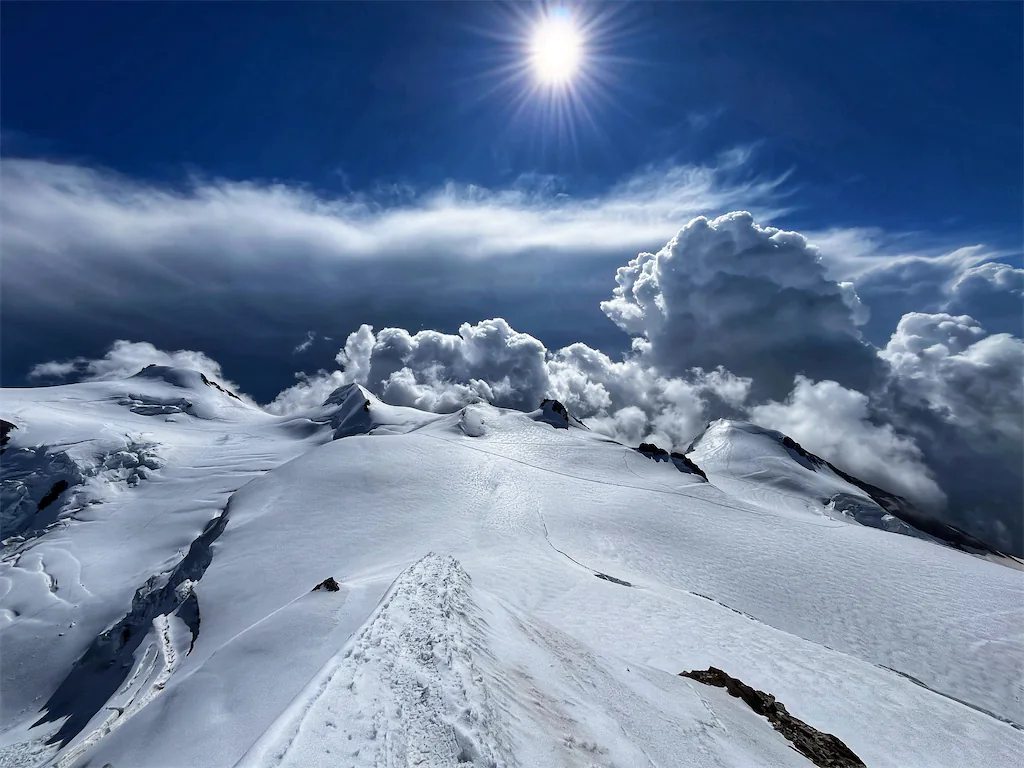
While crossing the ridge backwards after descent, I met the remaining Polish duo – they hadn’t even reached the slope yet. With all my limited Polish I tried asking whether it’s wise for them to continue when the storm might hit soon and their progress being so slow. But they were adamant on continuing.
Two hours after turning towards Lyskamm, I was back on the glacier, safe, and deeply content.
Descent after the Monte Rosa traverse
The weather hit just as I reached the Gnifetti hut – thunder echoing behind me. I hoped the Polish duo from the ridge made it down safely.
At the ski lift station, I shared an hour of serious discussions with an Italian professor before riding back to Staffal. From there – a short drive to the valley, a cold plunge at Cascate del Fer waterfall, clean clothes, and pizza for two straight days.
Recovery, reflection, and quiet gratitude.
Monte Rosa had tested me – and, in doing so, welcomed me into its world.
Next stop: Mont Blanc.
Monte Rosa Traverse – Quick Info
| Detail | Description |
|---|---|
| Duration | 2 days |
| Start/End | Staffal, Gressoney Valley, Aosta (Italy) |
| Transport | 3 gondolas to Punta Indren (3275 m) |
| Total time (Day 1) | ~11 hours (9:00–20:00) |
| Peaks climbed | Punta Giordani, Piramide Vincent, Corno Nero, Ludwigshöhe, Parrotspitze, Punta Gnifetti, Zumsteinspitze, Lyskamm Orientale |
| Max altitude | 4563 m (Zumsteinspitze) |
| Grades | F to AD |
| Best season | July–September |
| Notes | GPS essential in poor visibility; avoid Cresta del Soldato ridge solo without some rock protection gear; early start recommended. |
Final Thoughts
This traverse wasn’t just a collection of summits – it was a test of resilience, adaptability, and humility. As it should be.
If you’re planning your own Monte Rosa traverse, alpine adventure, don’t know where to start or just want to chat about it, feel free to reach out and follow me on Instagram.
Useful Links
Some helpful resources for planning a similar Monte Rosa traverse or another alpine adventure: