Crampons
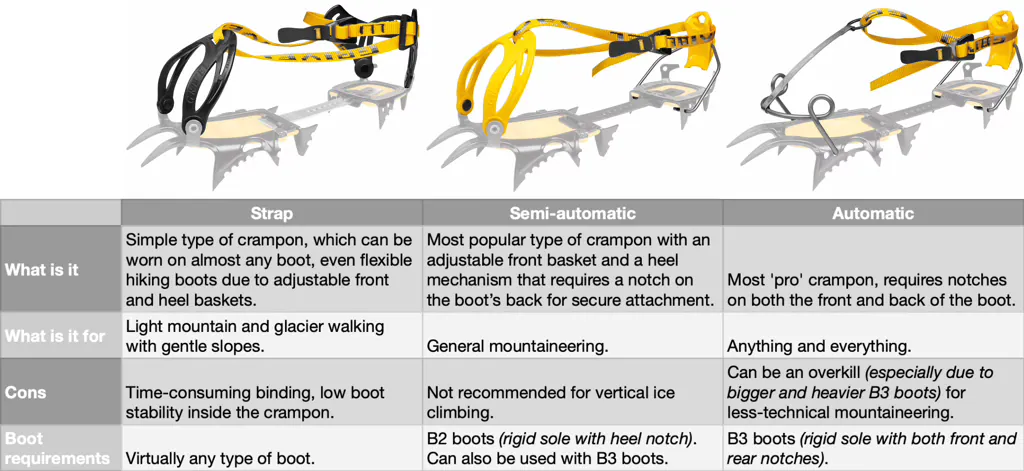
Most people buy crampons twice. Sometimes three times. They start with strap crampons on whatever boots they own, get serious about the mountains, and realize they need B2 boots and semi-automatic crampons. Then vertical terrain or winter conditions appear on the horizon, and suddenly it's B3 boots and automatic crampons with front points. The gear follows the ambition, always one step behind.
The only ways to avoid this are to be honest with yourself about where you're headed before you buy, or to get the most universal crampons available from the start.
The binding system reflects both your boots and your ambition, and they all have to match. Semi-automatic is the most universal option for summer mountaineering. Automatic crampons enter the picture for vertical ice, mixed climbing, and seriously high altitudes.

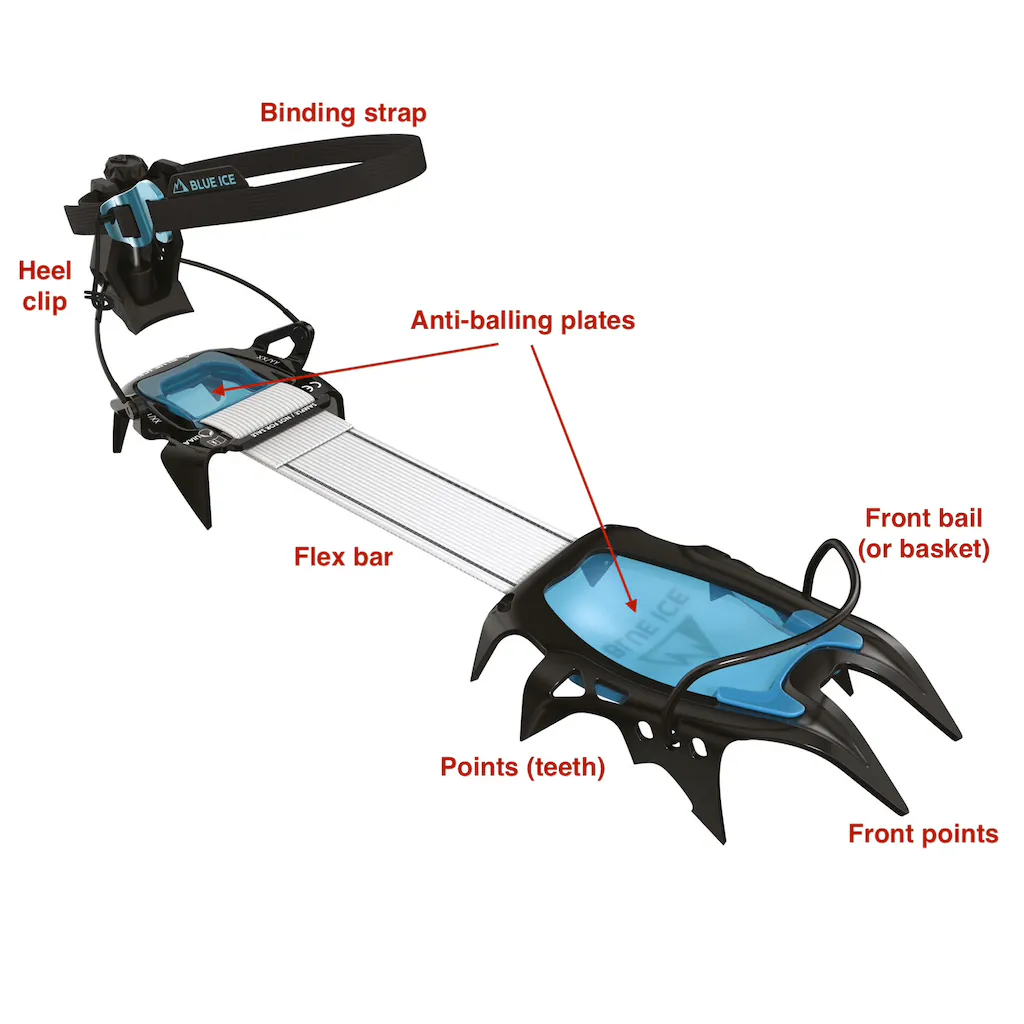
Crampon anatomy
Point count is simpler than it looks. 10 points cover minimal difficulty snow and glacier walking. 12 is the universal standard. What most people should be on. 14 is a specialist tool, and if you need to ask whether you need it, you probably don't yet.
Front points: horizontal for everything except ice and mixed climbing, where vertical gives you real purchase. I run a vertical mono-point as a compromise, it doesn't cost you anything on lower-angle terrain, and gives you maximum performance when things get steep.
Steel, every time. Aluminium is only defensible for snow walking or ski touring, and even then I'd take steel for the durability, strength, and peace of mind.
Rigid vs flex is less technical decision, more religion. I chose flex after weighing the weight savings and testing them across various terrain. No difference in performance. But the most important thing is confidence. If flex doesn't feel solid underfoot, go rigid.
Anti-balling plates are non-negotiable. Snow sticking under your boot and building into a brick of ice renders the crampons useless. Don't buy crampons without them.
Buying secondhand crampons
Secondhand crampons are a legitimate option, and the market is decent if you're patient. The key word is patient. Don't buy out of desperation, wait for the right pair.
Start by narrowing your search before you start looking. Know the binding type, point count, weight range, and ideally a shortlist of specific models. Less supply, but everything you find is actually relevant.
When evaluating a pair, look for the least used examples first. Then check the points for wear. Ask if they've been sharpened. If yes, ask how. Electric grinder means walk away. Hand sharpening is better but still a flag, you'd rather do it yourself and know the condition. Unsharpened and just worn is the cleanest starting point.
No cracks in the frame or flex bar. Scratches are fine. Bindings and straps should show no fraying or excessive wear. Rust is a reason to pass, but surface oxidation is treatable and a fair bargaining chip.
More: Crampon history
If you want to go deeper, Grivel has two genuinely interesting reads on crampon history. One covers the origin of the first crampons, the other the superleggeri crampons that pushed mountaineering above 8000m. Worth the time.