Quickdraws
What is it?
Lead climbing without quickdraws means clipping your rope directly to protection, which creates friction, pulls your gear out of placements, and makes the whole system fight you. Quickdraws solve this. They're simple, but choosing the right type for the terrain makes a real difference.
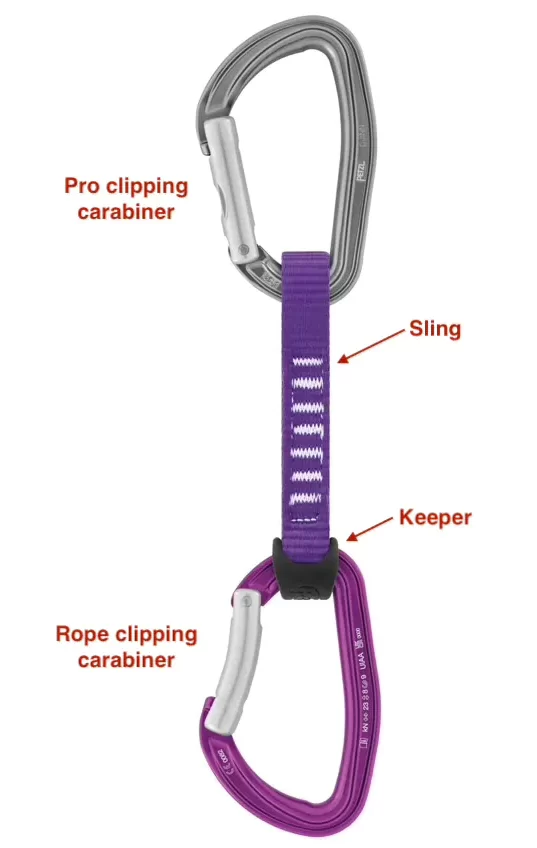
The photo shows the components. Here's what they do in practice.
Bolt-end carabiner - clips to the bolt or protection. Straight gate is standard here, keylock nose preferred so it doesn't snag when cleaning. This end stays fixed.
Sling (dogbone) - connects the two carabiners. Length determines how much extension you get. Nylon is wider and easier to grab when working a route. Dyneema is thinner and lighter, better for trad and alpine where you're building a rack.
Keeper (rubber retainer) - holds the rope-end carabiner in position so it doesn't spin and cross-load. Small detail that matters when you're clipping fast or tired.
Rope-end carabiner - clips the rope. Bent gate makes clipping faster and more intuitive. This is the end that takes rope wear over time.
If buying used, apply the same inspection logic explained in carabiners page, and check the sling for fraying, fading, or stiffness.
Trad quickdraws
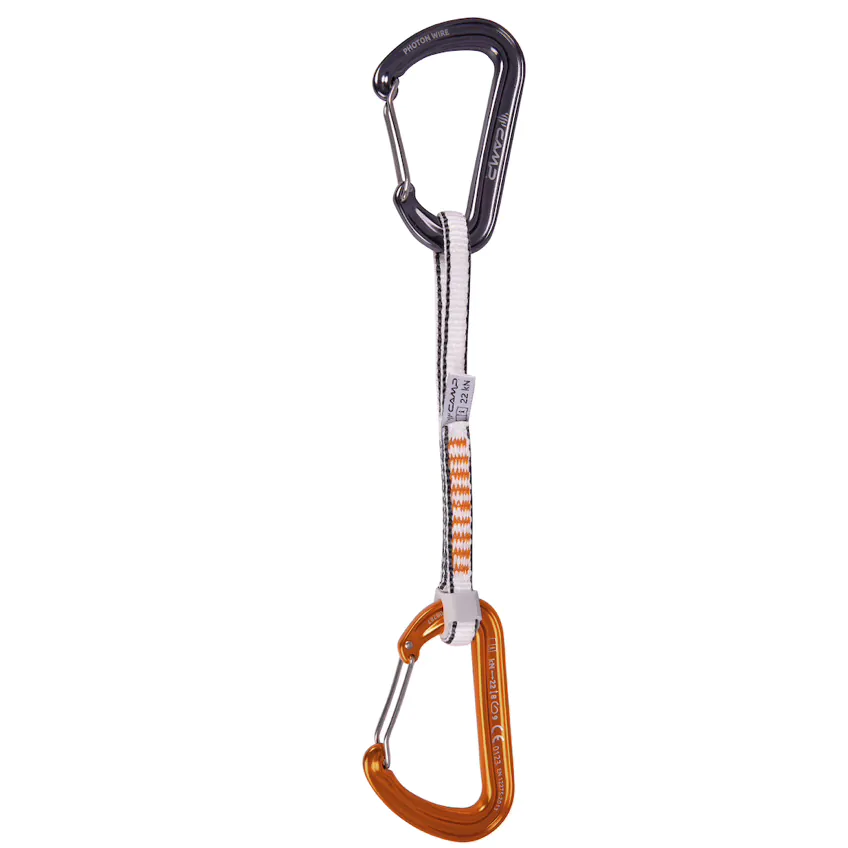
In trad climbing, a smoothly running rope keeps protection from being pulled out of placements and reduces load on the top piece. A variety of lengths is useful, with most draws around 20cm. On longer pitches with wandering terrain, weight adds up fast. Wiregate carabiners and thin Dyneema slings are the right call here.
Sport quickdraws
Sport climbing puts different demands on a quickdraw. You'll be falling on them repeatedly and lowering off them, so durability matters more than weight. Wider nylon slings are easier to grab when you're working a route. A bent gate on the rope end and a wide rope basket radius are worth prioritizing, the latter is kinder to the rope over many falls.

Alpine quickdraws
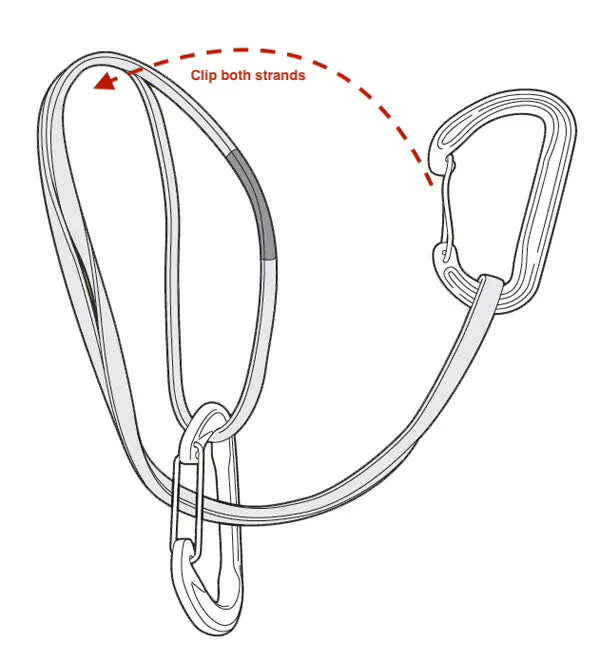
For alpine, ice, and any route that wanders, fixed-length draws quickly become a liability. An alpine quickdraw, built from a 60cm sling and two carabiners, solves this. Racked doubled, it functions as a normal 20cm draw. Extended, it gives you triple the length when the route demands it. These are what I carry for most roped climbing in the mountains.
More: Quickdraw history
The Momentum piece on quickdraw innovations is worth a look if you want to understand how the hardware has evolved and where current designs came from.