Via ferrata equipment
Via ferrata routes are equipped with fixed cables, ladders, and anchors that let you move through serious mountain terrain without a full climbing rack or a rope system. The gear requirement is minimal compared to alpine climbing, but what you do need is specific and non-negotiable. Get it wrong and the fixed infrastructure gives a false sense of security.
What you need
A via ferrata set, a harness, and a helmet are the three required pieces. A carabiner, sling or quickdraw for stopping at rest points rounds out the kit. The harness and helmet pages cover those in detail. This page focuses on the via ferrata set, which is the one piece of gear unique to this discipline.
Via ferrata set
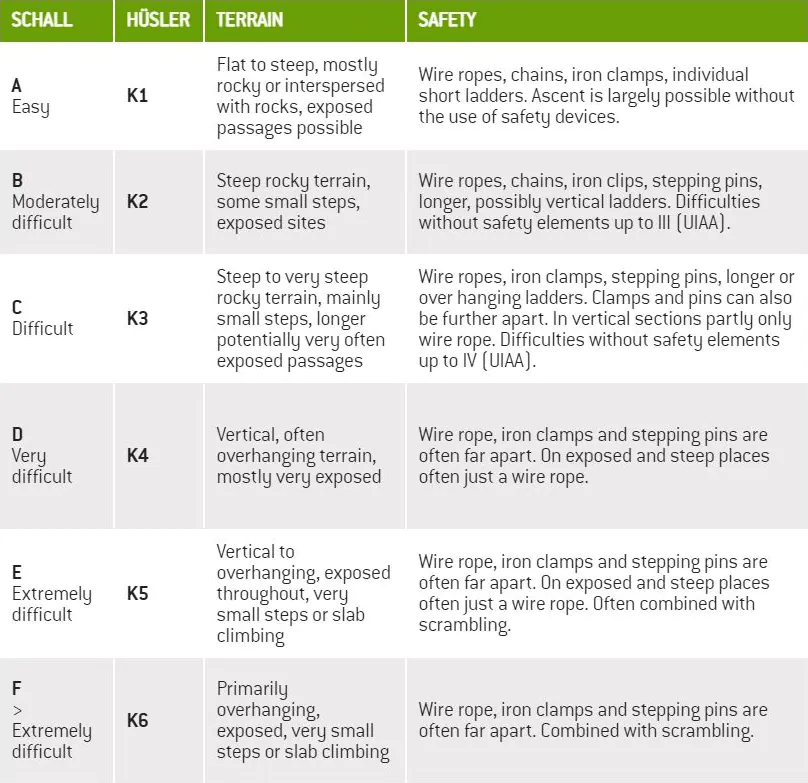
The photo shows the components. Here's what they do.
Carabiners - clip to the fixed cable. Typically two, on a Y-shaped lanyard, so you can move one ahead before unclipping the other. You are never without protection on the cable.
Bungee arms - the elasticated sections between the carabiners and the absorber. They keep the carabiners from hanging loose and getting in the way while you climb.
Energy absorber - the core safety element. Built as a progressive-tear webbing system: in a fall, the sewn layers tear progressively, extending the braking distance and reducing peak force on your body and the anchor. This is what makes a via ferrata set different from just clipping a sling to the cable.
Tie-in loop - connects the whole system to your harness belay loop.
The most dangerous moment on any via ferrata is at the cable anchor, where you transfer from one section of cable to the next. This is the point of maximum potential fall height. European standard EN 16869 limits that fall height to five metres, and EN 958 is the test standard your via ferrata set must pass.
Choosing a Via ferrata set
The energy absorber and carabiner quality are what matter most. Everything else is weight and ergonomics.
Check that the set is EN 958 certified and rated for your weight. Most sets cover 40-120kg, but verify. Heavier climbers generate more force in a fall and need to be within the tested range.
After that, weight is the main variable. Lighter sets use thinner HMPE arms instead of standard nylon webbing, and smaller carabiners. The tradeoff is slightly less durability, which matters less if you're doing a few routes a season than if you're guiding multiple times a week.
I use the Petzl Scorpio Vertigo, which is only 60g heavier than the lightest set on the market (Edelrid Cable Kit Ultralite VII - 300g), but has a very comfortable grip, slightly longer reach, and is one of the most popular sets around for good reason. I'd recommend it without hesitation.
A personal note
Via ferrata gets underestimated as a stepping stone. In my experience, doing ferratas before moving into alpine climbing is one of the better ways to build real mountain intuition: reading terrain, moving confidently on steep rock, understanding exposure. The gear is approachable, the risk is managed, and the mountain is real. More people should do more ferratas.