Sleeping pads
Your sleeping bag rating means nothing if you're losing heat through the ground. A sleeping pad isn't a comfort accessory - it's half your insulation system. Get it wrong and no amount of down above you will fix it.
This page covers air pads and closed-cell foam pads. Self-inflating pads sit closer to the car camping category and aren't covered here.
The sleep system
A sleeping bag and a sleeping pad work together. You can layer sleeping bags to push the effective warmth rating down significantly - but that only holds if the pad underneath matches the conditions. A -20°C sleeping bag on a R2 pad will leave you cold. The pad is the foundation.
Choose your pad R-value to match the coldest conditions you expect, then build the bag system on top of it.

How it works
Heat flows from warm to cold. When you lie on the ground, your body loses heat downward faster than in any other direction - the ground is a much more efficient heat sink than cold air. A sleeping pad creates a layer of thermal resistance between you and the ground.
That resistance is measured as R-value. The higher the R-value, the less heat escapes downward. R-value is additive - two pads stacked together combine their ratings. R-value ranges and their use cases:
- R 1-2: summer camping only
- R 2-4: 3-season backpacking
- R 4.5-5.5: winter and alpine use
- R 5.5+: expeditions, snow camping, high-altitude climbs
R-value is now standardised under ASTM F3340, which means ratings are comparable across brands. Before this standard existed, manufacturers tested pads differently and the numbers weren't reliable for comparison.
Air Pads
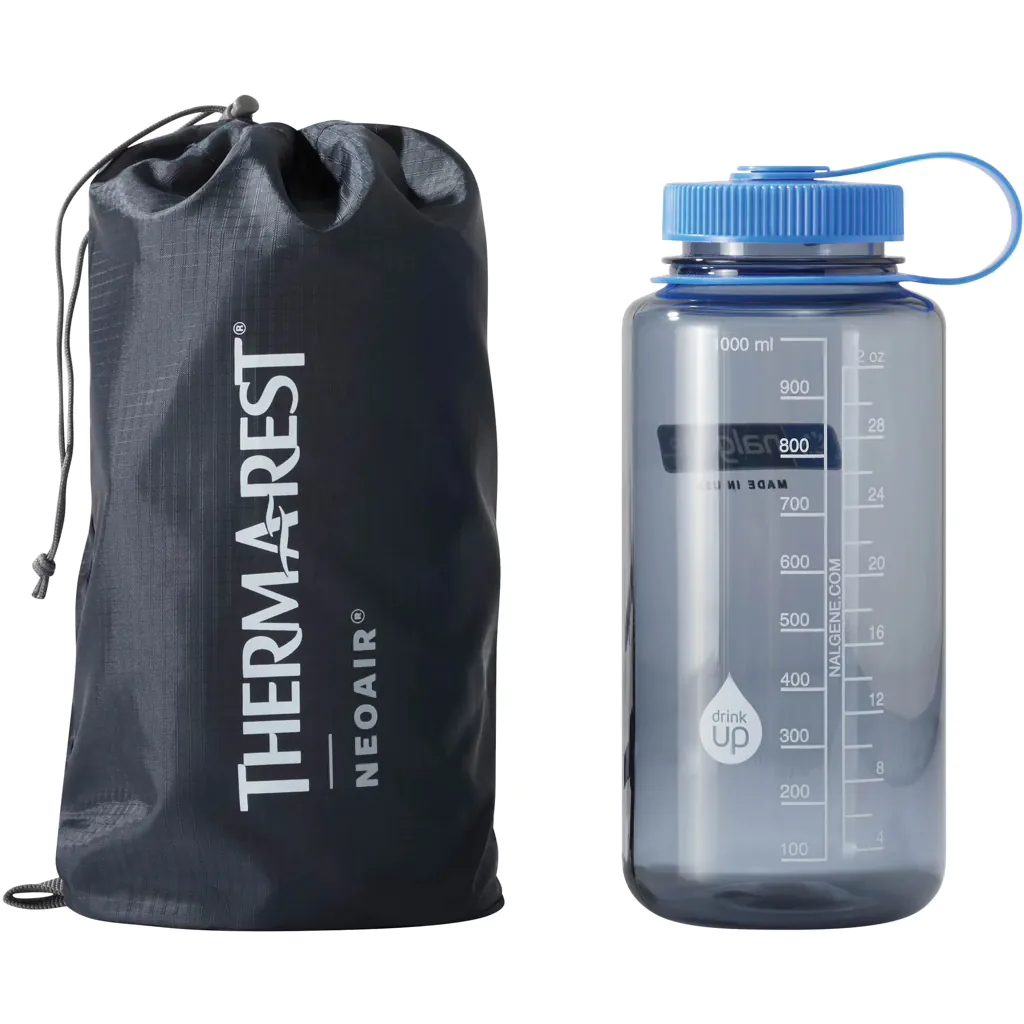
Air sleeping pads are the right choice for most backpacking and alpine use. High-performance air pads weigh almost the same as closed-cell foam pads but provide three to four times the insulation. The warmth-to-weight ratio is unmatched. I use the Therm-a-Rest NeoAir XTherm NXT. At R 7.3 it covers genuine winter and alpine conditions, while weighing under 450 g.
The main risk with air pads is puncture. It's a real consideration, not an imaginary one - but it's manageable. Carry a patch kit on every trip, two on serious objectives. In practice, punctures are rare. I've used air pads on all terrain types, including with large dogs in the tent, and never had one fail. Treat the pad with reasonable care, keep sharp objects away from it, and the risk stays low.
Modern air pads use reflective layers and baffled construction to trap heat. Some use a reflective barrier that bounces radiant heat back toward the body. That's why a thin air pad can outperform a much thicker foam pad on insulation.
Closed-Cell Foam Pads
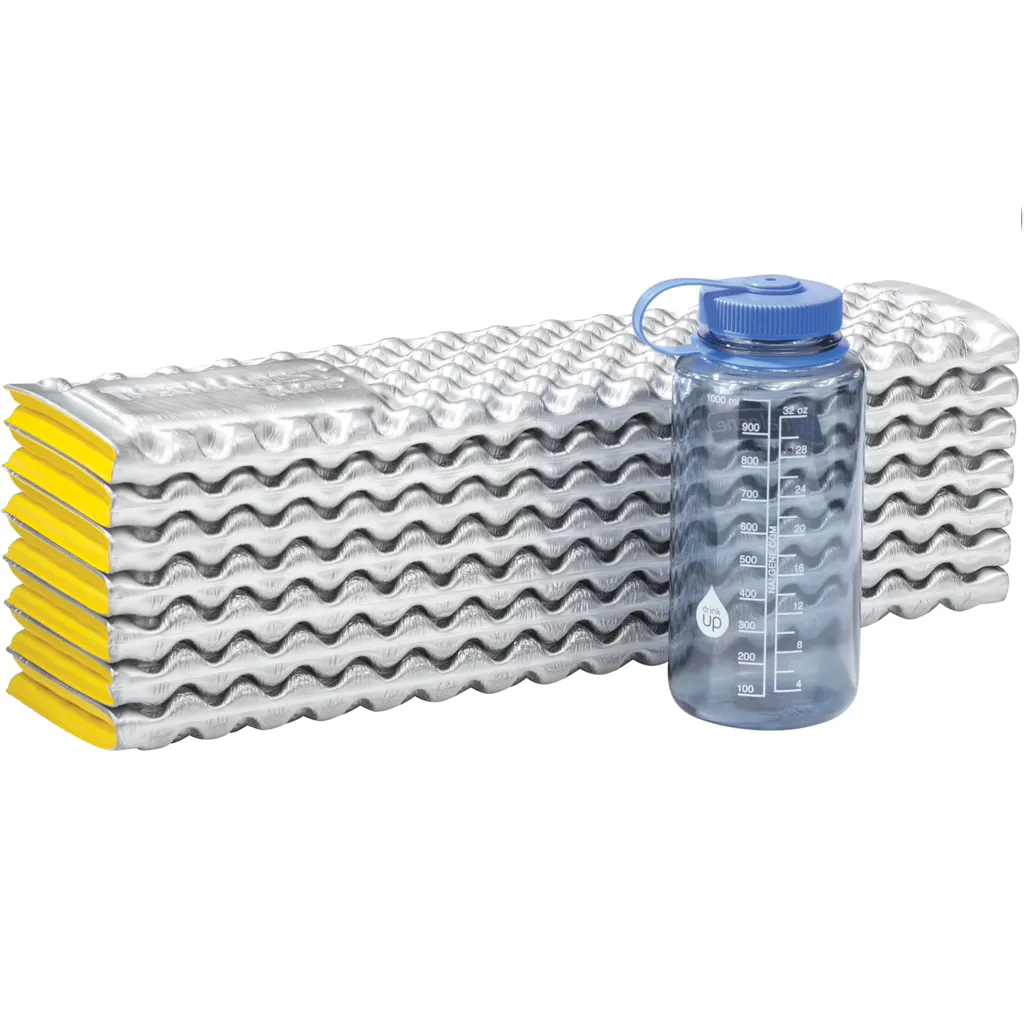
Foam pads have one advantage that air pads don't: they cannot fail. No puncture risk, no inflation required, nothing to break. That reliability has real value in specific situations.
In warmer conditions and on rocky or rough ground where puncture risk is higher, a foam pad is a legitimate choice. They're also useful as a secondary layer under an air pad when temperatures drop unexpectedly - R-values stack, and a foam pad adds 1.5-2.0 to whatever your air pad provides.
The tradeoff is bulk. Foam pads don't compress. They strap to the outside of a pack or fold into an awkward panel. For vertical or technical terrain that's a real inconvenience.
R-value for foam pads tops out around 2.0. That limits them to three-season use as a standalone pad. For winter or alpine conditions they need to be paired with an air pad or replaced by one entirely.
Shape and dimensions
Mummy and tapered pads match the shape of a sleeping bag and save weight. Rectangular pads give more room but weigh more and take up more space.
Width matters more than people account for. A narrow pad works if you sleep still. If you move around, you'll spend the night rolling off the edge onto the cold ground. Check the width before buying, not just the weight.
Length is a personal call. Full-length covers everything. Three-quarter length saves weight but leaves your feet on the ground or on your pack. In cold conditions, full-length is worth it.
How to choose
| Type | Weight (g) | R-Value | Packed Size | Durability | Best For |
|---|---|---|---|---|---|
| Air Pads | 225–800 g | 1.0–7.3+ | Very compact | Lower (repairable) | Thru-hikes, alpine climbs, ultralight backpacking |
| Closed-Cell Foam | 280–450 g | 1.5–2.0 | Bulky, folds or rolls | Excellent (bombproof) | Ultralight hikes, mountaineering, cold backup |
More: compare sleeping pads
Cody from Algonquin & Beyond has built and actively maintains a comprehensive database covering virtually all sleeping pads on the market, filterable by R-value, weight, price, and more. If you want to compare specific models and make a sound decision when choosing a pad, it's the best resource out there.