Backpacks
The backpack is probably the most exchangeable item in your kit. Boots are personal to your feet. A sleeping system is personal to your metabolism. A backpack is personal to your body geometry, your packing style, and the mission - and all three change over time.
This page covers backpacks for hiking, backpacking, and alpine use.
How to think about it
The pack has to fit what goes in it. As your gear evolves toward lighter and more compact, the pack follows. A 70-litre expedition pack on a two-day alpine climb is dead weight and poor organisation. A 25-litre alpine pack on a week-long trek is an exercise in misery. Start with the objective, work backwards to the volume, then find the pack that fits your body and carries that volume well.
Fit and sizing are the factors you actually control. The suspension system, hip belt geometry, and back length either work for your body or they don't - and no amount of adjustment fixes a fundamentally wrong fit. Everything else in a backpack is a feature. Fit is a prerequisite.
The problem is that a pack loaded with your actual gear in the mountains feels completely different from the same pack tried on in a shop with a sandbag. Shop fitting is useful as a starting point. It's not a guarantee. This is why backpack reviews should be read as personal accounts - what works for the reviewer's body and packing style won't necessarily work for yours.
My approach: buy used or at a good deal, use the pack on real objectives, and resell if something leaves me wanting. Less money lost while finding what actually works. The secondhand market for backpacks is healthy enough to make this a viable strategy.
Volume and use case
Daypacks (10-30 L) Short hikes, day missions, urban use. Frameless or minimal frame. Light, simple, no load-carrying architecture needed.
Hiking packs (30-50 L) Full-day hikes and light overnight trips. Internal frame, hip belt, proper suspension. The most versatile category for general use.
Ultralight thru-hike packs (40-60 L) Built for long-distance hiking with ultralight gear. Minimal or frameless construction. Only works if your base weight is already low - a frameless pack with a heavy load is uncomfortable and potentially damaging.
Backpacking packs (50-80 L) Multi-day trips with full gear. Internal frame, advanced suspension, reinforced panels. The right tool for extended wilderness travel with a full sleep system and food for multiple days.
Expedition packs (80+ L) Extended expeditions and heavy mountaineering loads. Rigid internal frame, maximum load capacity. Overkill for anything under a week in serious terrain.
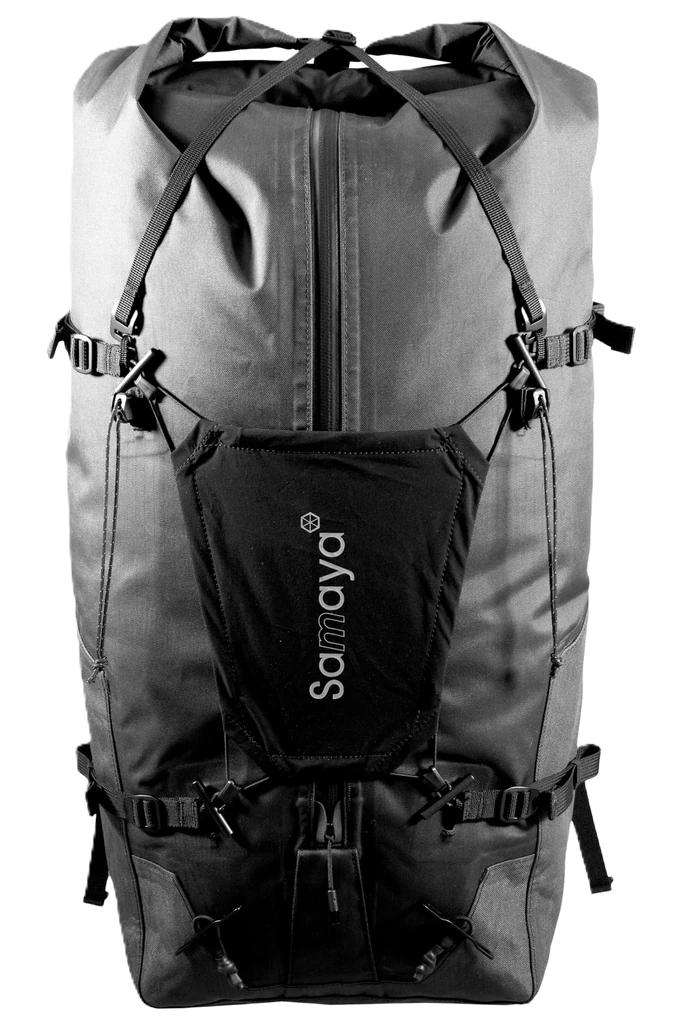
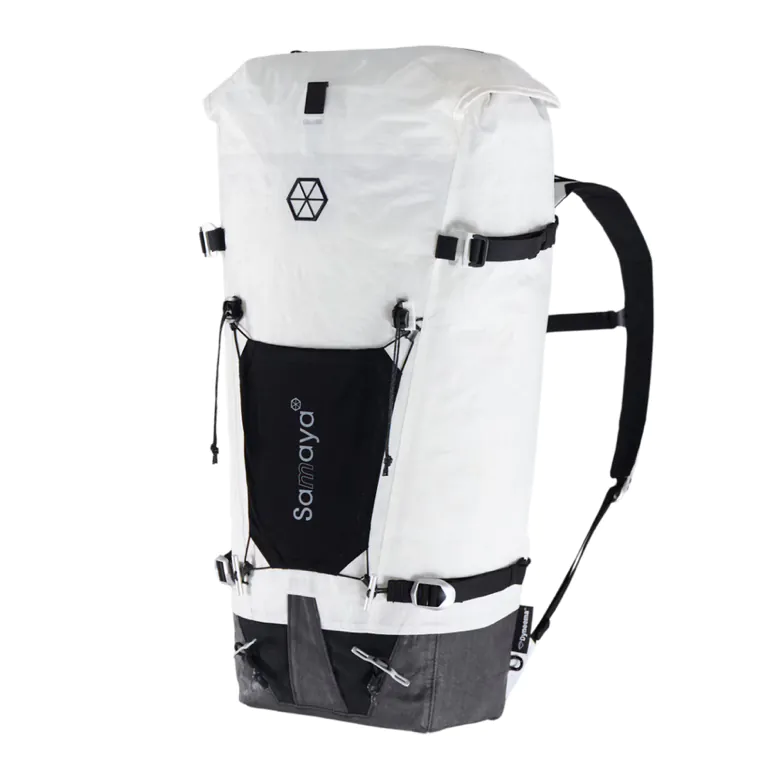
Alpine and climbing packs (20-50 L) Built for technical terrain. Streamlined profile, minimal external attachment points that could catch on rock, abrasion-resistant fabric. Ice axe attachments, rope carry systems, and helmet holders are standard. I use the Samaya Alpine35 for alpine missions - stripped, yet supported back, weatherproofed, light, and designed specifically for moving fast in the mountains.
Ski mountaineering and versatile packs (20-40 L) The category that gets underestimated. A well-designed ski mountaineering pack often works better for general hiking than a dedicated hiking pack - the structure, comfort, and modularity transfer across uses. My Blue Ice Yagi 25 covers everything that isn't a dedicated alpine climb: hiking, ski touring, day missions. Comfortable, modular, and light enough to not notice on shorter objectives.
Fit and sizing
Torso length determines which pack size fits. Most brands size packs by torso measurement, not height. Measure from the C7 vertebra at the base of your neck to the top of your hip bones. Buy for that number.
A pack that sits too high transfers load to your shoulders. A pack that sits too low misses the hip belt entirely and the suspension does nothing. Neither is something you can adjust your way out of.
Hip belt fit matters as much as torso length. The belt should wrap around the top of the hip bones, not the waist. When fitted correctly, 70-80% of the pack weight sits on your hips, not your shoulders. If your hips hurt before your shoulders on a long day, the belt is too low or too narrow for your build.
Try packs loaded. A shop fitting gives you geometry. Your actual gear in the actual pack on actual terrain tells you whether it works.
Key features
Organisation and access points matter more on longer trips. A top lid, front panel access, and internal organisation make a real difference when you're digging for gear in the dark or at a belay station.
Hydration compatibility is worth thinking through before buying. A reservoir sleeve and tube port works well for continuous movement. A side bottle pocket works better if you stop frequently and prefer to see how much water you have. Both are valid - decide which matches how you actually drink on the move.
Attachment points for ice axes, trekking poles, and rope are largely standardised across technical packs. Check crampon compatibility if you're buying an alpine pack - external crampon carry requires specific attachment points and a reinforced front panel.
Rain covers are not included with all packs. If yours doesn't have one, budget for it. Most backpacks are water-resistant, not waterproof. In sustained rain, everything inside can get wet without a cover, an internal waterproof liner, or dry bags.
Back panel ventilation reduces sweat on warm days. The tradeoff is that ventilated panels push the pack away from your back, which slightly reduces stability under heavy loads. For hiking in warm conditions it's worth it. For technical terrain or heavy loads, a closer contact panel is more stable.
Backpack comparison table
| Type | Best For | Capacity (L) / Load (kg) | Weight (kg) | Price (€) | Frame Type | Hydration | Ventilation | Durability |
|---|---|---|---|---|---|---|---|---|
| Daypacks | Short hikes, urban exploring, light travel | 10-30 / up to 6 | 0.3-1.2 | 30-100 | Frameless or Light Frame | Often | Basic to Moderate | Medium |
| Hiking Backpacks | Full-day hikes, light overnight trips | 30-50 / 7-12 | 0.8-1.8 | 70-200 | Internal Frame | Yes | Good | Good |
| Ultralight Thru-Hike Packs | Long-distance ultralight backpacking | 40-60 / 8-13 | 0.5-1.2 | 100-300+ | Minimal Frame or Frameless | Yes | Minimal to Moderate | Medium to High |
| Backpacking Packs | Multi-day hikes, long-distance backpacking | 50-80 / 12-20 | 1.5-3.0 | 120-350 | Internal Frame | Yes | Advanced | High (reinforced panels) |
| Expedition Packs | Extended treks, mountaineering | 80+ / 20-30+ | 2.5-4.5 | 200-500+ | Rigid Internal Frame | Often | Moderate to Advanced | Very High |
| Hydration Packs | Running, cycling, fast hiking | 2-10 / up to 4 | 0.2-0.8 | 40-120 | Frameless | Built-in reservoir | Light mesh back | Medium |
| Climbing Packs | Alpine climbs, technical ascents | 20-50 / 6-15 | 0.7-1.5 | 80-300+ | Removable / Internal Frame | Sometimes | Minimal | High (abrasion-resistant) |