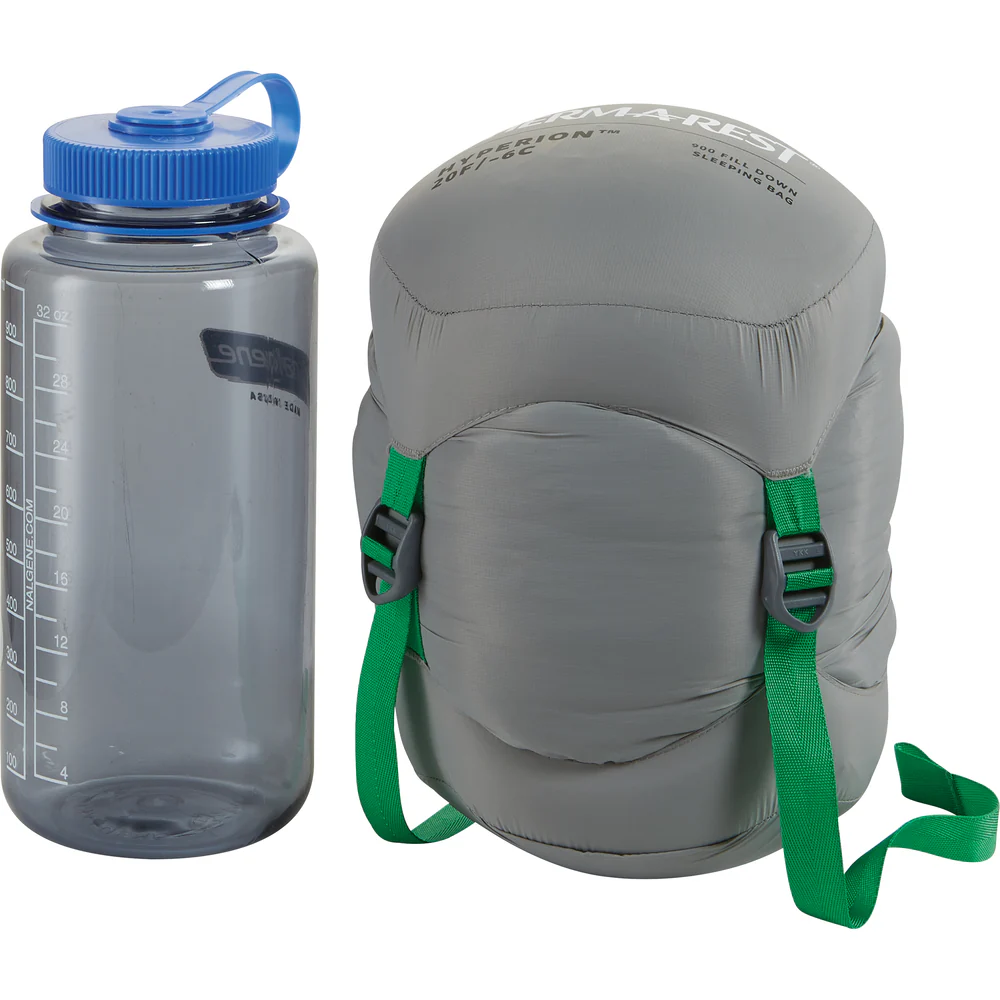
Sleeping bags
The sleeping bag is the one piece of gear you should not skimp on. A bad night's sleep at altitude or in cold weather doesn't just make you miserable - it affects your judgment, your recovery, and your safety the next day.
This page covers down sleeping bags only. Synthetic bags are cheaper and perform better when wet, but down beats them on every other metric that matters for backpacking and alpine use: warmth-to-weight ratio, packability, and longevity. If weight and pack size matter to you, down is the answer.
| Use | Recommended Features |
|---|---|
| Thru-Hiking / Ultralight Backpacking | 850–950 fill down, 600–900 g weight, comfort rating around 0°C to +5°C |
| 3-Season Mountain Backpacking | 700–850 fill down, 1–1.3 kg weight, comfort rating -6°C to -1°C |
| Winter Mountaineering | 850+ fill down, 1.5–2.2 kg weight, comfort rating -20°C to -30°C, waterproof shell |
| High-Altitude Expeditions | Expedition-grade baffled construction, 900+ fill power, sub -30°C rating, full draft protection |
How it works
A sleeping bag traps your body heat in the air pockets created by the insulation loft. The more loft, the more dead air, the warmer the bag. Down creates more loft per gram than any other insulation, which is why the warmth-to-weight ratio is unmatched.
Fill power measures how much loft one ounce of down produces, expressed in cubic inches. Higher fill power means lighter and more compressible for the same warmth. The range runs from 550 to 950+.
- 550-650 fill: budget and casual backpacking
- 700-800 fill: serious 3-season and light alpine use
- 850-950+ fill: ultralight and expedition use
Modern down is often treated to resist moisture - hydrophobic down dries faster and retains loft better in damp conditions. Worth prioritising for alpine and shoulder season use.
Temperature Ratings
Sleeping bags use standardised EN/ISO ratings:
- Comfort: the lowest temperature at which an average cold sleeper is comfortable.
- Limit: the lowest temperature at which an average warm sleeper is still comfortable.
- Extreme: survival only. Not a usable reference for planning.
Always buy a bag rated 5-10°C colder than the lowest temperature you expect. Ratings are tested under controlled conditions. You won't always have them.
Your metabolic rate matters too. Cold sleepers need a warmer bag than the rating suggests. Warm sleepers can get away with less - which matters when choosing a system.
Don't buy an expedition bag you don't need
The instinct to buy the warmest bag possible is expensive and counterproductive. A -30°C expedition bag weighs 1.5 kg or more, costs serious money, and spends most of its life stuffed in a closet unless you're genuinely doing high-altitude expeditions or polar objectives.
For most alpine use, layering is a smarter system.
Layering sleeping bags
Two sleeping bags combined produce warmth well beyond what either achieves alone. A -6°C bag layered inside a 0°C quilt pushes the effective comfort rating to around -20°C. The weight penalty for the quilt is a few hundred grams. A comparably warm single bag would weigh at least 1.5 kg and cost three times more. A good sleeping pad completes the system - insulation from below matters as much as above.
There's also a practical argument: more people already own a couple of 3-season bags and/or quilts than an expedition bag.
Layering works best when the inner bag is a close mummy fit. A roomy bag as the inner creates dead air that doesn't help warmth. The outer layer can be a quilt, a blanket-style bag, or a second mummy - all work.
The table below shows approximate combined comfort ratings:
| Rating | 10°C | 4°C | -1°C | -6°C | -12°C | -18°C |
|---|---|---|---|---|---|---|
| 10°C | -1°C | -6°C | -12°C | -18°C | -23°C | -29°C |
| 4°C | -6°C | -12°C | -18°C | -23°C | -29°C | -34°C |
| -1°C | -12°C | -18°C | -23°C | -29°C | -34°C | -40°C |
| -6°C | -18°C | -23°C | -29°C | -34°C | -40°C | |
| -12°C | -23°C | -29°C | -34°C | -40°C | ||
| -18°C | -29°C | -34°C | -40°C |
Shape and Fit
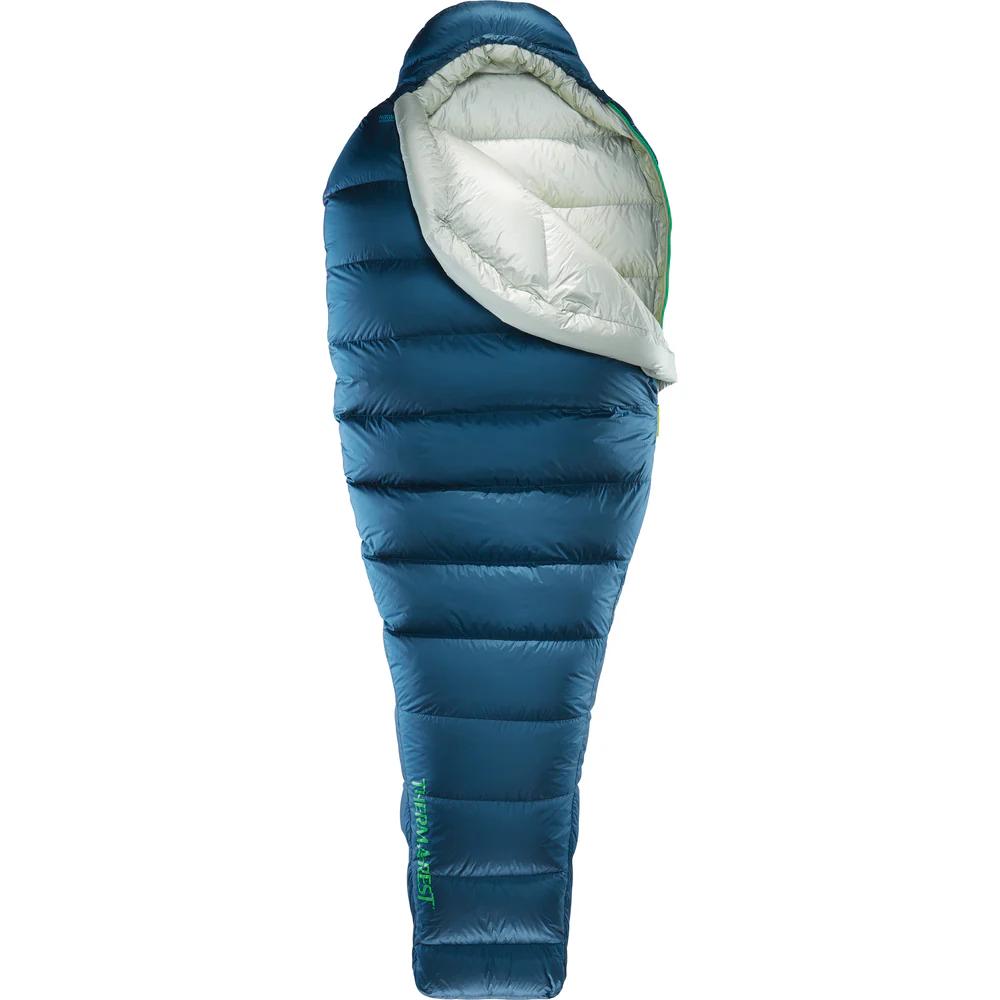
Mummy shape is the standard for backpacking and alpine use. It minimises dead air space around the body, which is where heat escapes. The tradeoff is movement - a snug mummy limits how much you can shift around.
Expedition mummy shapes are cut even closer, with draft collars, insulated hoods, and shaped footboxes. For serious cold, these details matter.
Women's-specific bags are cut narrower at the shoulders and have extra insulation at the hips and feet. If the fit is better, the warmth is better.
A bag that's too large is colder than a bag that fits. Your body has to heat the extra air inside.
Shell and construction
The outer fabric protects the down and affects durability and weather resistance. Lighter shells (10-20D ripstop nylon) save weight but require more care. Pertex Quantum and Pertex Shield are the benchmark fabrics at the performance end.
DWR coating adds water resistance without blocking breathability. Hydrophobic down treatment adds another layer of wet-weather protection.
Baffles keep down from shifting and creating cold spots. Box baffles are more thermally efficient than sewn-through construction because they don't compress the insulation at the seam.
Draft tubes along zippers and draft collars around the neck seal in warmth. On a -20°C night, those details matter.
Weight and packability
- Ultralight quilts and minimalist bags: under 800 g
- Standard backpacking bags: 800 g to 1.3 kg
- Winter and expedition bags: 1.3 kg and up
Compressed volume matters for pack organisation. A good 3-season down bag compresses under 10 litres. Expedition bags under 18 litres. Use a compression sack and keep the bag away from moisture in transit.
One note: don't store a down bag compressed long-term. The loft degrades. Store it loose or hanging.
Care
Wash down bags rarely and with a specialist down cleaner. Air-dry thoroughly after every trip - moisture kills loft over time. Store loose, never compressed. Treated well, a quality down bag lasts a decade or more.