AVALANCHE SAFETY GEAR
Avalanche terrain is part of alpine and winter mountaineering. The avalanche safety gear covered on this page does not prevent avalanches. It gives you and your group the best chance of surviving one, and more importantly, of saving someone else. All three core pieces - beacon, probe, and shovel - only work as a system. The airbag pack is an additional layer of safety, not a replacement for any of them. Owning one without the others is not a safety setup. Neither is owning all of them without practicing with them regularly.
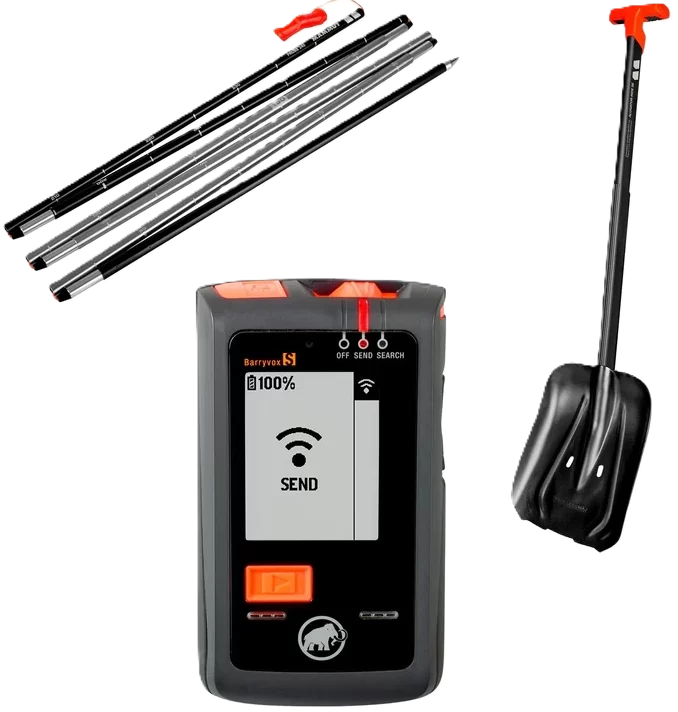
Avalanche beacon (transceiver)
A beacon is a device worn on the body that continuously transmits a radio signal. In a burial, it switches to search mode to locate other beacons. Modern three-antenna digital beacons can locate a buried signal within seconds and guide the searcher to within centimeters of the burial point.
Every person in the group must wear one, switched to transmit, before entering avalanche terrain. A beacon in a backpack is useless.
Key specs to understand: antenna count (three-antenna is the current standard, do not buy two-antenna), range (the distance at which the beacon can detect another signal, typically 40-50m), and multiple burial capability (the ability to mark and separate signals when more than one person is buried). Most modern beacons handle multiple burials, but practice is what makes the difference, not the spec sheet.
Beacons should be replaced every 7-10 years as components degrade. Buy new if you can. If buying used, verify the model is current enough to be compatible with modern search algorithms, check battery contacts for corrosion, and confirm the firmware is up to date. An outdated beacon can create confusion in a group search situation.
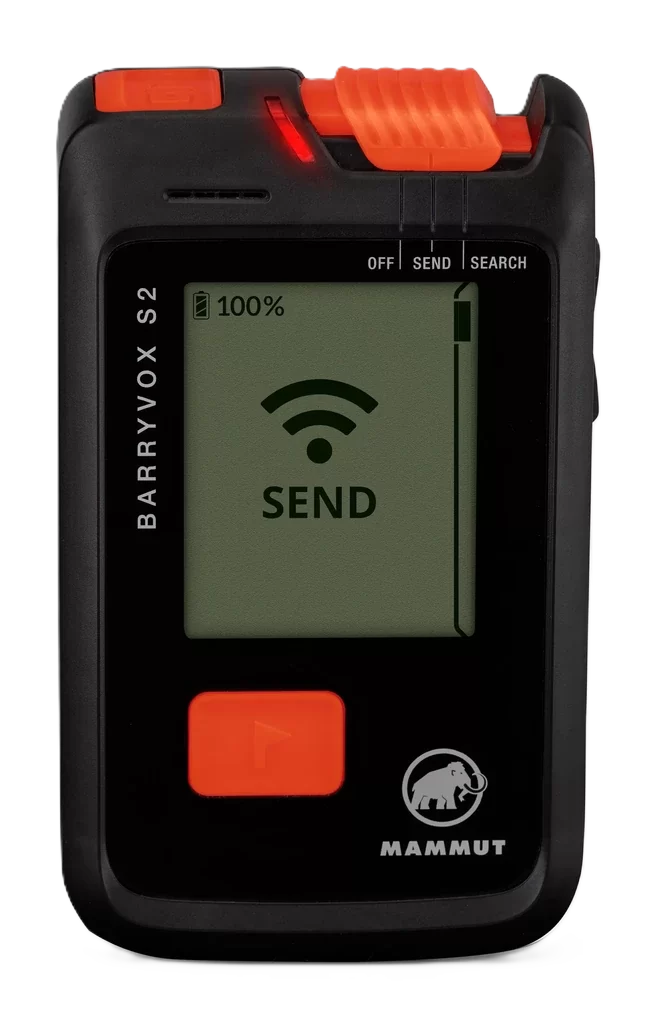
Probe
A probe is a collapsible pole used to pinpoint the exact location of a buried person once the beacon search has narrowed the area. Probes confirm depth and location before digging begins, which saves time and prevents injuring the buried person with the shovel.
Length matters: 240cm is the practical minimum, 260-300cm is better for deeper burials. Carbon probes are lighter and stiffer, which makes them faster to assemble and easier to push through dense snow. Aluminium probes are heavier but more durable and significantly cheaper.
Probes are straightforward used buys. Check that the locking mechanism works cleanly and the sections are straight. A bent or sticky probe costs time in a real search.
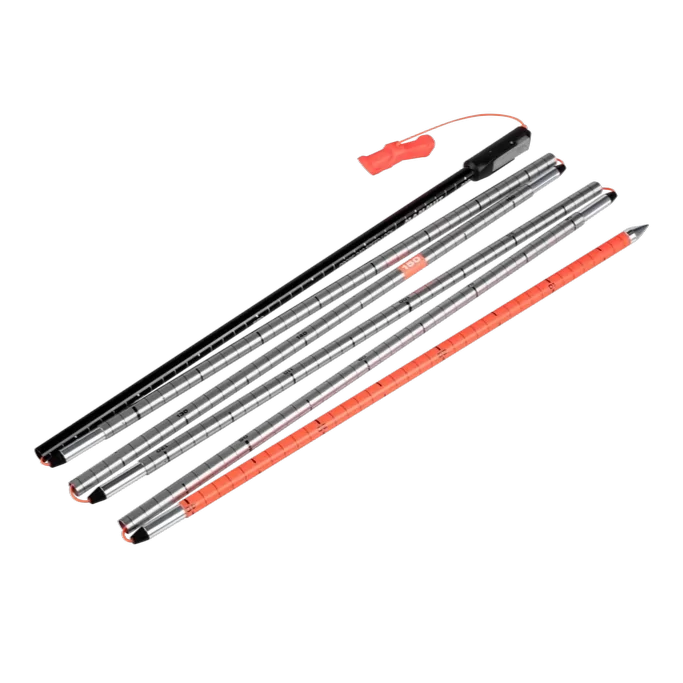
Shovel
The shovel does the heaviest work in a rescue. Once the probe confirms location, digging is what gets the buried person out, and in most avalanche burials the snow sets like concrete. Speed matters: survival rates drop sharply after 15 minutes of burial.
Metal blades are worth the weight penalty over plastic. They cut through dense avalanche debris where plastic blades flex and fail. Extendable handles allow proper digging posture, which matters on a long dig. A shovel that is too short or too flexible is a liability.
Shovels are good used buys. Check the blade for cracks or significant bending, and confirm the handle locks securely at full extension.
Avalanche airbag pack
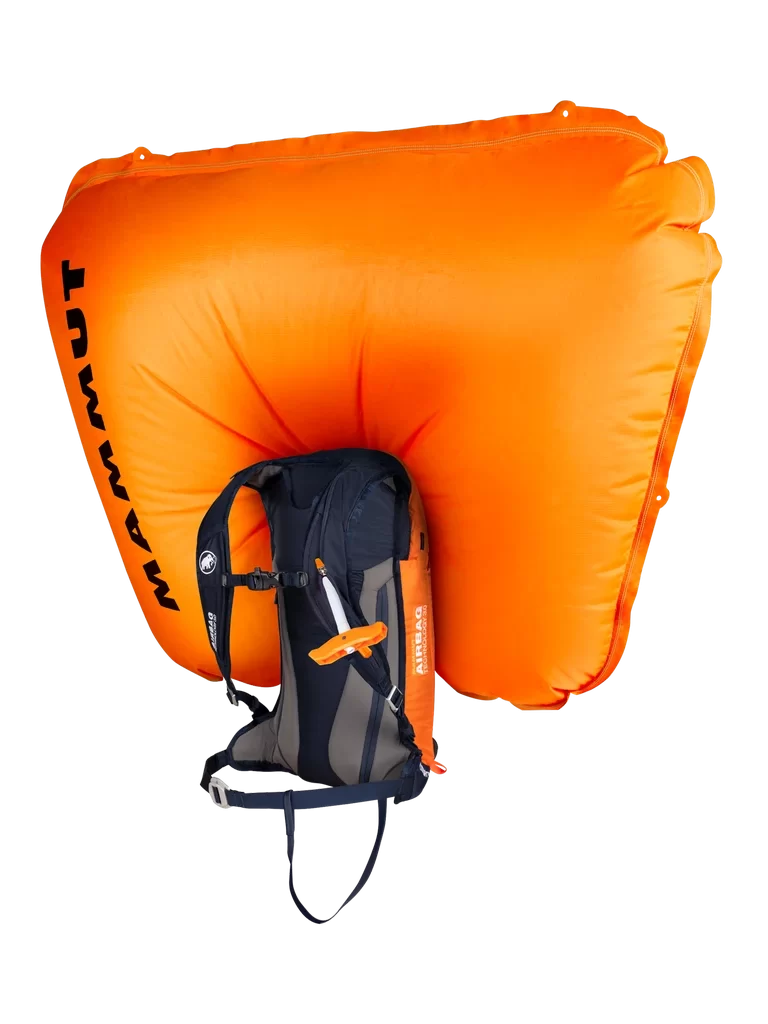
An avalanche airbag is a backpack with an integrated inflatable airbag system. When triggered, the airbag inflates rapidly, increasing the wearer's volume and helping them stay near the surface of the avalanche through a process called granular convection. It does not guarantee survival and is not a substitute for the beacon, probe, and shovel system. It is an additional margin, not a replacement for any of it.
Two trigger systems exist: compressed air cartridges and battery-powered electric fans. Cartridge systems are lighter and faster to deploy but require cartridge replacement after each deployment and have restrictions on air travel. Electric fan systems are rechargeable, travel-friendly, and can be tested without replacing anything, but add weight and have a small risk of battery failure in cold conditions.
When buying used, establish whether the airbag has ever been deployed. A deployed bag needs professional inspection before reuse. Check the canister or battery system carefully, and confirm the trigger mechanism operates correctly.
More: avalanche safety resources
Mammut has one of the more comprehensive avalanche safety education sections from a gear manufacturer, covering beacon search technique, terrain assessment, and rescue systems. Avalanche.org, run by the American Avalanche Association, is the most authoritative non-commercial resource in English for understanding avalanche terrain, forecasting, and rescue. Both are worth bookmarking before you head into the mountains.