Ice axes & ice tools
There is no universal ice axe. What's comfortable for glacier travel and cane use will feel wrong on steeper ground, and what performs on steep ground is overkill and not so comfortable for glacier walk. At some point the wisest move is to stop overthinking it and get an axe that fits your actual upcoming uses. If the uses change, so will the axe. Similar to crampons.
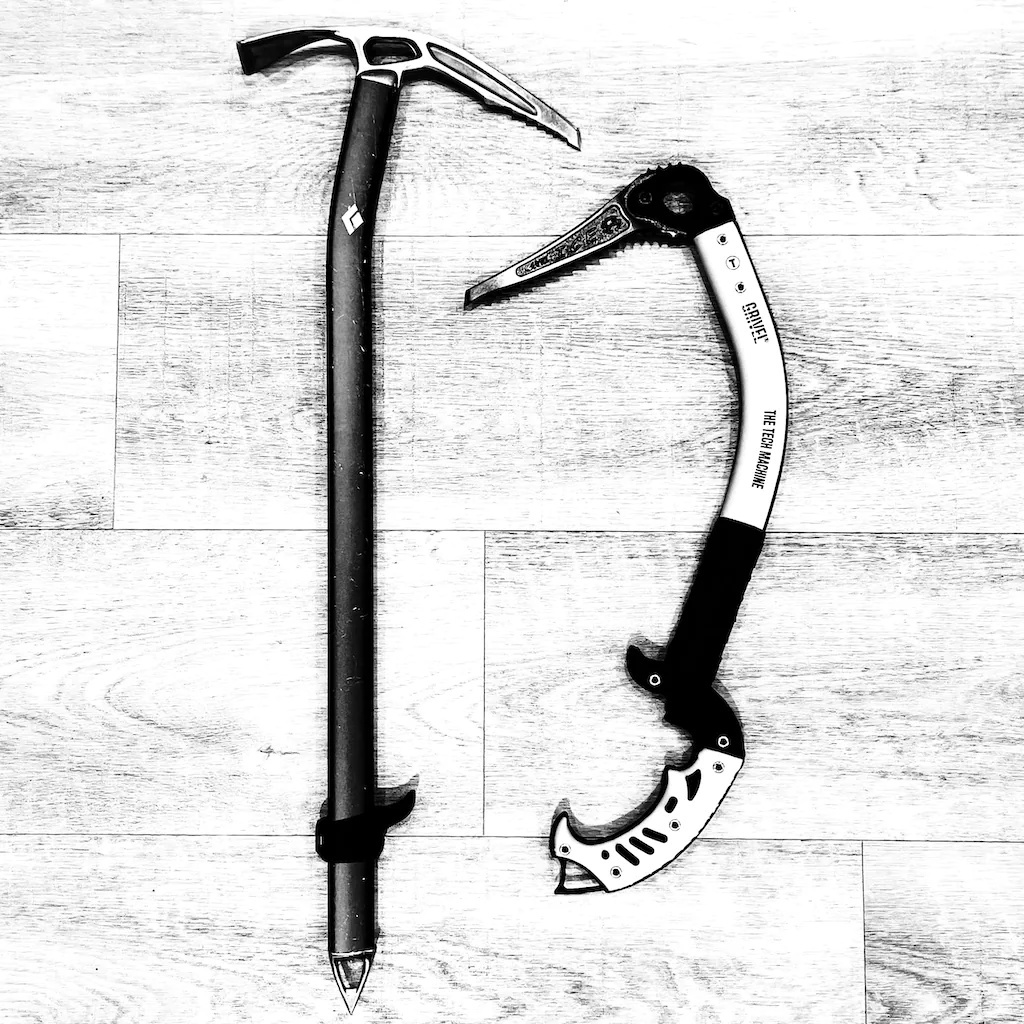
There are two general types: mountaineering ice axes and ice climbing tools.
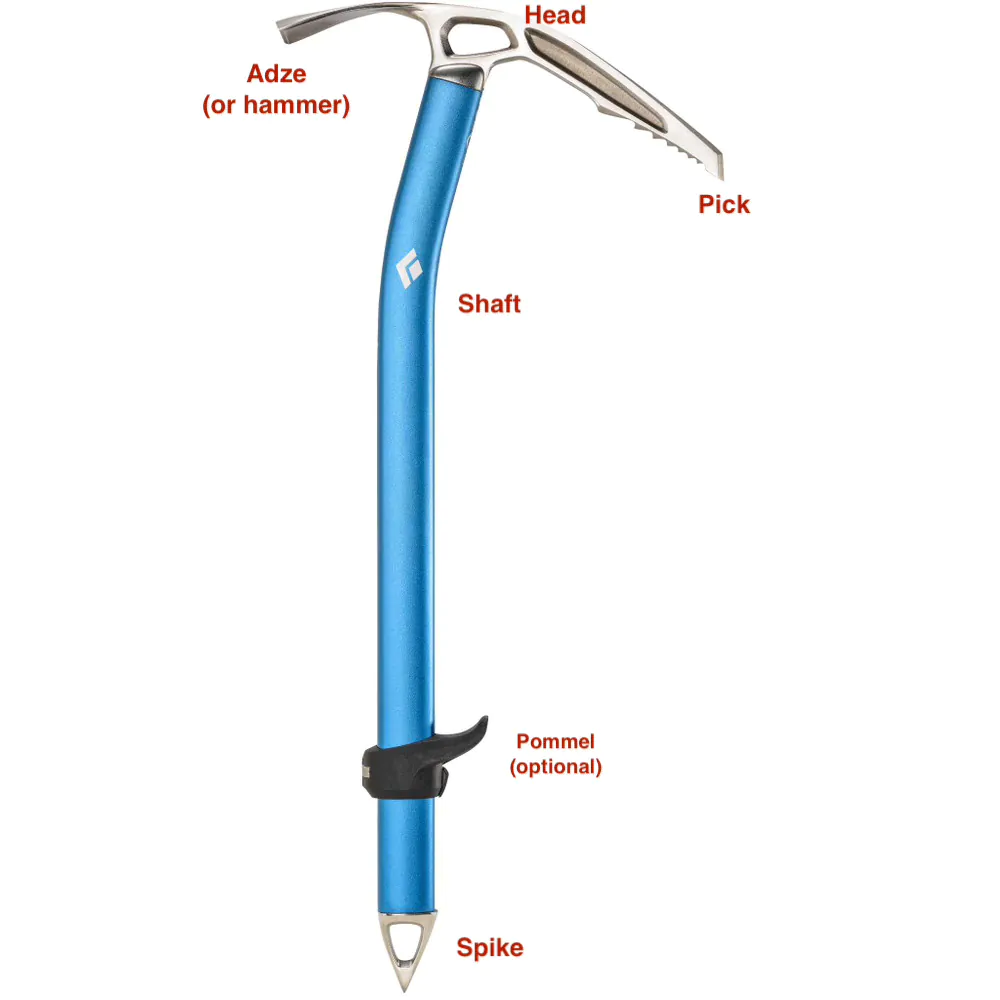
Ice axe anatomy
The head consists of the pick and either an adze or hammer on the back. Hammer is only relevant if you'll actually use it for hammering pitons or similar. Otherwise, always adze. Ice tools often have neither.
The shaft ends in a spike at the bottom, useful for plunging into snow as a cane or anchor point.
Ice axes are classified by strength: CEN-B (Type 1) and CEN-T (Type 2), rated to 250kg and 400kg of force respectively. CEN-T can take real abuse. Placing the pick in rock cracks, torquing with your full weight, repeated hard impact. CEN-B will likely snap under that kind of treatment. That doesn't make CEN-B inferior, just know its limits. If you're staying on snow and moderate terrain, CEN-B is fine. If you know you'll be abusing it, go CEN-T.
Mountaineering ice axes
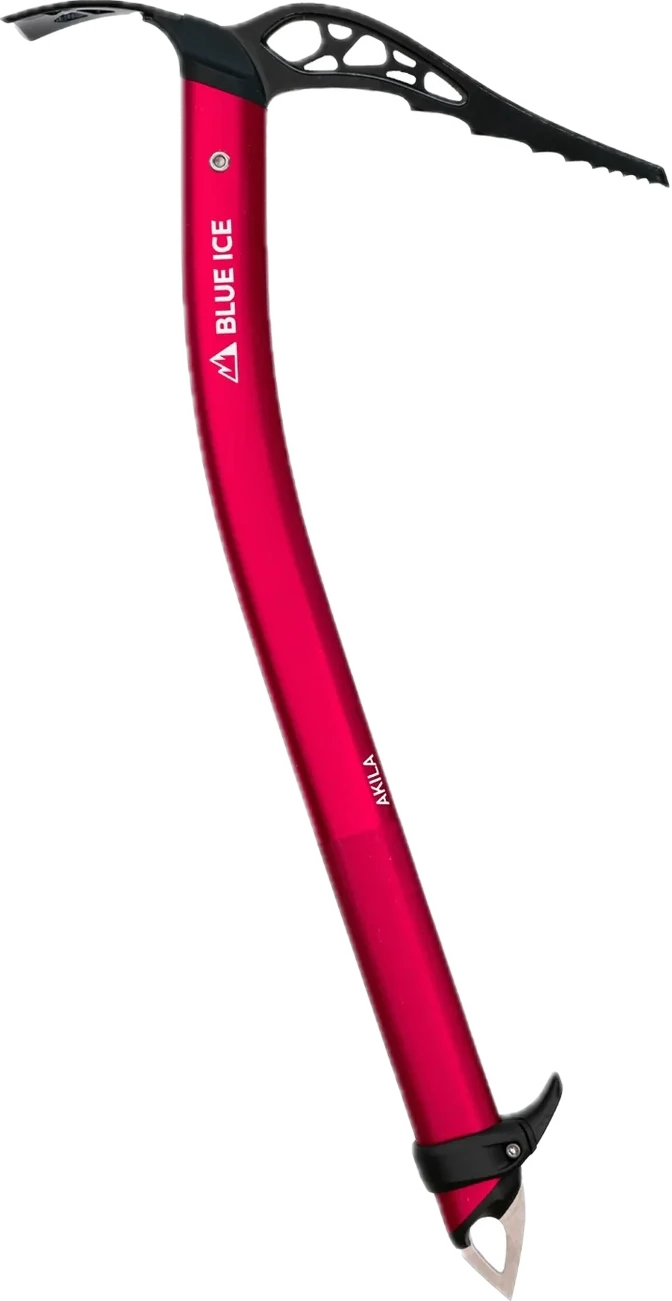
Mountaineering ice axes cover a wide range. A basic straight shaft axe handles glacier travel, general snow climbing, and self-arrest. A curved shaft opens up steeper terrain.
On length, the traditional guide is ankle height when standing. It's a reasonable starting point. But most people end up going shorter as their objectives get steeper and their technique improves. I went from a 64cm T-rated axe, solid and bombproof but heavy, to a 49cm which works for me as both a self-arrest tool and an actual climbing axe up to mid difficulties.
The shorter you go, the more committed you are to steeper use. Don't go short just because it looks aggressive. Match the length to what you're actually climbing. Every choice is a compromise, and that's fine.
Ice tools
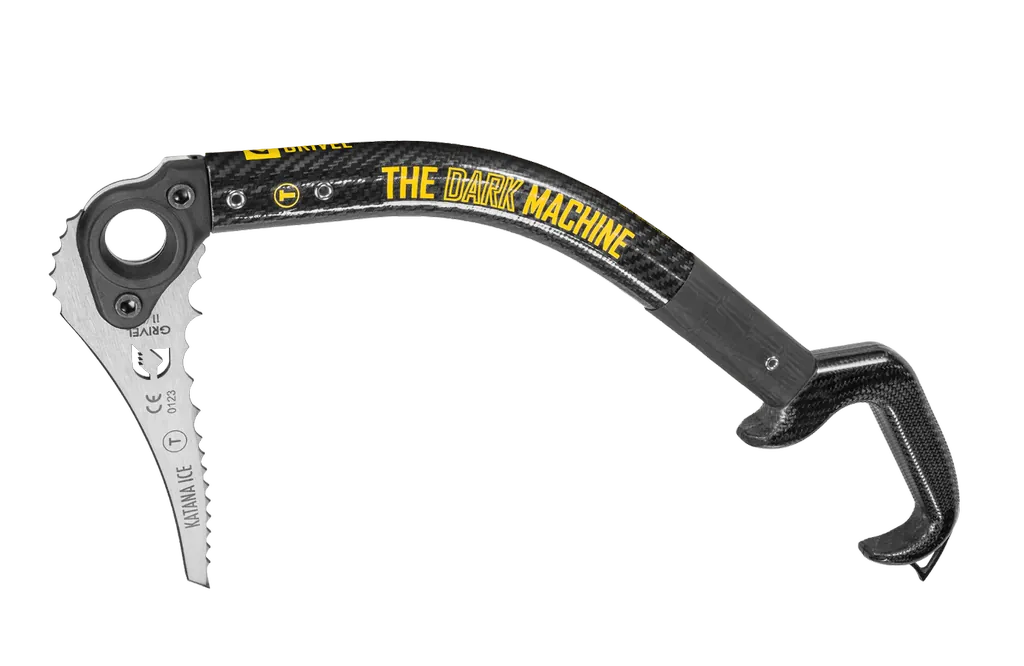
Ice tools are designed for vertical ice, mixed climbing, and dry-tooling. The shaft is dramatically more curved than a mountaineering axe, and the pick angle is optimized for maximum penetration and hold on steep ice. Picks are interchangeable, ice, rock, or mixed, depending on the route. The back of the head can have a hammer, adze, or nothing, based on preference and conditions.
Choosing ice tools comes down to one thing: swing as many as you can. Every tool has a different balance, and what you're looking for is the one that feels effortless, swinging naturally from the wrist with minimal force. Advice helps, but no amount of it replaces actually trying them. This is the one piece of gear where your own hands give better answers than any guide.
It's also a significant investment, and a bad choice means replacing them at significant cost. Worth thinking carefully about the "intermediate" options too, technical ice axes that are CEN-T certified but not full ice tools. They're cheaper, but have real limitations on vertical difficulty. If WI3 is your ceiling, they might be enough. Anything above that, invest in proper tools from the start.
More: Ice axe history
If you want to appreciate how far ice axe technology has come, these are worth the time. Engineering and material advances didn't just improve the tools, they opened terrain that was previously out of reach entirely. What once seemed impossible became merely hard.