Ice Screws
What is an ice screw?
An ice screw is the primary tool for placing anchors in ice, whether on vertical ice climbing routes or horizontal glacier terrain. Without one, you have no reliable way to protect a pitch, build a belay, or create an anchor for an Abalakov thread. If you're climbing ice or crossing crevassed glaciers, they belong on your rack.
Ice screws come in three length ranges, each with a different purpose.
Short screws (10-13cm) are for thin ice or delicate placements where longer screws won't work. On vertical ice they also serve as a gear hanger while resting at a stop.
Medium screws (13-17cm) are the workhorse. Most of your rack will be these. Good balance between security, speed of placement, and versatility across conditions.
Long screws (19-22cm) are for building reliable anchors in softer ice and for Abalakov or Amundsen threads at belay stations or rappel points.
A standard rack for a roped team runs roughly 8 medium screws, 2 short and 2 long per climber, adjusting slightly for pitch length. Solo is a different story. On my harness, I carry one 22cm for threads, one or two mid-size for stops and general use, and one 10cm for thin ice and as a gear hanger on vertical sections.
One screw each on a glacier is also worth considering even if you're not ice climbing. If someone falls into a crevasse, a 22cm screw can serve as an anchor in the ice wall or a temporary tie-in point while the rest of the team figures out the rescue.
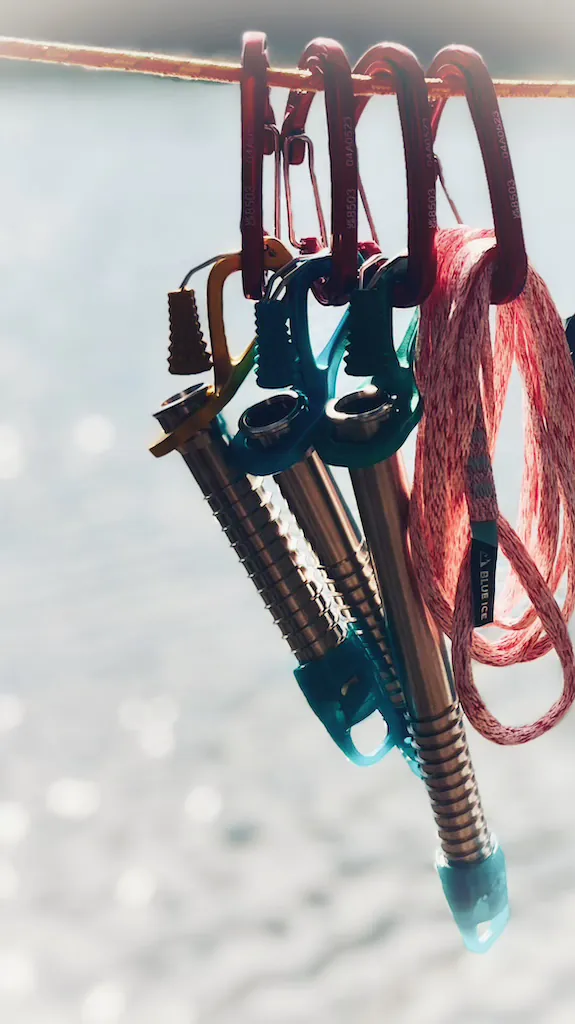
Ice Screw anatomy
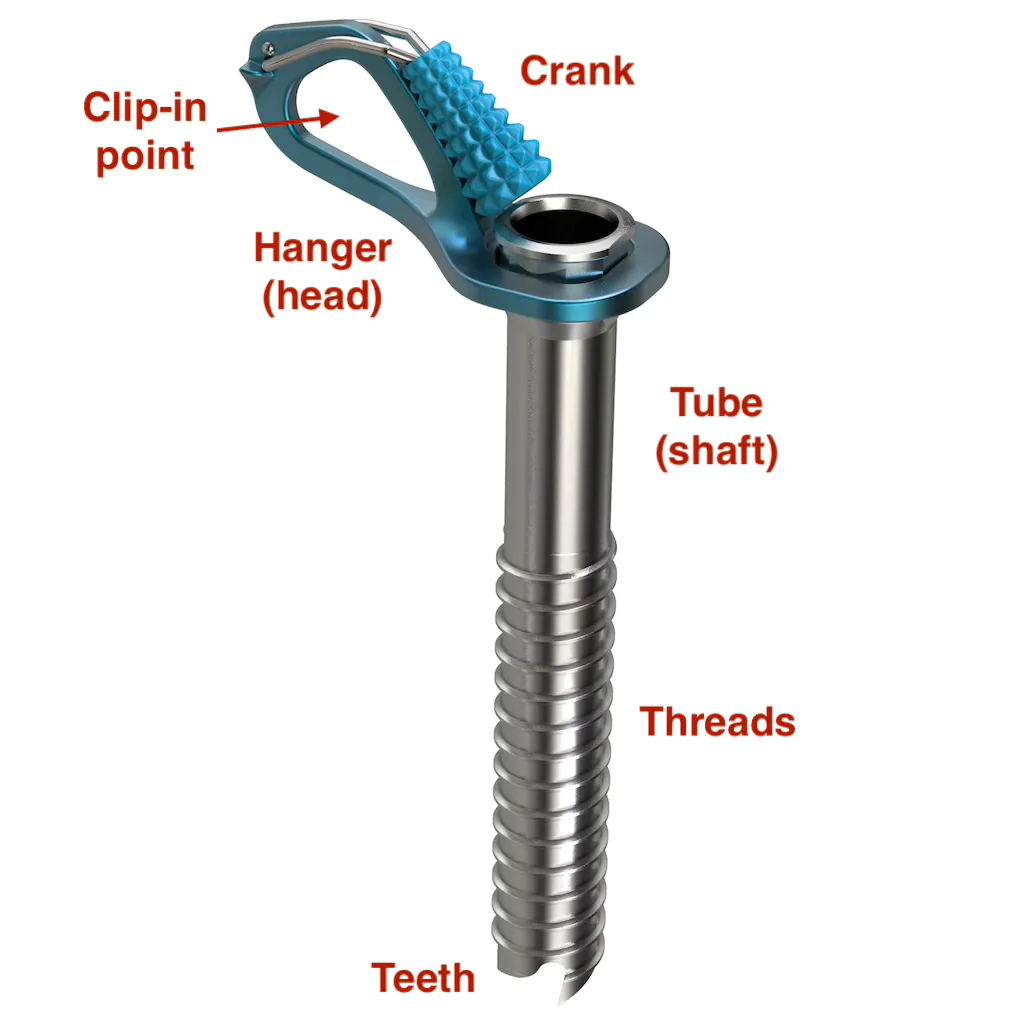
The tip does the critical work. Sharp, serrated teeth bite into the ice first and define how easily the screw penetrates. A dull tip means more force, more time, more frustration. On vertical ice that matters. Sharpen by hand when needed, never with a machine.
The tube is the main body, steel or aluminium, with helical threads that grip the ice as you rotate. Material choice affects weight and durability, more on that below. A wider diameter tube can be placed in a previously used screw hole, which significantly reduces resistance and makes placement faster, with no loss in holding strength.
The hanger and crank sit at the top. The hanger is the clip-in point for your carabiner. The crank is what you spin to drive the screw in. A short or wobbly crank reduces the rotational radius you can generate, meaning more effort for the same placement. Worth checking before you buy.
Steel or aluminium is a question worth thinking about. Aluminium screws are lighter, and their tips are still steel, so the strength gap has narrowed with modern manufacturing. But durability reports still give me pause, so I run the Blue Ice Aero, which are steel screws light enough to compete with most aluminium ones - weight without the compromise. If you're drawn to aluminium, they're not bad screws, but I'd rather know I'm being conservative on something I'm trusting with my life.
Buying ice screws
If you're looking for ice screws, you're probably buying more than one. A typical rack runs to eight or so, which means the choice of model matters more than it would for a single piece of gear. Research what works for your use, weight, lengths, price, lock in one or two models, and wait for a good deal. I've picked mine up at over 30% off by being patient. It takes time but hurts the wallet considerably less.
Ice screws last a long time if looked after properly. Dry them thoroughly after use, lubricate the teeth and threads before storage, and sharpen by hand when needed.
If buying secondhand, don't buy sharpened screws. You can't verify the method, and machine sharpening can make the teeth dangerously fragile.
More: ice screw placement, strength & use in old holes
Black Diamond's QC Lab has done the most rigorous testing on ice screw performance available publicly. These three articles cover the steel vs aluminium debate, screw strength under load and different angles, and the risks of reboring old holes. Worth reading if you want the science behind the choices.