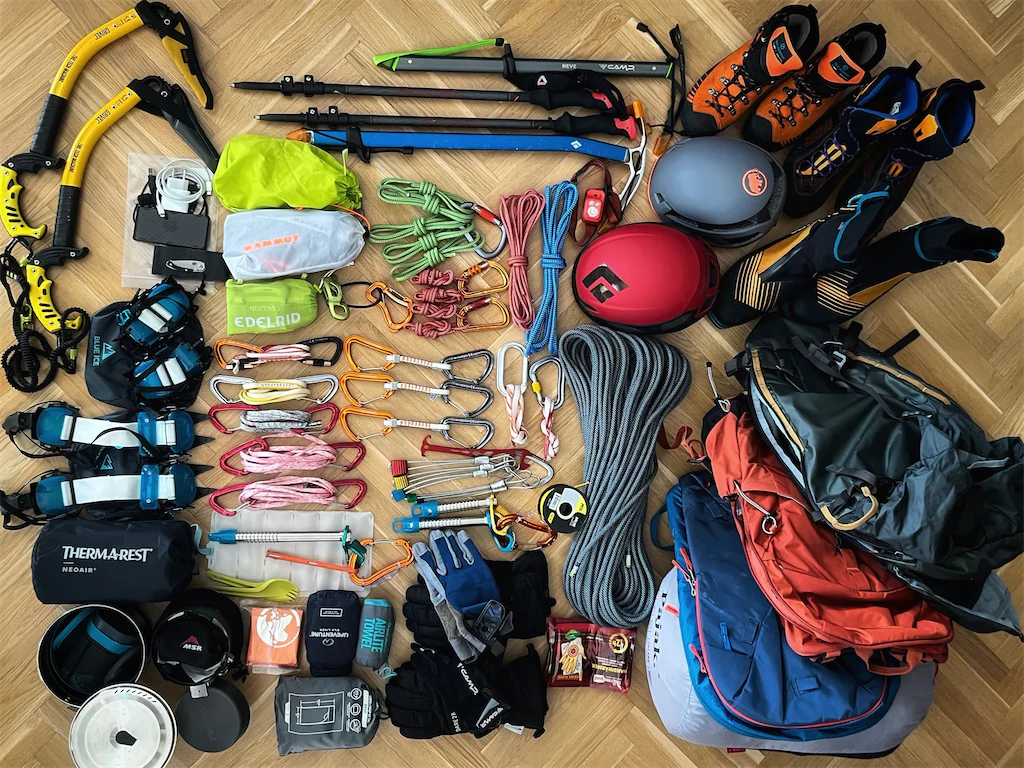
You can either take this advice, or – like me – learn it over time while looking at the pile of “essential” things you never really used.
There are countless guides out there on what you must have for every kind of outdoor adventure. I’ve watched and read a lot of them myself – some are great, others are just trying to sell you things (and that’s fine). But when it comes to outdoor adventure essentials, most guides tend to overdo it.
You don’t need a mountain of equipment to go outdoors. In fact, the stuff you actually need comes down to a much shorter list than most people make you believe.
To cut through the noise, all outdoor adventure essentials can be broken down into just four groups of things:
- The Basics (clothing, shoes)
- Specialty Items (backpacks, extra layers, specific-purpose things)
- Gear
- Safety & Admin (permits, insurance, trackers, etc.)
You don’t need everything for every occasion. You can have it all – but you don’t have to.
The Basics
This sounds simple, but it’s where most people trip up. The more efficient and universally useful your basic kit is, the less you’ll spend and carry over time. Building such a kit takes experience – understanding what kind of adventures you do most and focusing there.
Think of your basics like this: what can you wear or use on almost every trip?
For anything that’s not underwater, that’s probably your underwear, base layer, fleece, pants, rain jacket, a buff, and sunglasses.
If you only go on short hikes once in a while, don’t overinvest – budget-friendly gear (like from Decathlon) will do perfectly fine. But if you’re out there a lot, it’s worth upgrading your basics. Go for merino wool for underwear and base layers (and even your buff, beanie, liner gloves). Get a light technical fleece, durable pants, and a proper waterproof shell.
A good set of basics will work across most adventures – and if you choose well, for years.
Shoes
Think about what you actually do most.
Right now, I’m mostly mountaineering, so I invest in solid mountain boots and approach shoes. For the occasional flat hike, those same approach shoes or some old sneakers work fine. If I hiked more often, I’d buy great hiking boots. For rare high-altitude expeditions? I might even rent.
Key takeaway: Pick your shoes for what you actually do most – not for what you might do once.
Specialty items
The first specialty item is your backpack – because no, one size doesn’t fit all.
If you’re not usually doing multi-day adventures, one medium-sized pack (25–35L) will cover day hikes, overnight hut stays, and summit pushes. Just check it has what you need (gear attachments, hydration system compatibility, etc.).
For longer trips with tents, go for something over 50L. For hut-to-hut mountaineering, a 30–40L alpine pack works best. Climbers, skiers, bikers – everyone’s got their version, and that’s okay. Just match the pack to your type of adventure.
Other specialty items are things like extra-warm jackets or boots for arctic conditions, breathable layers for deserts, or insect-repelling clothing for forests.
Here the rule is simple:
→ High quality for what you use most.
→ Rent, borrow, or go budget for what you rarely do.
Gear
Gear is where people either go broke, or get smart.
If you’re trying something for the first time and aren’t sure if you’ll stick with it – buy budget items, or go secondhand. Borrow, rent, buy used, or find a good deal with resale potential. Once you commit to a discipline, then go for the best you can afford – but keep an eye on what you actually need, not what looks cool.
A sidenote: when buying secondhand PPE (Personal Protection Equipment), even from a trusted seller – inspect it thoroughly. Petzl has great instructions on how to do that, if this is new to you. If you don’t feel comfortable properly checking the equipment upon which your life depends – choose budget new items instead.
I’ve shared more on this in How not to waste your money – worth a read if you’ve ever bought something shiny and never used it again.
Safety & Admin
This is the “everything else” category:
Permits, insurance, first-aid kit, sunscreen, insect repellent, GPS devices, mapping or navigation subscriptions – basically, the admin and safety side of adventures.
Not much to save here. You get what’s required, pay what’s due, and make sure it works when needed.
Key Takeaways
So, which group gives you the best opportunity to save?
For me, it’s all of the outdoor adventure essentials, but especially the basics and the gear.
That’s why I keep updating the Gear Guide – where I describe most of the equipment I use, share what’s worth buying, and explain how to choose wisely.
Have better, lighter, and more sustainable adventures.
Follow along on Instagram for more on gear, mountains, and keeping it simple.
Useful links
- Gear Guide – the list of equipment and choosing tips
- Outdoor Gear Economics 101: How not to waste your money – practical guide to smart outdoor shopping
- Where to Find the Best Outdoor Gear Deals in Europe – best places to find deals and reliable stores