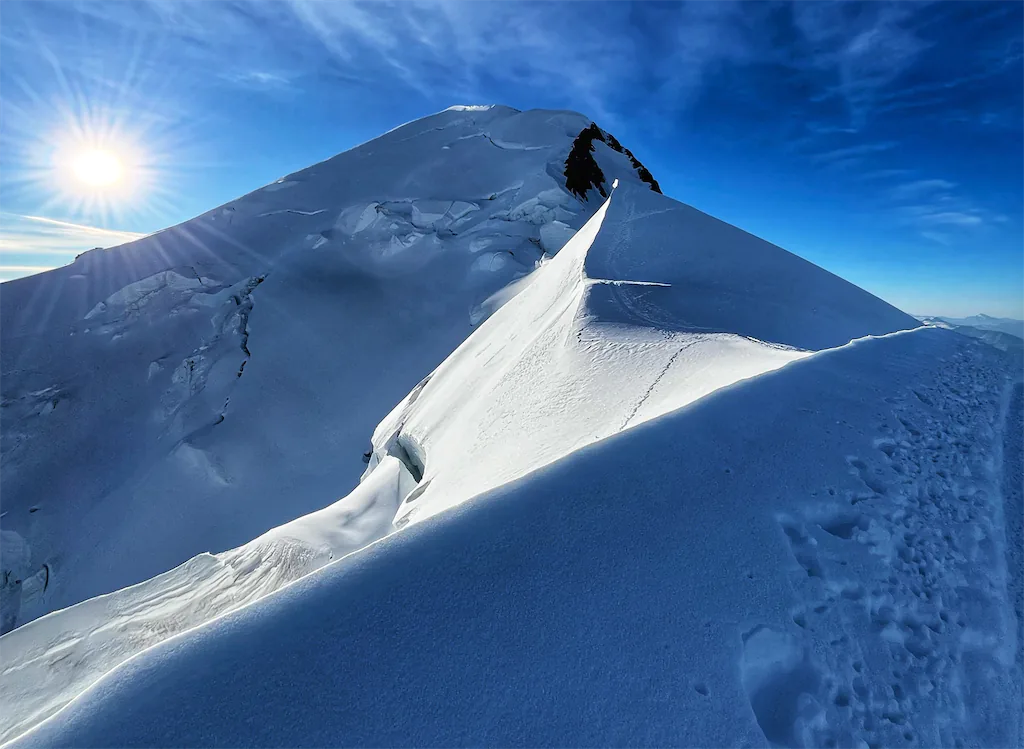
Even though it’s not the most spectacular climb in technical terms or pure mountaineering awe, climbing Mont Blanc is still on almost every alpinist’s checklist. It’s the roof of Western Europe, after all.
There are numerous routes along its faces, from moderate to extremely demanding ones, but I wanted to start with a classic – the Goûter Route (PD).
Booking and Preparation
Since 2019, the French authorities have required a mandatory hut booking to climb Mont Blanc from their side. Honestly, it’s a great decision – it regulates the crowds and helps preserve the mountain.
The flip side: booking a hut becomes an adventure in itself. You really start climbing Mont Blanc 3-6 months in advance, by refreshing that reservation website every day.
Choosing the Hut
On the Goûter Route you have two options — each with pros and cons:
- Goûter Hut (3,835 m): higher, making for a shorter summit push (1000 m vertical gain). But it’s notoriously difficult to book, as it’s often reserved by guides. You also have to cross the Grand Couloir during the day – a bit riskier.
- Tête Rousse Hut (3,167 m): below the Couloir, adding 600 vertical meters and around two more hours to summit day. But the approach is easier, and you cross the Couloir more safely at night.
I couldn’t get into the Goûter Hut three months out, but a spot opened at Tête Rousse after a few days of refreshing. So Tête Rousse it was.
Looking back, I don’t regret that choice — it felt more challenging, more proper. And it was.
Tramway du Mont Blanc
After my Monte Rosa traverse, I drove to Chamonix via the Grand Saint Bernard Pass — one of the most scenic roads in the Alps, and far better than sitting in the Mont Blanc tunnel.
Chamonix was overflowing with UTMB trail runners, so finding parking near Saint-Gervais station was a sport in itself. Eventually I found a hidden spot in the bushes, changed into alpine gear, double-checked everything, and headed for a ride on the Tramway du Mont Blanc.
There’s a special Alpinism ticket add-on (1.50€) for the final stretch to Nid d’Aigle, available only if you have a hut reservation. Three trams run per day – I took the midday one.
After a scenic hour-long ride, I had a first-time experience: stepping off a train that was tilted like a ski jump.
Approaching Tête Rousse hut
The trail from Nid d’Aigle (2,372 m) to Tête Rousse Hut is straightforward and takes around two hours to ascend 800 meters.
About 15 minutes in, two mountain police officers were checking everyone’s hut bookings and required gear – a reassuring bit of order in the chaos of alpine ambition.
It was the last days of August and peak heatwave: 30°C in Chamonix and sweltering higher up. The final hundred meters crossed a melting glacier – soft, wet slush in parts. No one used crampons, including me, though in hindsight I’d definitely put them on next time. Safer than balancing on ice like a clown.
The hut had no running water, so after dropping my gear on a bunk bed, I went back to the glacier and found a tiny stream – my improvised spa. The audience of climbers on the terrace gave a few laughs and whistles. Fair enough.
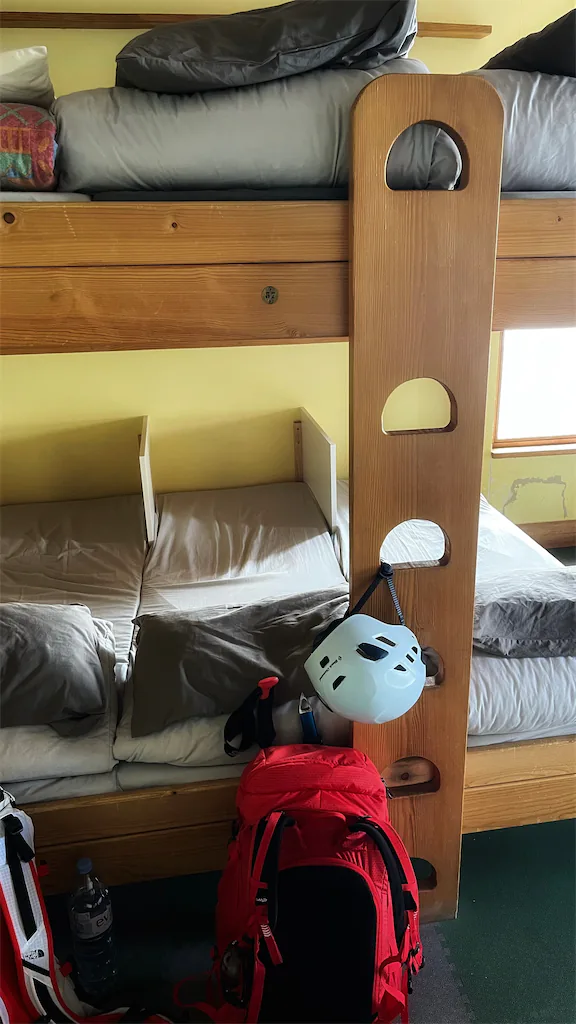
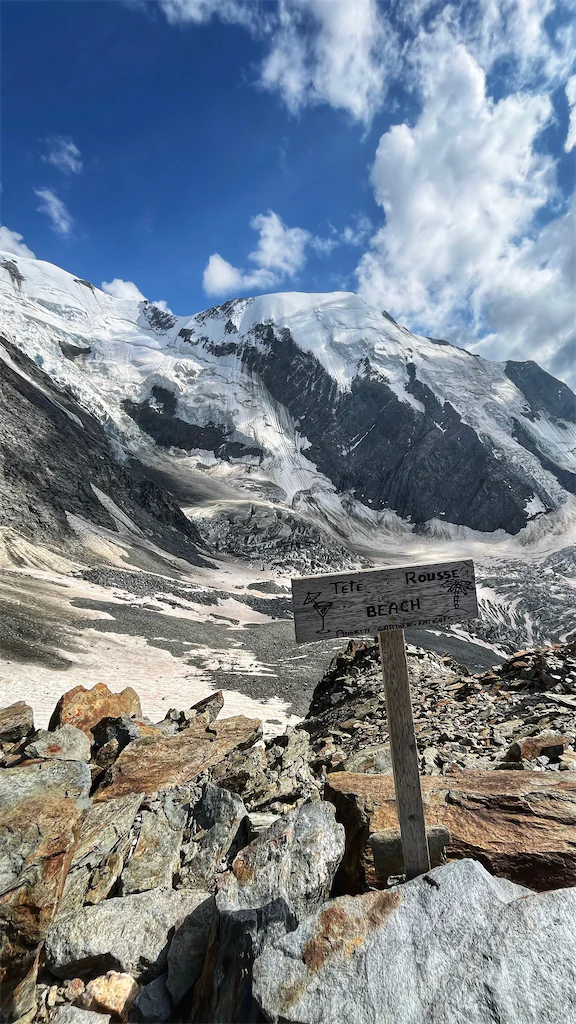
By 8 p.m., the hut fell silent. I tried to sleep, but as usual, one (or two) snorers triumphed over everyone’s rest. Mental note: buy earplugs.
Start of the climb
2:30 a.m. – shuffling, zipping, and the glow of headlamps. I left at 2:45, leaving behind a bag of unneeded gear bag, and heading into the dark toward the Grand Couloir.
I initially drifted off course among boulders but spotted a Ukrainian team’s lights ahead and corrected. My headlamp barely pierced the darkness, but I led up to the crossing point.
The Grand Couloir
The Grand Couloir is Mont Blanc’s notorious danger zone – a 30-meter-wide gully funneling constant rockfall when dry. With glacier retreat, it’s even worse now. The crossing itself isn’t technically hard – just mentally unpleasant. The ground shifts underfoot like loose sand, and the echo of rocks tumbling below doesn’t help.
Crossing it at night is safer, before the sun loosens everything. In late August 2024, the rockfall was so bad it tore away the steel cable marking the route. Instead, climbers were told to look for a shovel marking the spot. In pitch black.
After some searching, I found the legendary shovel, muttered “steady, swift, no running,” and crossed safely.
Aiguille du Goûter ridge
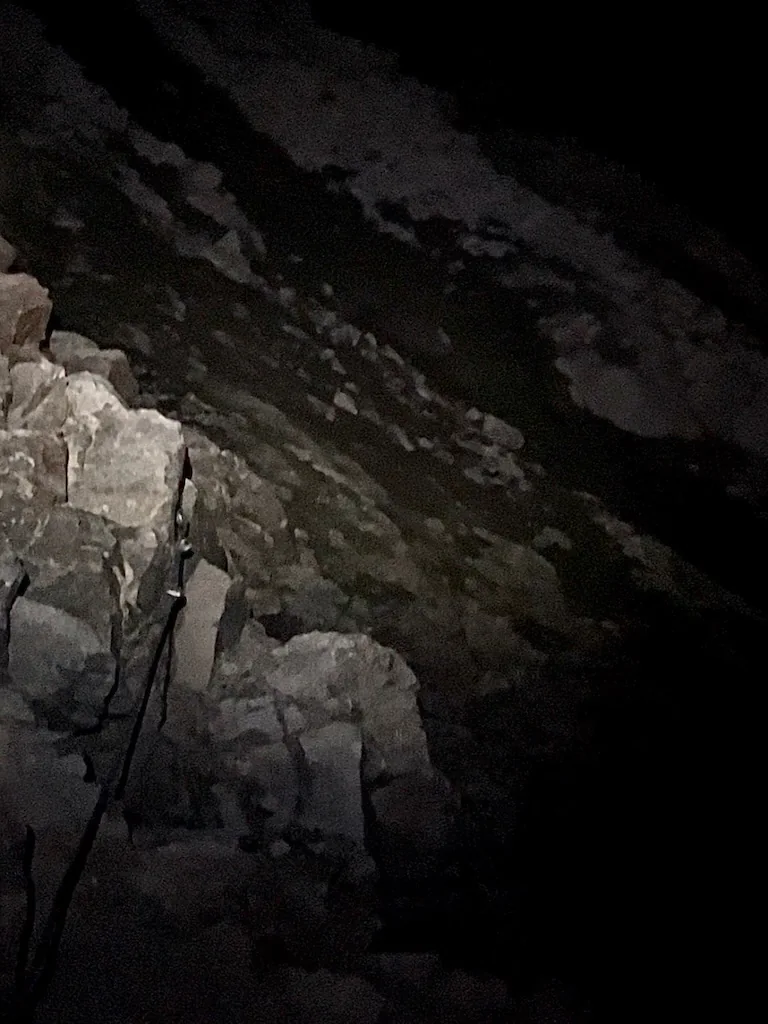
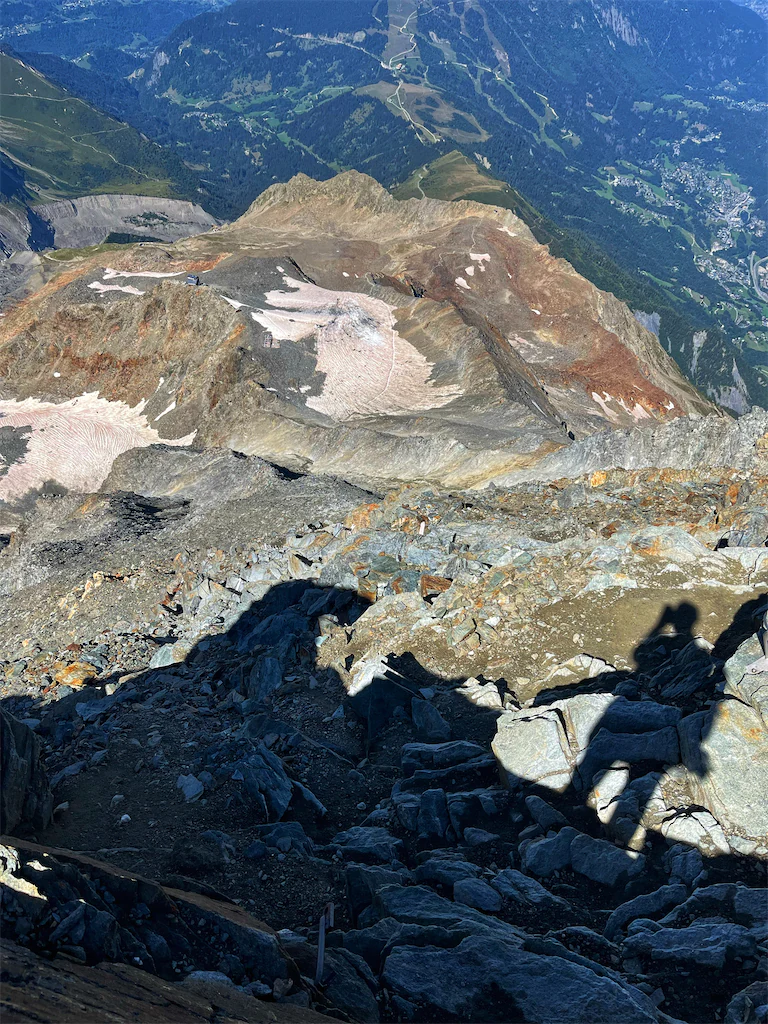
From there, it’s 500 vertical meters of Class 2–3 scrambling. Not technically demanding, but constant focus required. Even at 3,500+ meters, the night air was so warm I climbed in a t-shirt, sweat dripping from under my helmet.
At the top of the ridge stands the porch of the old Goûter Hut – the perfect spot to gear up with crampons and layers. A Spanish couple arrived just after me; the man had taken a small rock hit below the eye from the Couloir. We patched him up at the new Goûter Hut (3,835 m) before continuing.
Dome du Goûter – 4,304 m (F)
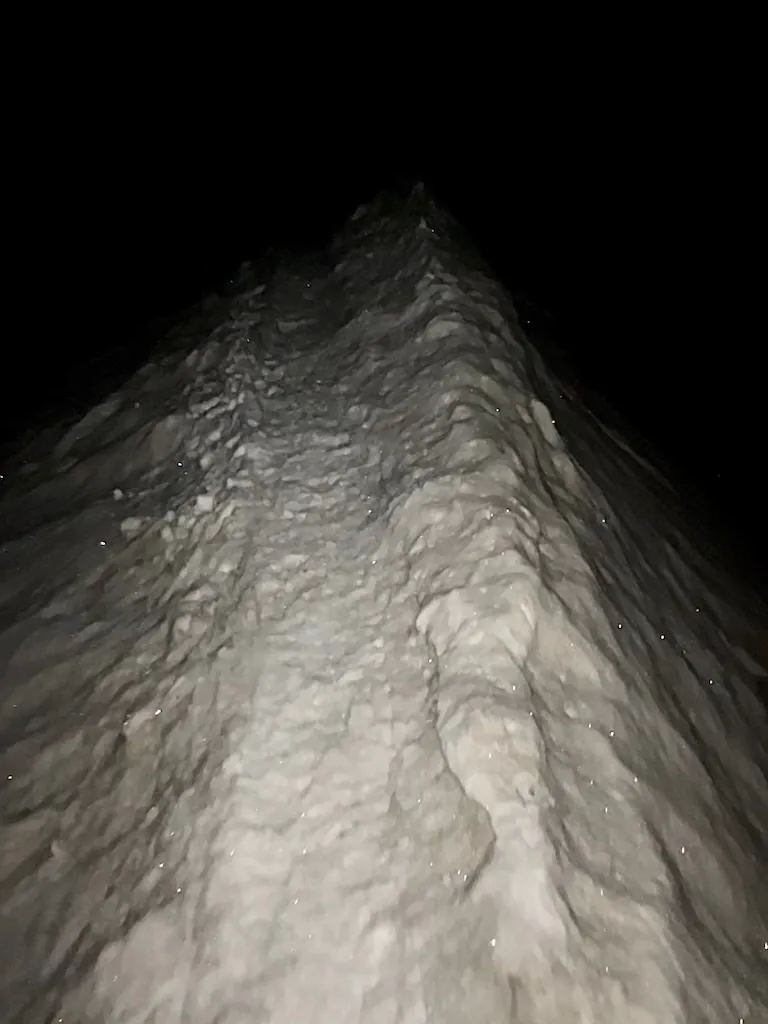
At 5:00 a.m., I left the Goûter Hut and stepped onto ice. Out from the ridge’s protection, the air turned sharply colder.
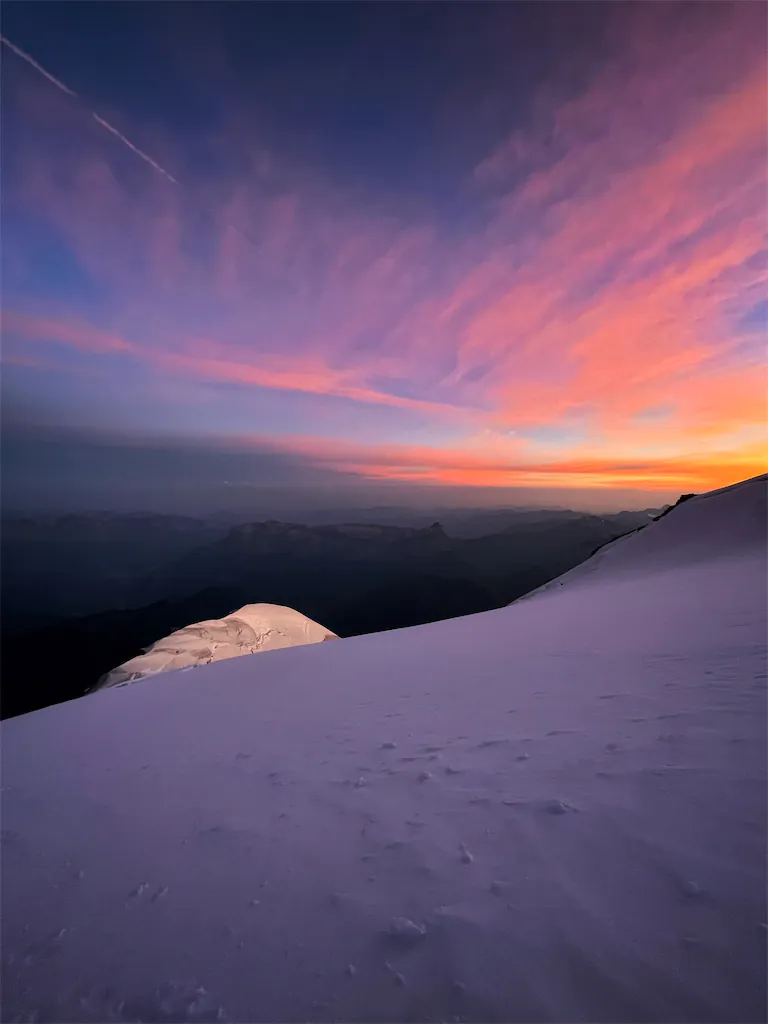
Most teams contour around the Dôme du Goûter to save energy, but since I’m collecting all 82 Alpine 4000ers, I couldn’t skip it. The slope was steady at 20–30°, and by 6:20 a.m. I stood on the summit – just as the sun rose.
That sunrise alone was worth every meter.
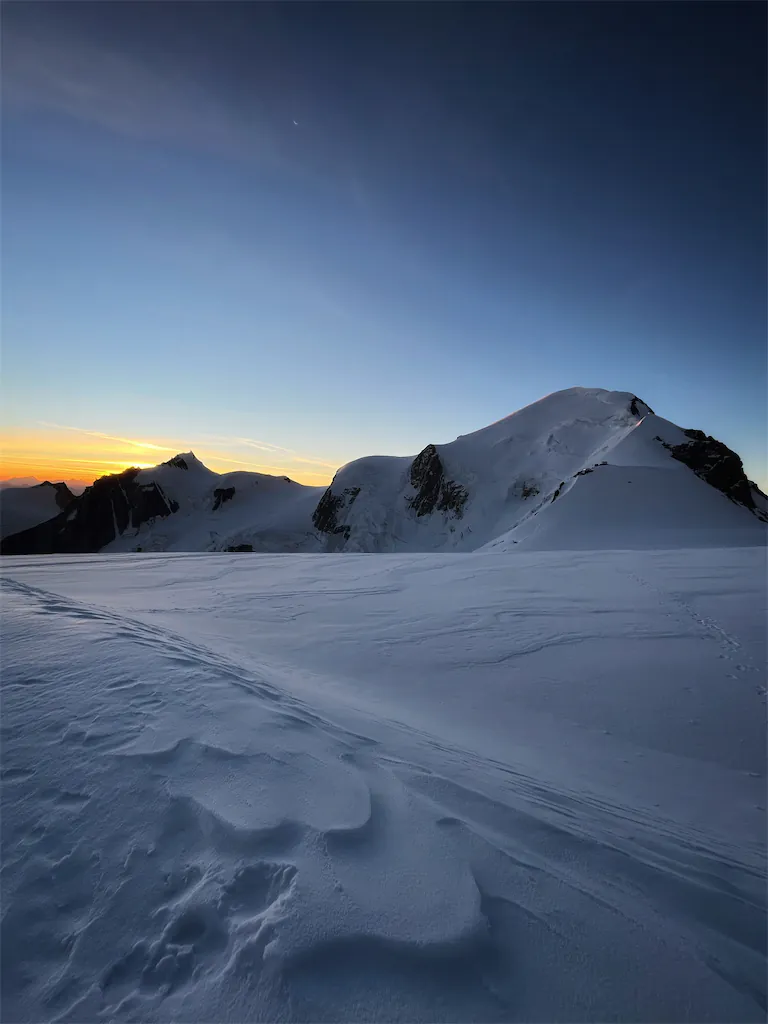
Thirty minutes later I reached the Vallot emergency hut (4,362 m) and rested briefly before tackling the Bosses Ridge.
The Bosses Ridge
This final ridge is where Mont Blanc shows its teeth – exposed, narrow, and steep. It climbs through Grande Bosse (4,513 m), Petite Bosse (4,547 m), and Rocher de la Tournette (4,677 m), each steeper than the last.
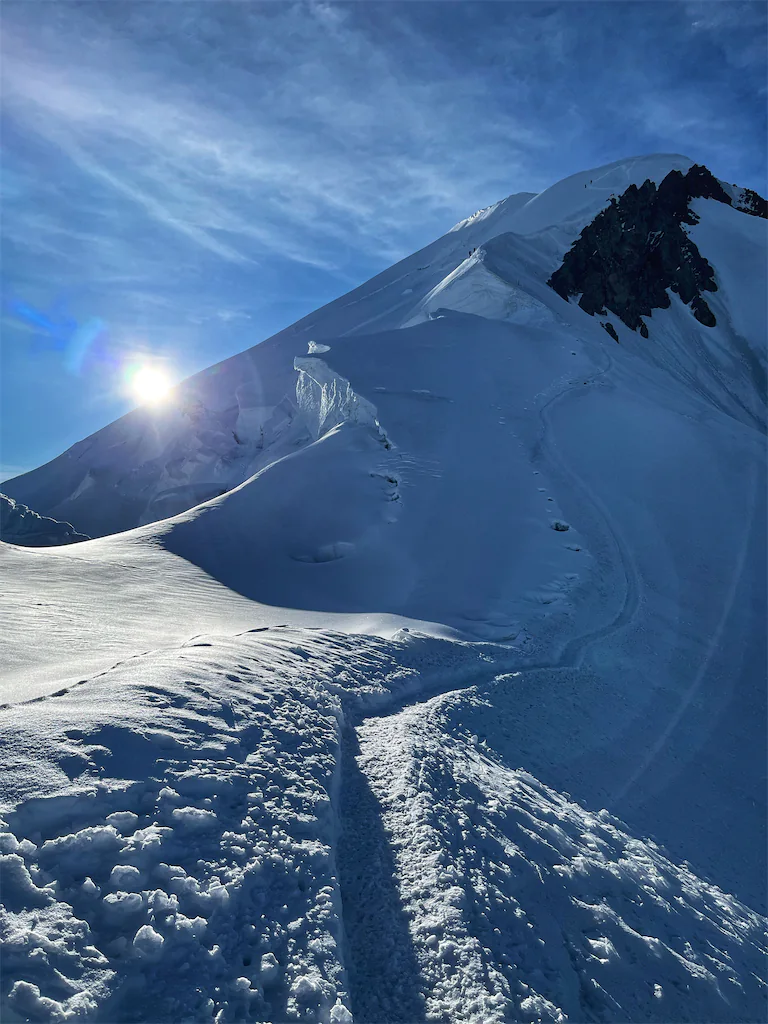
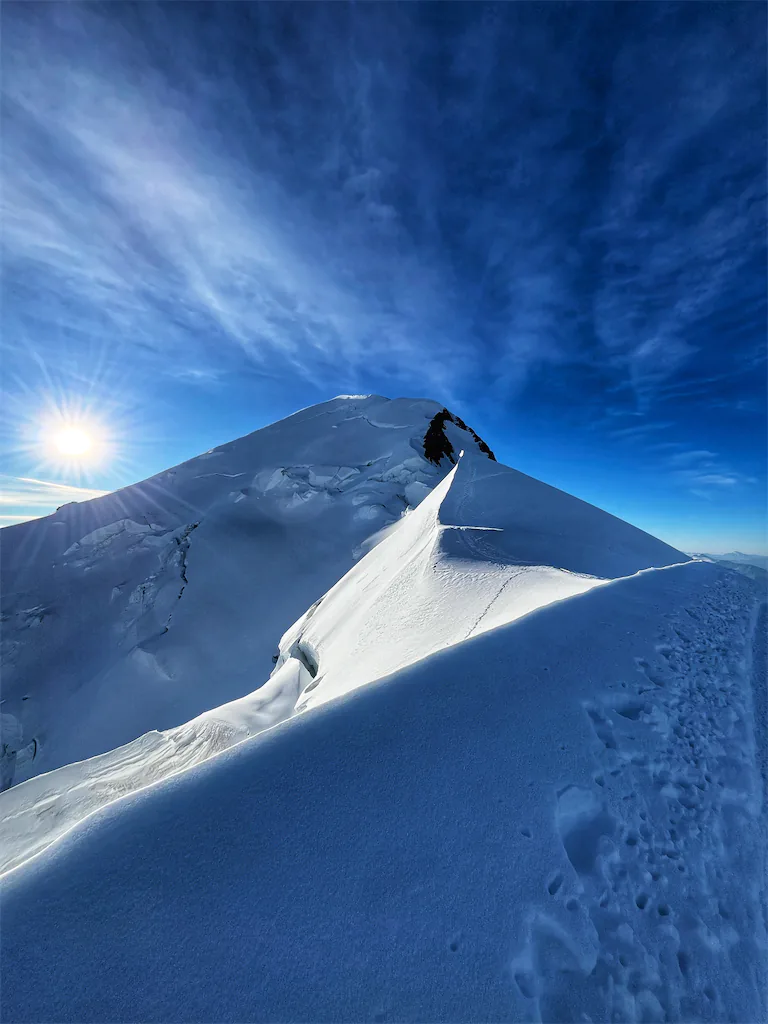
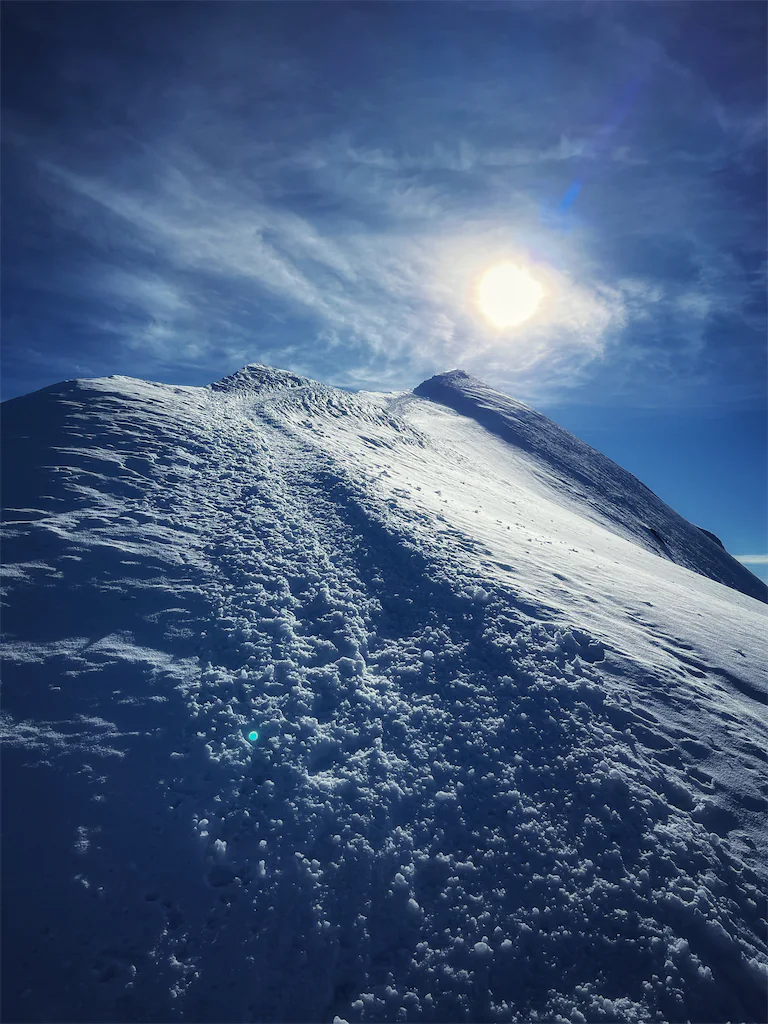
After 1,300 meters of vertical gain already, the thin air makes itself known. It’s a grind, but a satisfying one – this is the part that truly feels like mountaineering.
Mont Blanc – 4,808 m (PD)
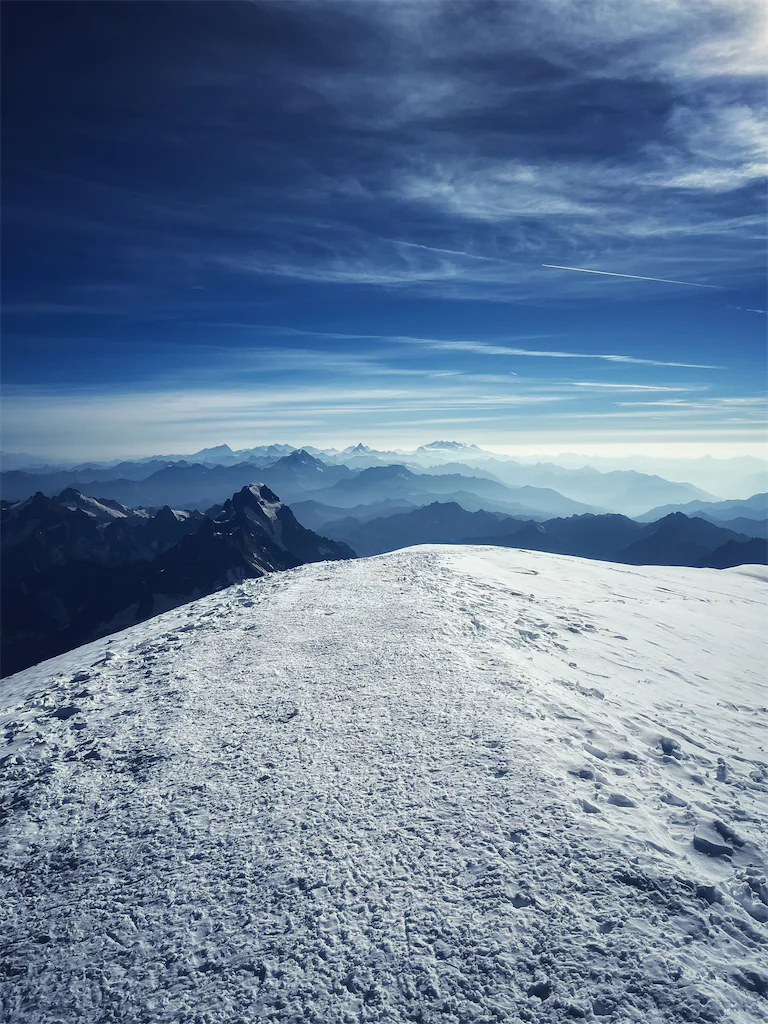
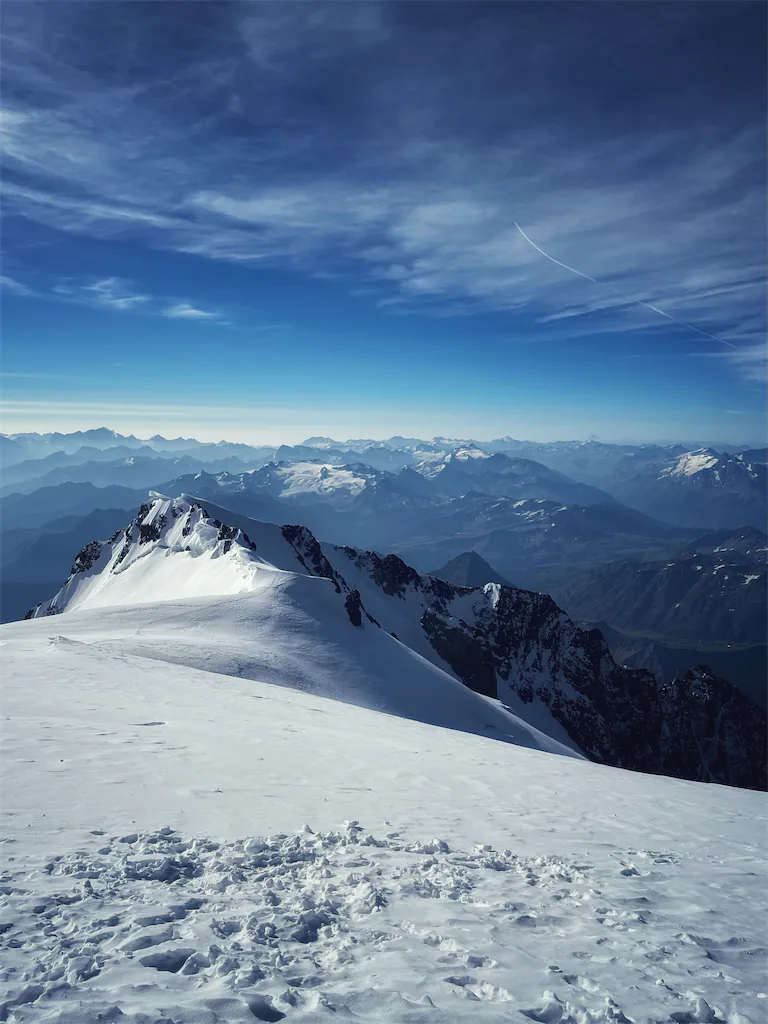
It took just under two hours from Vallot to reach the summit of Mont Blanc. The final slope eases off, and suddenly the ridge broadens into a snow-covered plateau – the roof of Western Europe.
At 9:00 a.m., I stood completely alone on the summit. No wind, crystal-clear skies, and strong 5G (of course). I called home on FaceTime with a ridiculous grin – pure joy.
Six hours fifteen minutes from Tête Rousse hut to summit. Perfect conditions. Couldn’t have asked for more.
The Descent
Let’s be honest: I hate descents. Especially when it’s the last mountain before going home. One day I’ll learn paragliding – a far better way down.
The descent was long and punishing on tired legs. By 11 a.m., I reached the old Goûter Hut and packed away crampons for the scramble back down the ridge.
The Grand Couloir was in full chaos – constant rockfall, boulders thundering down. I waited, then caught a rare quiet moment and dashed across safely.
At 1 p.m., I was back at Tête Rousse, finally getting that coffee and retrieving my stashed bag.
The final stretch to Nid d’Aigle felt endless. My legs were calling for retirement, but I made it down by 3:15 p.m., just in time for the last tram at 4. I arrived just after the Spanish couple, and was very proud of almost matching their speed.
And honestly, by that point, I only wanted one thing: a burger. And a shower.
Final Thoughts
After the Monte Rosa traverse, I expected climbing Mont Blanc to feel less exciting – but it surprised me. There may be less variety and technical challenge, but it’s a serious physical test:
- 1,639 meters ascent
- 2,688 meters descent
- 18.5 km total distance
- The thin air of 4,808 meters
Would I climb it again? Maybe – but via a different line, like Trois Monts or the full Intégrale de Peuterey.
For a first-timer, though, the Goûter Route is ideal. If you want to make it slightly easier, book Goûter Hut for the ascent and Tête Rousse for the descent – less downclimbing after summiting.
And yes, this route can be done solo, if you know what you’re doing and respect the risks.
Route Summary
- Date: 28-29th of August, 2024
- Route: Goûter Route (PD)
- Ascent type: solo mountaineering
- Start: Nid d’Aigle (2,372 m)
- Hut: Tête Rousse (3,167 m)
- Summit: Mont Blanc (4,808 m)
- 4000ers: 2 – Dome du Goûter (4,304 m), Mont Blanc (4,808 m)
- Total Distance: ~18.5 km
- Elevation Gain: 1,639 m ascent / 2,688 m descent
- Season: Late June – early September
Useful Links
- Tête Rousse Hut Booking – official page for reservations and details.
- Goûter Hut Booking – official page (book early, often full).
- Tramway du Mont Blanc Timetable – official schedule and tickets for the tram.
- The Gear You Actually Need, and Gear Guide.
- Petzl Research on the Grand Couloir – studies on rockfall hazards and safety.
- Official UIAA List of 4000 m Peaks – complete list of Alpine 4000ers.
Planning on climbing Mont Blanc or another 4000er? Feel free to reach out or follow me on Instagram.