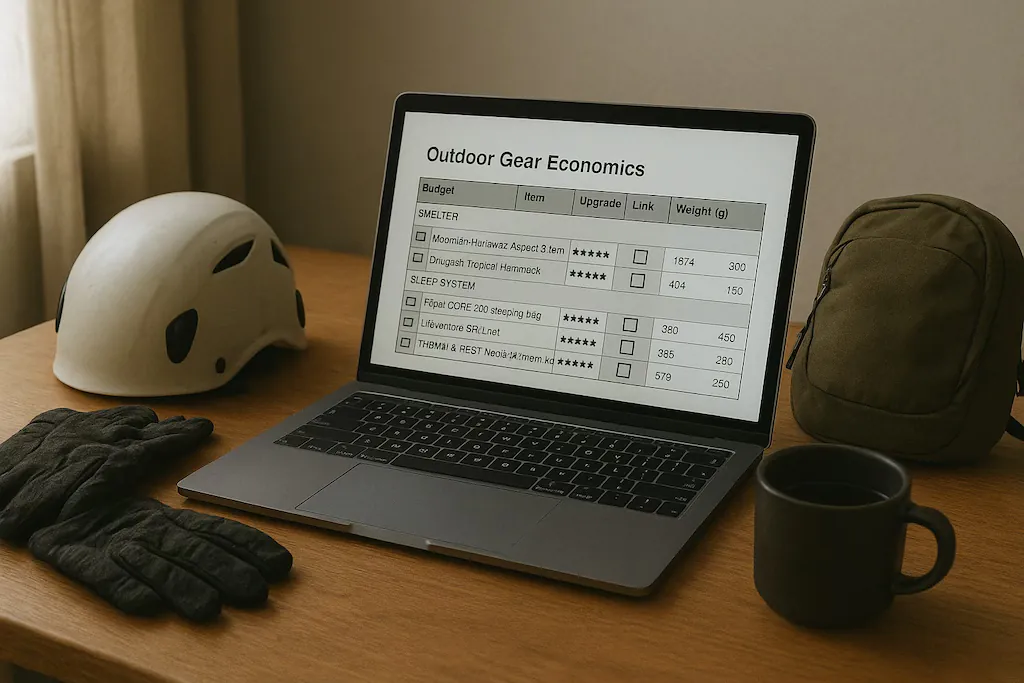
It starts the same way for most people who accumulate serious outdoor kit. A list. Then a gear spreadsheet. Then a smarter spreadsheet with formulas.
Mine grew alongside the kit. First it was just inventory – what I have, what I need. Then weight columns appeared. Then cost columns. At some point I stopped thinking about gear as things I buy and started thinking about it as a portfolio I manage.
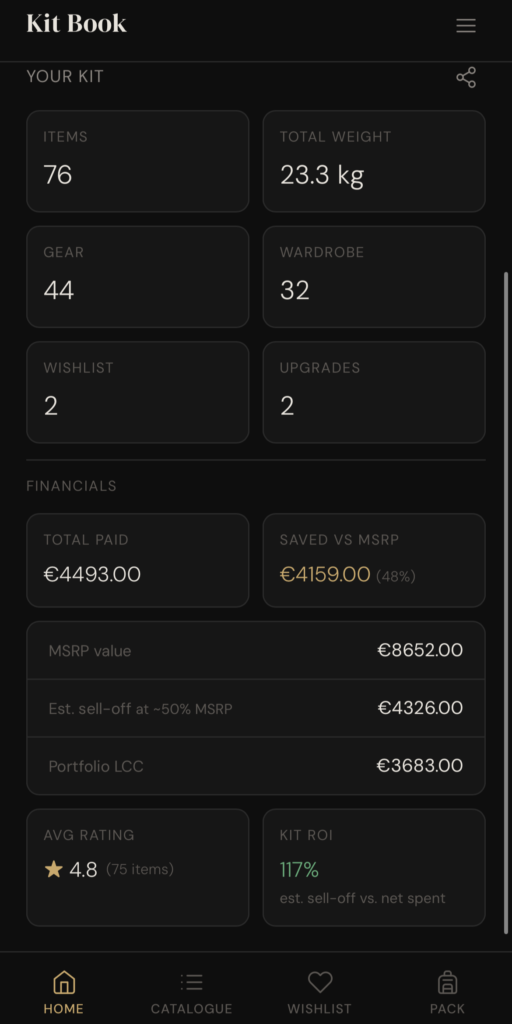
That shift changes everything. A jacket isn’t €400. It’s €400 minus whatever you sell it for when you’re done with it. If you bought it at the right time, maintained it, and sold it before it depreciated too far, it might have cost you €80 for three seasons of use. Or you bought something on impulse without a clear application for it, it sat in a cupboard, and it cost you the full €400 plus the guilt. The gear spreadsheet started showing me which of those stories I was actually living.
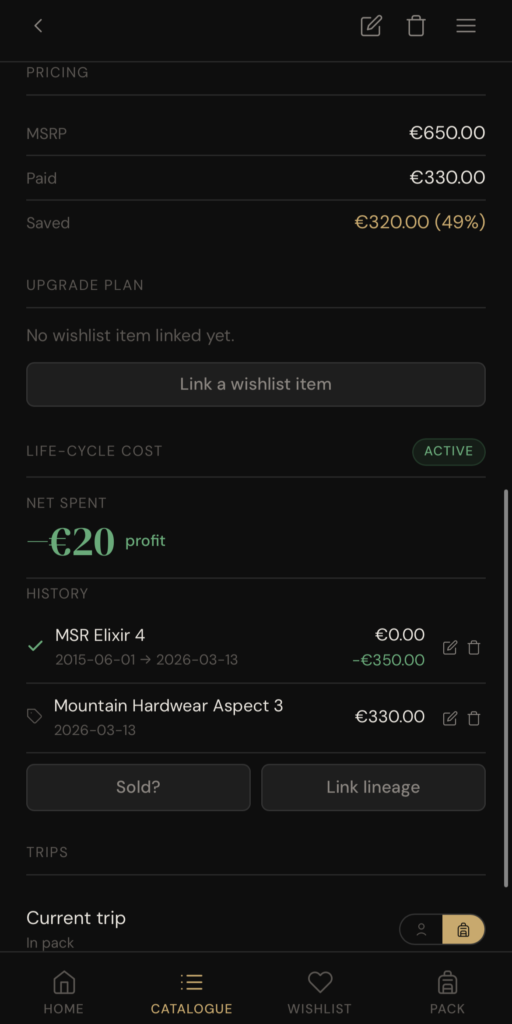
And it got interesting. Waiting strategically for a price drop. Timing a sale before a new model dropped the second-hand value. Linking a new purchase to the sale of its predecessor so the numbers told the full story. The economic side became almost a game – one with real stakes and real feedback. Every smart decision showed up in the net cost. Every impulse buy showed up too.
The gear spreadsheet held up for a while. Then it started straining. Notes crammed into cells. No photos. Weight calculations that worked fine at a desk but were useless at a trailhead. And more than once I found myself in a mountain hut the night before summiting, trying to leave a note about a piece of gear, squinting at a Google Sheet on a phone screen at 3am. Or not doing that at all as there’s no cellular connection. I needed an alternative.
That’s when I decided to build something properly. An app.
The core was always the economics system – full buy and sell history per item, true net cost over the item’s entire lifetime, across every iteration of it you’ve ever owned. The pack builder came next. Then spreadsheet import, because I wasn’t the only one running a system like this and I didn’t want anyone to have to start from scratch. AI autofill for specs and weights, for those who enter items manually. A wishlist connected to your current gear, showing the actual net cost of an upgrade rather than just the price tag of the new thing.
What I didn’t expect: when the first people tested it, they got into it in ways I hadn’t anticipated. Use cases I hadn’t thought of. That was the moment it stopped feeling like a personal tool and started feeling like something worth releasing properly.
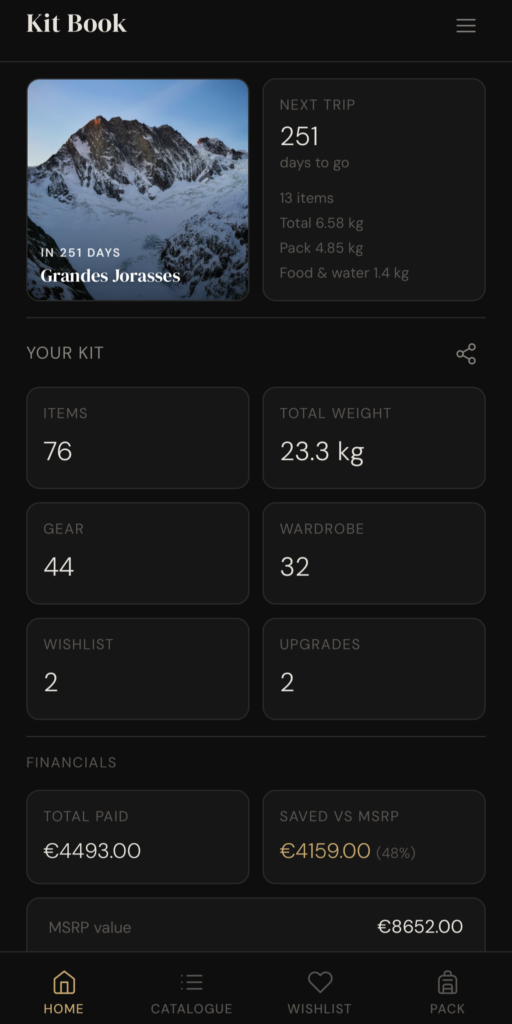
It’s called Kit Book. Free up to 20 items. If you’ve ever managed your kit in a spreadsheet, it’ll feel just right in your hands from the first minute – and go further than your gear spreadsheet ever did.
Read more about gear economics in Outdoor Gear Economics 101: How not to waste your money.