Trad Climbing Gear
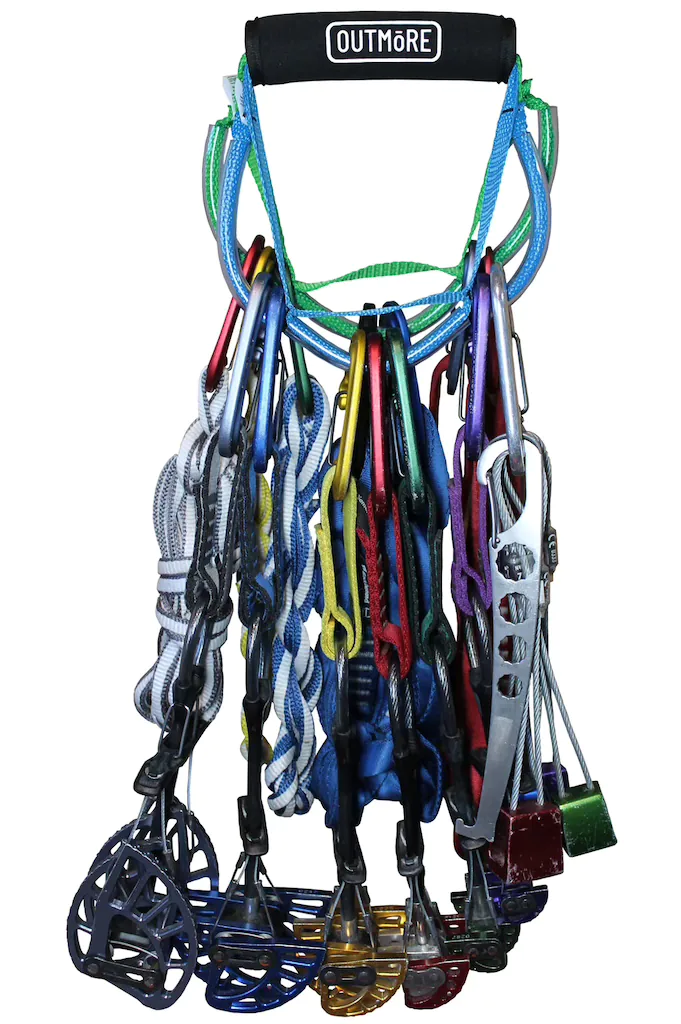
Trad climbing means placing your own protection as you go and removing it when you're done. No fixed bolts, no permanent anchors. What keeps you on the wall is how well you read the rock and how well you place your gear. The trad gear rack you carry on a harness is the toolkit for that, and understanding what each piece does is what makes the difference between a solid placement and a dangerous one.
The rack
Guidebooks describe what trad gear a route needs using standard terminology worth knowing before you buy anything.
"Gear to 3 inches" means you need protection that fits cracks up to 3" wide. "Standard rack" typically means a full set of nuts and six or more cams covering roughly 0.5" to 3". "Doubles" means two pieces of each size, which wandering or sustained crack routes often require. Some routes specify triples. Check the guidebook before assuming a single rack covers it.
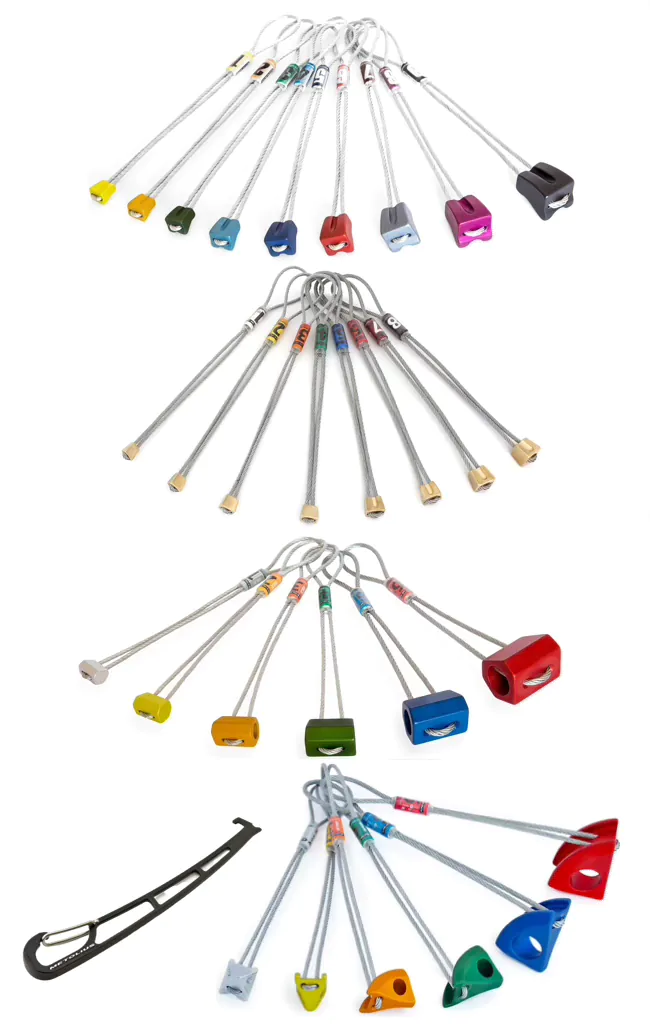
Passive protection
Passive pro has no moving parts. It holds by shape and friction.
Nuts are aluminium wedges designed for tapering cracks. You place them in the narrowest part of the crack so the taper locks under load. They only protect a downward pull, so placement angle matters. A full set covers roughly 10-12 sizes. Cheap, light, and essential on any rack.
Micro nuts go where nothing else fits: thin cracks, old piton scars. Most are brass or copper, which moulds slightly to the rock and increases contact. Most micro nuts hold body weight but not a dynamic fall. Place them accordingly.
Hexes are hollow aluminium blocks that work in tapering and parallel-sided cracks, including widening ones where cams struggle. Lighter and cheaper than cams, and more reliable in wet or icy conditions where a cam's springs and lobes can freeze or slip.
Tricams are versatile and underrated. They get stronger with more downward force, work in horizontal and parallel-sided cracks, pockets, and shallow vertical placements, and can be used to build anchors. Worth having a few sizes.
Nut tool is not optional. Passive pro gets stuck. A nut tool gets it out. Every climber on the team should carry one. I use the Kong Trik - super light at 22g, clips directly to the harness. Also doubles as a bottle opener, which has its uses after a long day.
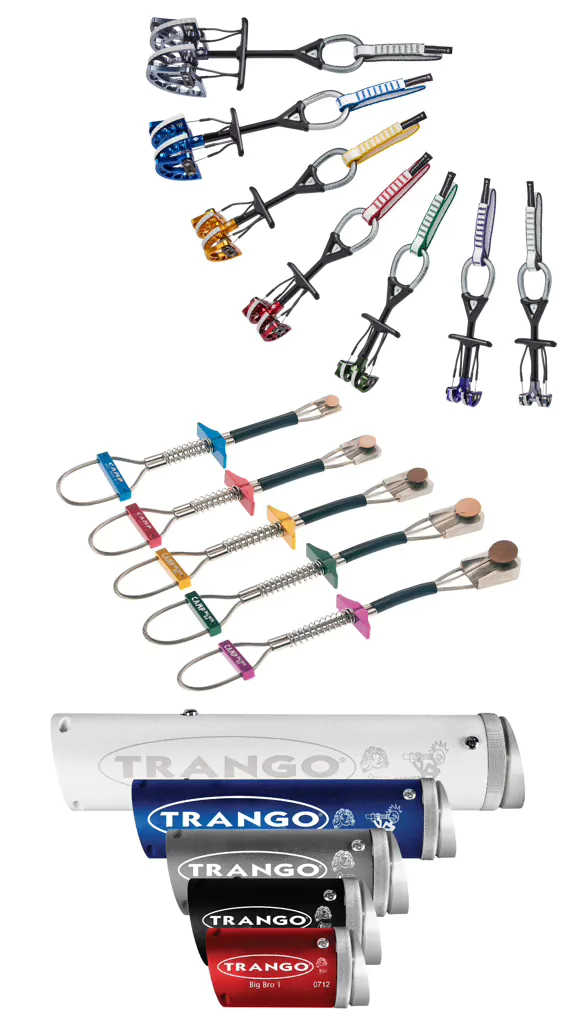
Active protection
Active pro uses moving parts to fit the crack.
Cams are the backbone of most trad racks. Three or four spring-loaded lobes contract when you pull the trigger and expand to fill the crack when released. Under load, the cam's geometry converts downward force into outward force against the crack walls. This is what makes them work in parallel-sided cracks where nuts can't hold. Each cam covers a range of crack widths, so one piece fits several placements. The cam angle, the relationship between the lobes and the crack walls, determines placement quality. Too retracted or too expanded and the cam can walk or fail. Learning to read this takes practice and is the core skill of trad climbing. Cams are expensive. A standard single rack will cost more than any other single gear investment in climbing.
Spring-loaded wedges expand via a sliding mechanism rather than rotating lobes. Lighter and stronger than comparably sized cams, and useful in smaller parallel-sided cracks where cams don't fit well.
Tube chocks (Big Bros) handle extra-wide placements: wide parallel cracks and pockets that are too big for cams. Spring-loaded with a locking collar. They resist pull in any direction, which makes them useful in horizontal and angled placements as well as vertical ones.
Building a rack
Start with a full set of nuts and six cams covering the core range (roughly 0.5" to 3"). This covers most moderate routes at most crags. Add doubles in the sizes you place most often as your experience grows. Hexes and tricams can fill gaps at a fraction of cam cost.
Don't build a rack in isolation. Climb with experienced trad climbers first, follow pitches, and learn to place and clean gear before leading. The trad gear rack is only as good as the person placing it.
Buying used trad gear
Trad gear is one of the best secondhand categories in climbing, with some caveats depending on the piece.
Nuts, hexes, and tricams are generally safe used buys. Check the cable or cord for fraying, kinking, or damage at the crimp. The metal itself rarely fails unless visibly bent or cracked.
Cams require more scrutiny. Check that all lobes move freely and retract fully when the trigger is pulled. Look for worn or missing teeth on the lobes, which reduce holding power. Check the stem for cracks or sharp bends. A cam that has been over-cammed repeatedly or taken hard falls may look fine and be compromised. If the seller can't tell you the history, price that uncertainty in.