Climbing Harness
What's it for?
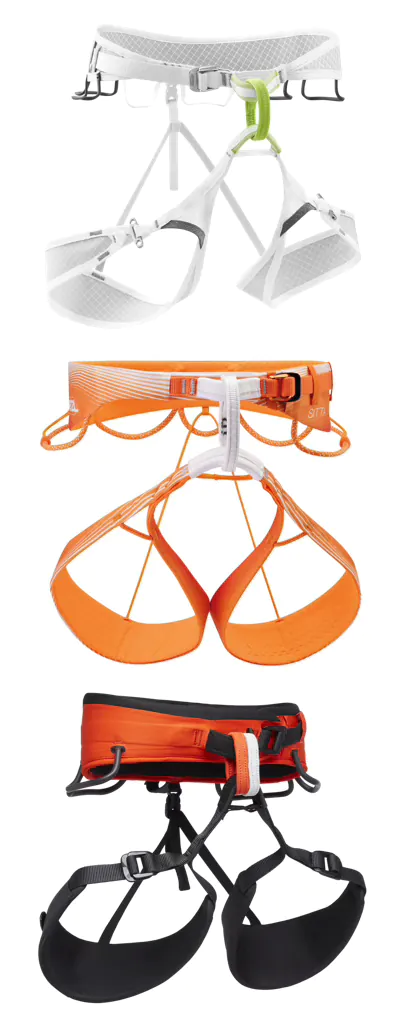
A climbing harness is one of those pieces of gear where the intended use has to be clear before you buy. An alpine harness and a trad harness are built around completely different priorities, and the wrong one will either slow you down or make you miserable on long routes. Beyond that, fit is personal. Some harnesses simply don't work for certain body types. Try before you buy if you can, and if you're between sizes, go bigger.
Harness anatomy
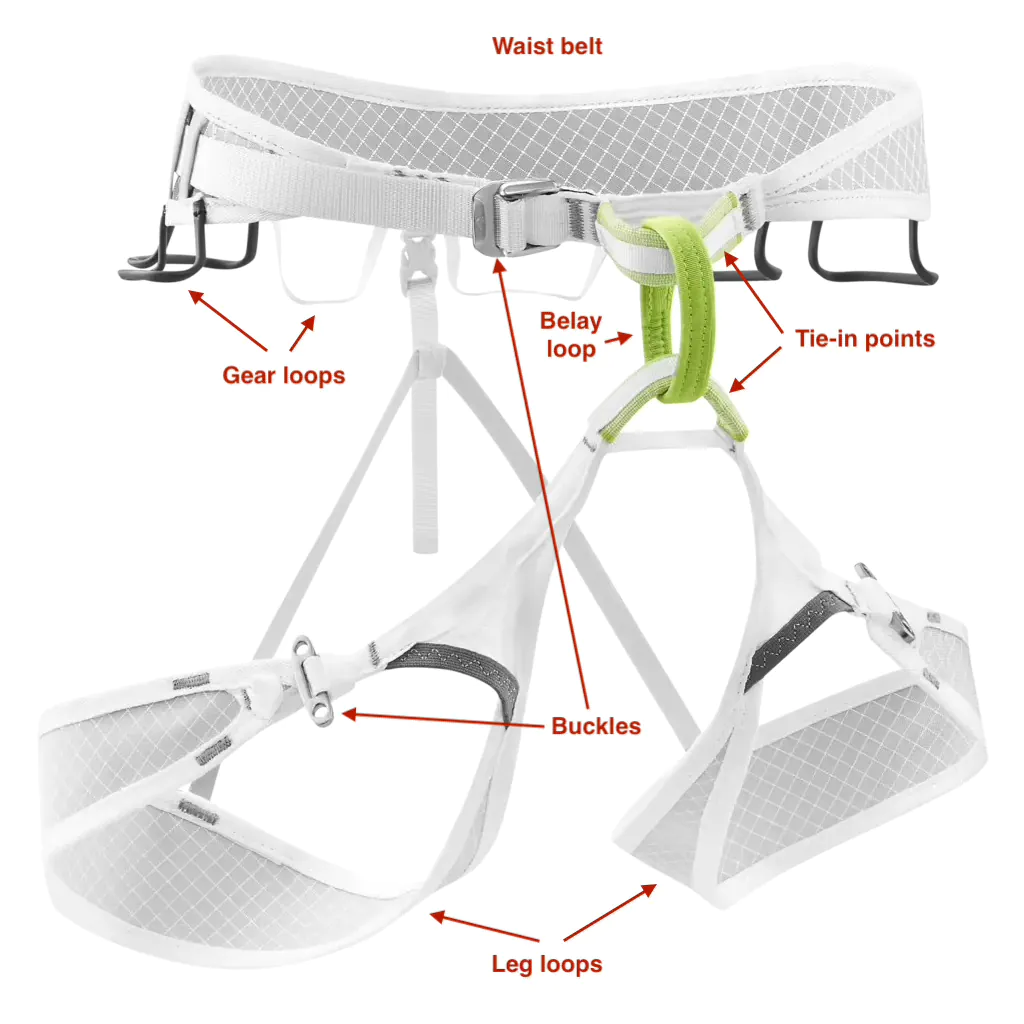
The waist belt and leg loops define how comfortable you'll be hanging. Less padding means the harness bites into skin and muscle under load. More padding improves comfort but adds bulk, weight, and reduces breathability. For short alpine routes, minimal padding is fine. For long rock routes with extended hanging, you'll feel the difference.
The belay loop is your primary connection to the rope system. All harnesses are strong enough here, it's not a differentiating factor. Same goes for the tie-in points.
Gear loops matter more than people expect. I prefer sheathed, rigid loops over cord loops. Clipping gear onto a rigid loop is faster and more reliable, and the harness holds its shape under load. Ultralight harnesses sometimes have only two cord loops, which is acceptable for ski touring or minimal gear, but four loops should be the minimum for anything more serious.
Buckles give you adjustability on the waist and leg loops, which matters both for fit over different clothing layers and for keeping the harness close to the body while moving.
Ice clipper slots don't get enough attention. They allow dedicated ice clippers to be attached on waist belt, which transforms how you manage ice screws and other gear on the move. Most ice clippers are strong enough to hold ice tools while you rest. If you're doing any ice or mixed climbing, this feature is worth seeking out.
Choosing a harness
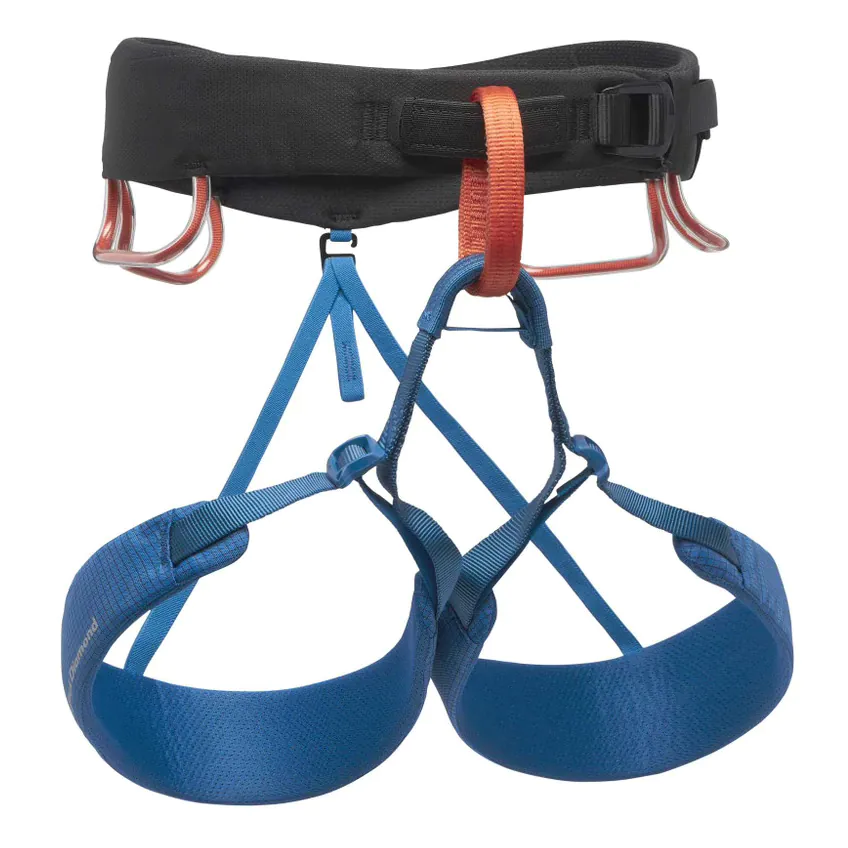
The discipline comes first. A gym or sport climbing harness prioritizes comfort and simplicity. A trad climbing harness needs more padding for long hanging sessions and more gear loops to accommodate a full rack. An alpine or mountaineering harness is a different animal entirely - lightweight, adjustable leg loops for putting it on and off over crampons or skis, ice clipper slots, and gear loops that can handle load without deforming.
For extended roped climbing on rock, comfort matters more. You'll be hanging, resting on gear, and carrying a lot of it. Padding and loop count become priorities.
For alpinism, you're optimizing for weight, adjustability, and function in cold conditions with gloves on. Comfort is still a factor, nobody wants to hang in a wire, but it's a secondary consideration.
Know what you need before you shop. I had clear requirements when I chose the Edelrid Prisma Guide: very light, adjustable leg loops, four rigid sheathed gear loops, well-placed ice clipper slots, and tolerable to hang in. It fit the bill. When the requirements are clear, the choice becomes straightforward. That's true for climbing harness and for most gear decisions.