Belay devices
A belay device controls the rope through friction. That friction is what catches a falling climber, controls a lower, and manages a rappel. The device you choose affects how much work your brake hand does, how the rope feeds, and what techniques are available to you. Getting this wrong is not an option.
Every belay device creates friction by forcing the rope to bend sharply around metal. The more the rope has to change direction, the more friction is generated. Your brake hand controls that friction by adjusting the angle of the rope below the device. This is true for every device type, from the simplest tube to the most sophisticated assisted braking system. Understanding this makes every device easier to use and harder to misuse. It also means that no device removes the need for good technique. The device manages friction, you manage the device.
Whatever device you use: never remove your brake hand from the rope.
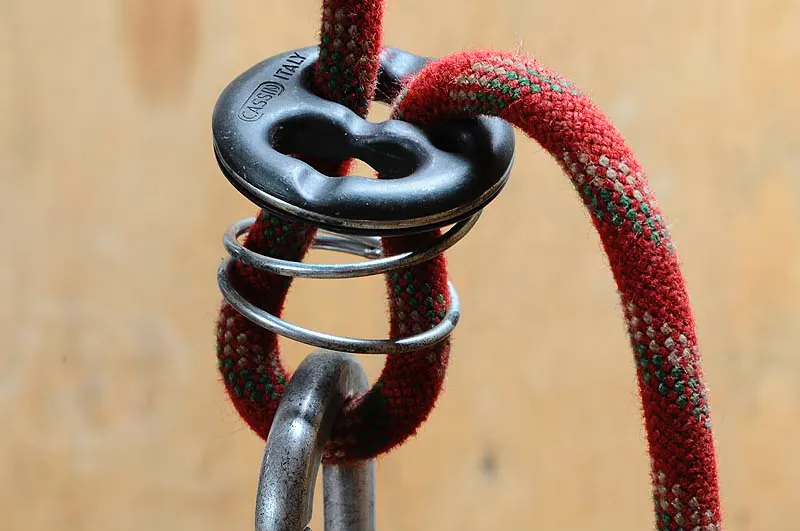
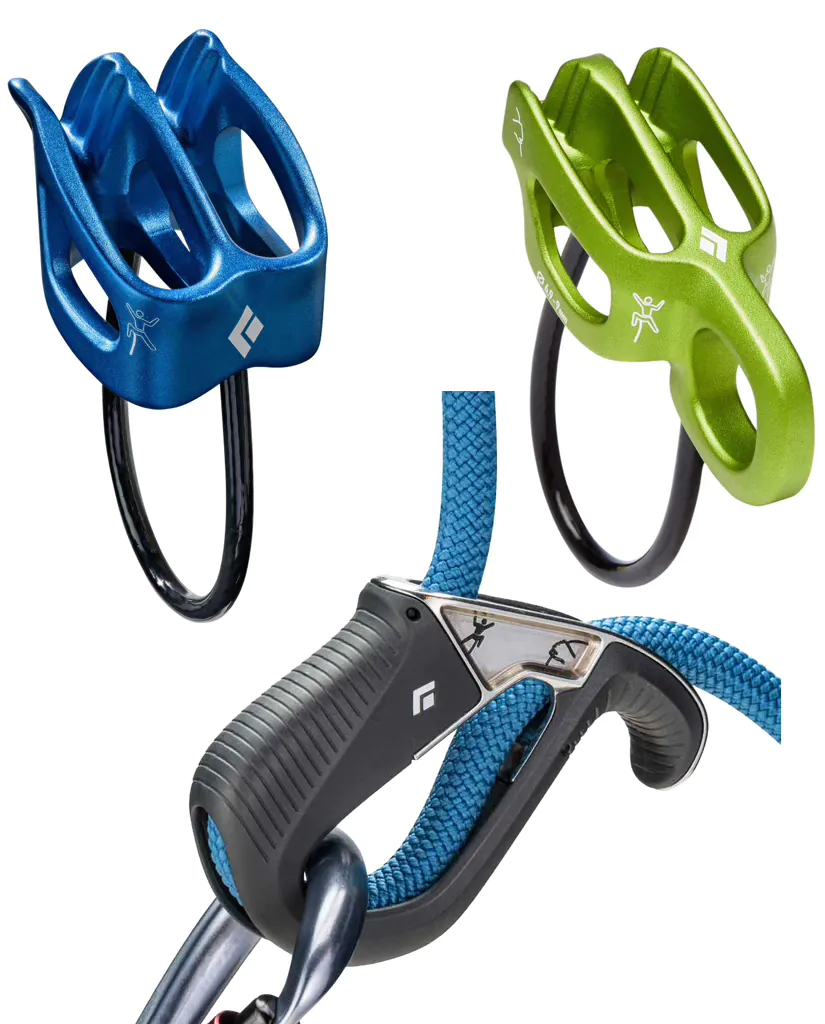
Tubular belay devices
The most common category. A loop of rope threads through a slot in the device and clips to a locking carabiner on your belay loop. The rope runs smoothly for paying out and taking in, and a sharp pull down on the brake hand locks it off. Simple, light, and compatible with single and double ropes.
Modern tubular belay devices have ridges or teeth at the rope contact point to increase friction, which matters on thinner ropes. The Black Diamond ATC is where the category name comes from, and the design has barely changed because it works.
Guide mode adds a second clip point that allows the device to be used as an auto-block when belaying directly from an anchor. In this configuration, a fall locks the device automatically without the belayer holding the brake. Essential for multi-pitch and guiding. I use the Black Diamond ATC Alpine Guide, which handles thinner alpine ropes well and covers both lead belaying and guide mode from anchors.
Passively assisted braking belay devices work like a standard tube but reorient under load to pinch the rope against the carabiner, adding friction automatically in a fall. No moving parts, slightly more forgiving than a standard tube, but typically single-rope only.
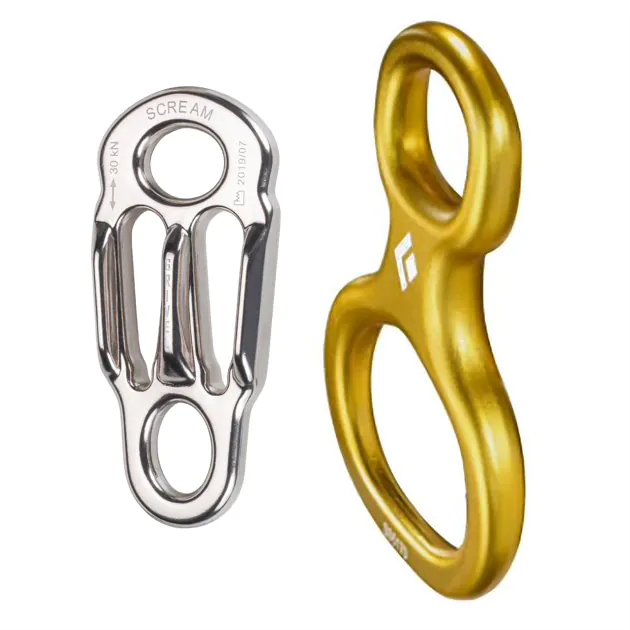
Plates and figure Eights
These predate tubular belay devices and are largely specialist tools now. Plates have two rope slots and can belay with twin ropes, which makes them useful for guides and alpine climbers who want a single device that handles everything.
Figure 8s are simple and bombproof, still used in canyoneering, military, and rappelling contexts. Without solid technique both types are prone to rope twisting and jamming, and there are better options for most climbers starting out. That said, a plate in the hands of someone who knows it is a remarkably capable piece of gear.
Assisted braking devices
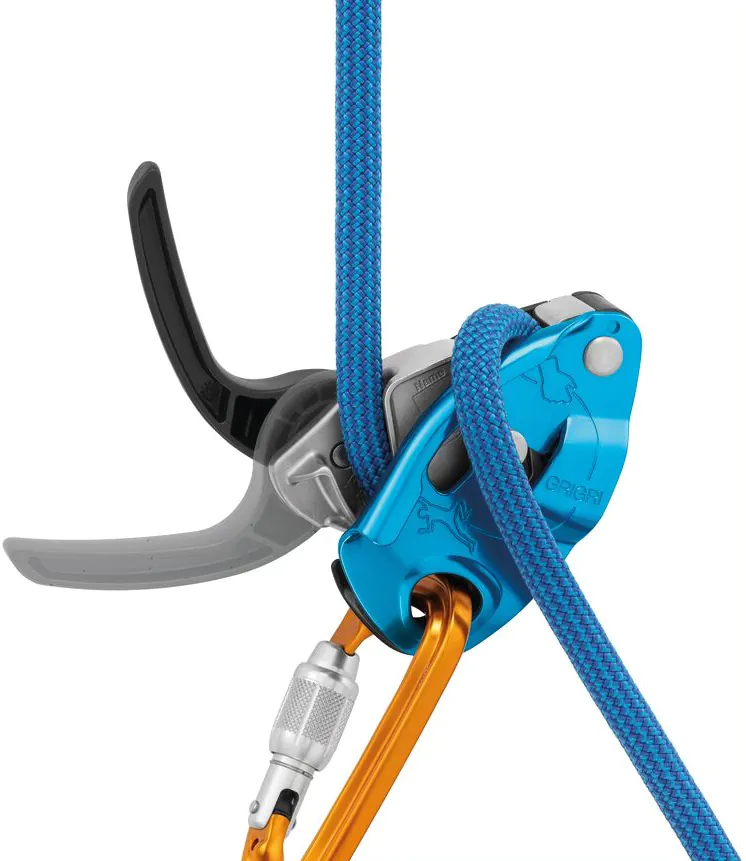
The Petzl Grigri, introduced in 1991, changed how a lot of people belay. A cam inside the device engages whenever the rope moves too fast, locking it without the belayer having to react. This is why climbing gyms have embraced them: the margin for error is smaller if the belayer loses focus. Most major brands now make a version of this design.
The tradeoff is weight, cost, and a learning curve around rope feeding. Paying out slack quickly requires technique, and improper use can give a false sense of security. Assisted braking does not mean hands-free. The brake hand rule still applies.
More: belay devices and methods
The CavingUK page covers belay device terminology and methods in more depth than most climbing-specific resources bother to. Worth a read if you want to understand the full picture.