Climbing Rope
What is a climbing rope
A rope is the one piece of gear that connects everything else. The hardware on your harness, the screws in the ice, the axe in your hand - none of it matters if the rope fails or if you brought the wrong one for the job. Getting this choice right is less about finding the best rope and more about understanding what you actually need it to do.
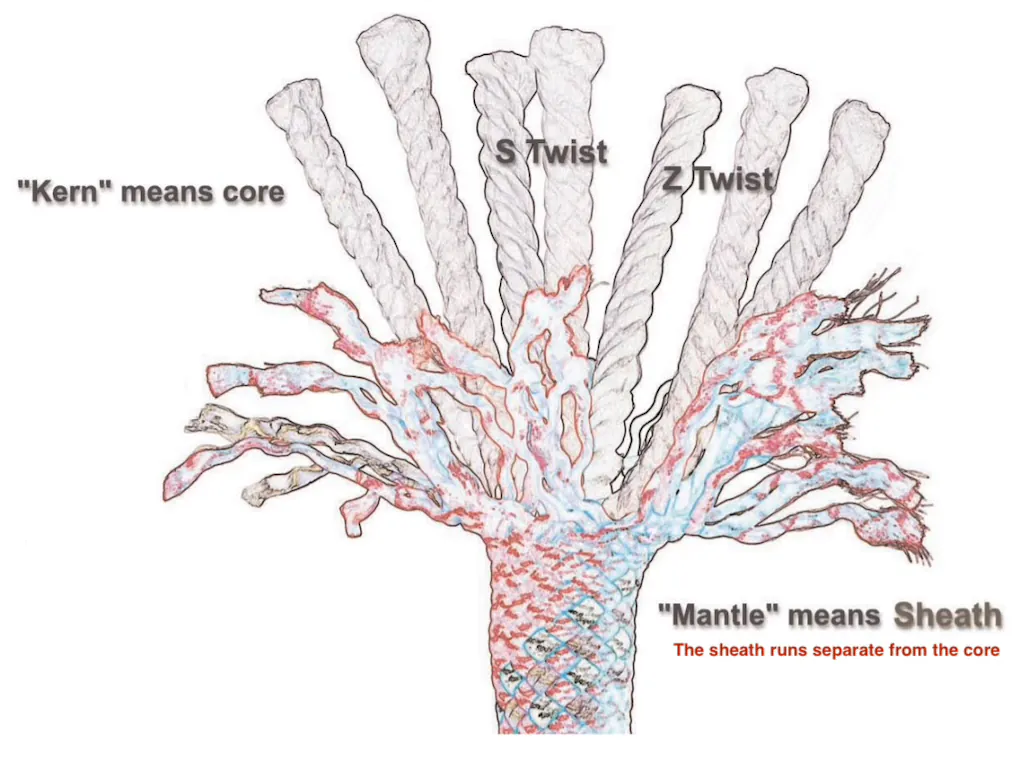
Modern rope anatomy
The photo shows a cross-section of a modern kernmantle rope. Here's what the labels mean in practice.
Kern (core) - This is where the strength lives. Nylon bundles twisted together form the load-bearing center of the rope. In dynamic ropes, the core is also responsible for stretch, which is what absorbs the energy of a fall instead of transferring it directly to your body and gear.
Mantle (sheath) - The braided outer layer protects the core from abrasion, UV, moisture, and dirt. Sheath percentage, usually listed as a spec, tells you how much of the rope's total weight is sheath. Higher sheath percentage means more durability and better handling, but also more weight. A rope with around 35-40% sheath is a reasonable all-rounder. Go lower and it will be lighter but wear faster.
Diameter - The most visible spec and the one that drives most other tradeoffs. Thicker ropes (9.5-10.5mm for singles) are more durable, handle better, and work with all belay devices. Thinner ropes (8.5-9.2mm) are lighter and better for longer days but wear faster and require compatible hardware. For half ropes, you're typically looking at 7.0-8.0mm per strand.
Dry treatment - Nylon absorbs water, and a wet rope can lose up to 30% of its impact resistance. Dry treatment is a coating applied to the sheath, the core, or both. Sheath-only treatment is cheaper and better than nothing. Core-and-sheath treatment is worth it for alpine, ice, and glacier use where the rope will regularly get wet or freeze. It adds cost but the performance difference in winter conditions is real.
UIAA ratings - Dynamic climbing ropes are tested and certified under UIAA standards. Three numbers matter: fall rating (how many UIAA test falls the rope holds before failure - more is more margin, not permission to take more falls), impact force (the peak force transmitted to the climber in kilonewtons during a test fall - lower is gentler on your body and gear, look for under 8kN for single ropes), and elongation under load (how much the rope stretches - more stretch absorbs more energy but makes the system feel dynamic and can mean a longer fall distance).
Middle mark - A colored mark at the rope's midpoint. Essential for rappelling. Some ropes have a bicolor construction instead, where the pattern changes at the middle. Either works; just make sure yours has one and that it's still legible.
Single rope
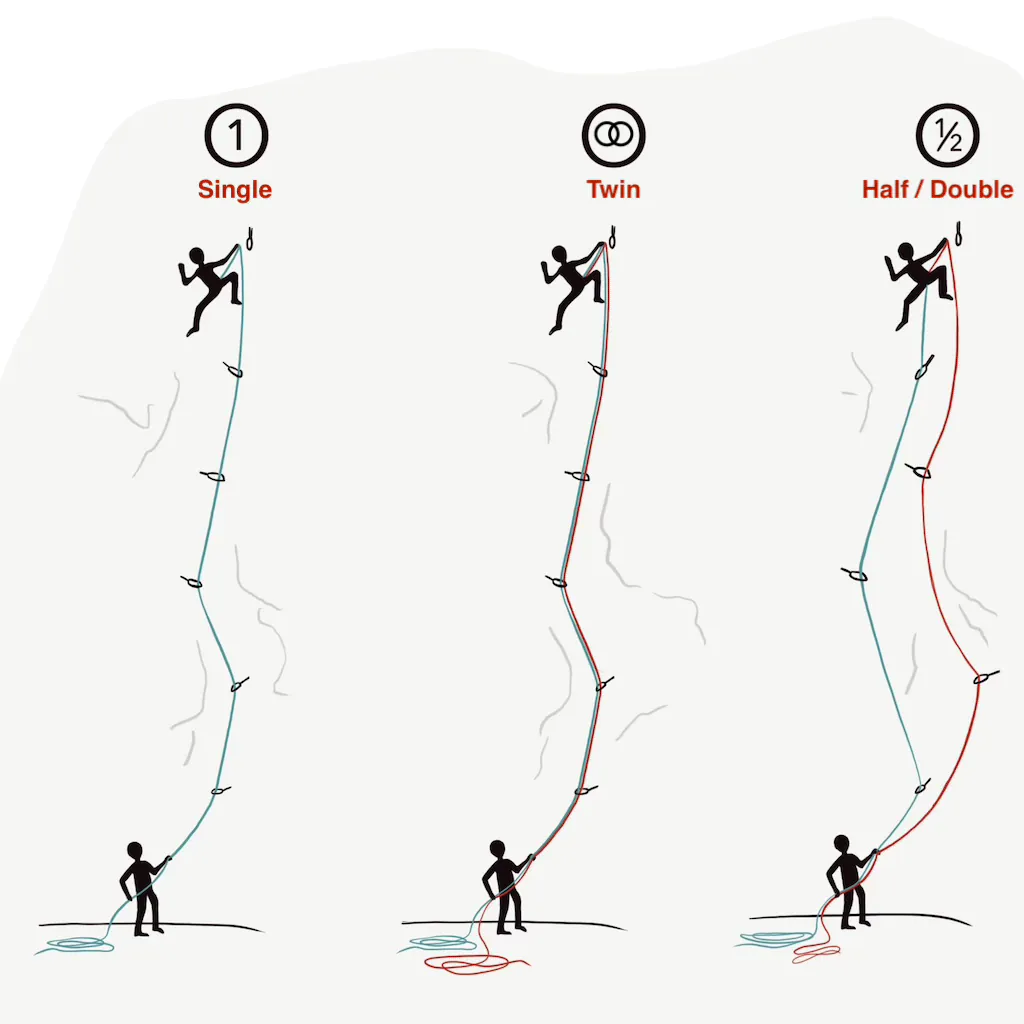
The default choice for most climbing. One rope, clipped into each piece of protection as you go. Simple to manage, compatible with assisted braking devices like the Petzl Grigri, and rated to hold multiple falls on its own. Singles cover sport, trad, ice, alpine, and gym. The tradeoff is rappelling: on a single 60m rope you can only rappel 30m at a time unless you carry a second rope or cord. Wandering routes can also create rope drag unless you extend your placements with slings.
Twin rope
Two strands clipped together into every piece of protection, used as a system rather than alternated. Thinner and lighter than half ropes, which makes them popular for alpine climbing where weight matters most. Unless double-rated, twin ropes are not designed to be used as independent strands.
Half / Double rope
Two strands, each rated to hold a fall independently. The leader alternates clipping each strand into different pieces of protection, which reduces rope drag on wandering routes and provides redundancy if one strand is cut or damaged. Full-length rappels are possible because you use both strands together. The system takes more practice to manage well, but it pays off on alpine routes and longer mountain objectives. I use an Edelrid Skimmer 7.1 as my half rope for glacier travel with a partner and for situations where I need the full rappel length.
Hyperstatic cord
Not a dynamic rope. Hyperstatic cord has minimal stretch, which means it does not absorb fall energy and should never be used for lead climbing. What it is good for: rappelling, hauling, glacier travel, and crevasse rescue setups where weight and pack size are the priority. The small diameter (typically 6mm) requires careful attention to friction when rappelling - test your setup before committing. I carry a 30m Mammut Glacier Cord 6.0 for solo rappels and easy glacier terrain. It packs to almost nothing.
Buying a used rope
This is one category where secondhand comes with a real caveat. You cannot verify a rope's fall history by looking at it. A rope that has taken one severe factor-2 fall may look fine and be structurally compromised. That said, plenty of ropes live easy lives and get sold unused or lightly used. The WeighMyRack guide linked below is the most practical resource for inspecting a rope's condition - it covers what to look for in the sheath, core feel, and end damage. If you're buying used, read it before you buy, not after.
More: Rope ratings and care
Two external resources worth bookmarking. The Vertical Addiction piece covers rope specs and ratings in more depth than most buyers ever need, but it's useful reading once to build a mental model. The WeighMyRack guide is the one to return to whenever you're evaluating a used rope or deciding whether your current one has reached retirement.